What Happens Behind the Scenes When You Swipe, Insert, or Tap Your Credit Card
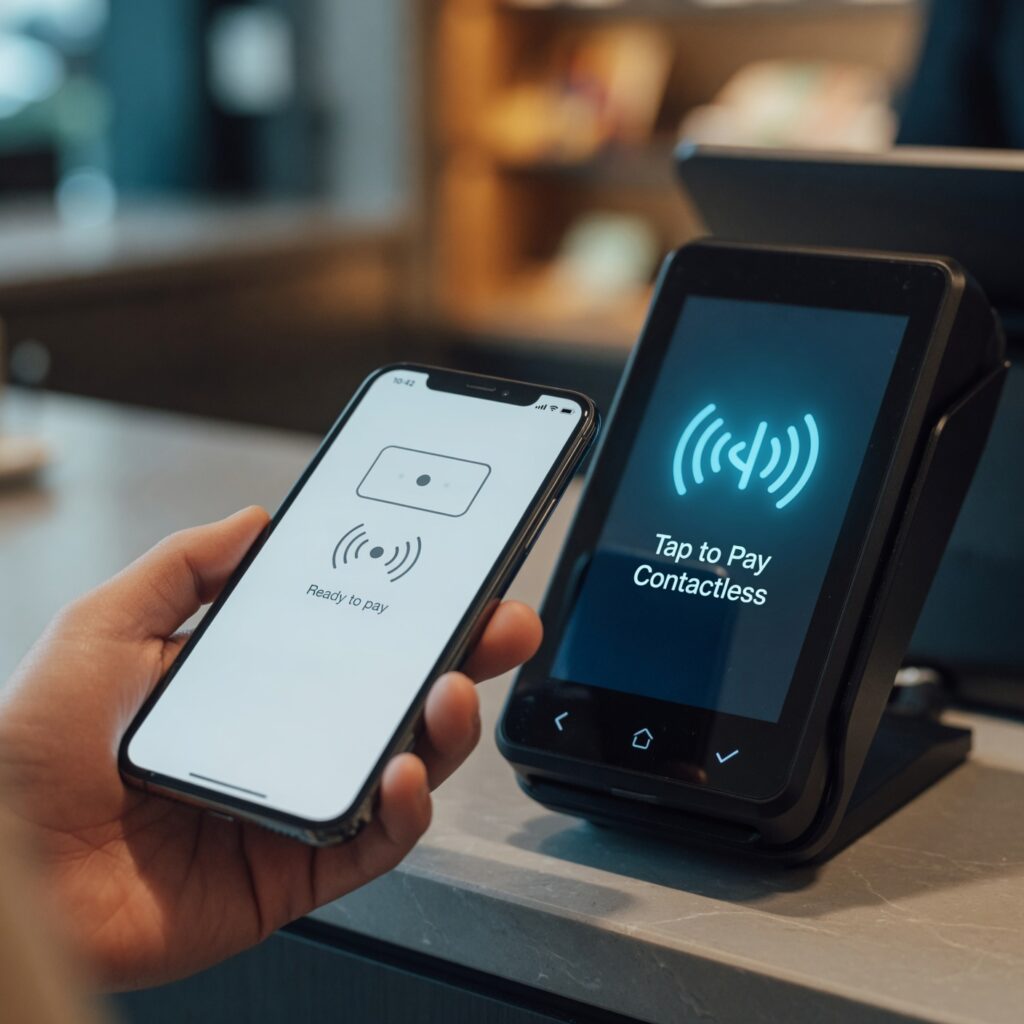
image for illustrative purposes only.
We use our credit and debit cards every single day. Whether you are buying your morning latte at a local coffee shop, filling up your gas tank, or paying for a nice dinner, the physical act of paying takes only a few seconds. You swipe the magnetic stripe, dip the metallic chip, or wave your smartphone over a sleek plastic terminal, hear a cheerful beep, and your transaction is approved.
To the average consumer, this process feels instantaneous and incredibly simple. But have you ever paused to think about what is actually happening during those brief three seconds?
Behind that simple beep lies a remarkably complex, ultra-secure, and lightning-fast global data relay. The moment your card makes physical or wireless contact with a Point of Sale (POS) terminal, a massive digital network springs to life. Your financial data travels across continents, bounces between multiple banking servers, undergoes military-grade cryptographic verification, and secures authorization—all in less time than it takes you to blink.
If you want to understand how modern banking works, let us peel back the plastic shell of the payment terminal and explore the high-speed journey your money takes every time you make a purchase.
The Key Players in the Credit Card Processing Ecosystem Explained
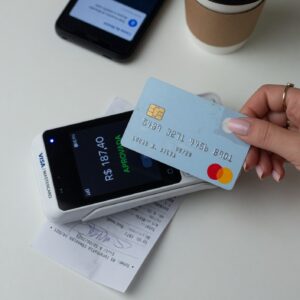
Before we trace the actual path of a transaction, we need to introduce the invisible network of financial institutions that work together in the background. When you step up to a retail counter, you are not just interacting with the store owner. You are initiating a real-time communication loop among five distinct entities.
-
The Cardholder (You): The consumer who has been issued a credit or debit card line from a financial institution and wants to exchange digital funds for goods or services.
-
The Merchant: The business owner, retailer, or service provider who accepts your card as a valid form of payment using an electronic terminal.
-
The Acquiring Bank (Merchant’s Bank): Also known simply as the acquirer, this is the financial institution that provides the merchant with their payment processing hardware, software, and corporate bank account to collect sales revenue.
-
The Card Network: The global digital highway systems that route transactional data between different banks. The most massive networks on earth are Visa, Mastercard, American Express, and Discover.
-
The Issuing Bank (Your Bank): The specific bank or financial company that approved your credit line or manages your personal checking account, and ultimately printed your physical card.
Every single time a card touches a machine, these five players must conduct a perfect, highly regulated digital choreography to ensure that the correct amount of capital moves safely from your account to the business’s ledger.
Step-by-Step Breakdown: The Modern Credit Card Authorization Process
To appreciate the immense engineering feat of payment processing, we have to look at the chronological sequence of events. While it feels like one fluid action, a credit card transaction is broken down into three entirely separate phases: Authorization, Authentication, and Clearing & Settlement.
The initial three-second window where you wait at the register is known as the Authorization Phase. Here is the exact path your data travels during those critical moments.
1. Data Extraction at the Point of Sale
When you interact with the terminal, the machine must harvest your unique account credentials. Depending on your payment habits, it reads this data in one of three ways:
-
The Swipe (Magnetic Stripe): The terminal reads the black magnetic tape on the back of your card, which contains static, unencrypted account numbers.
-
The Dip (EMV Chip): The terminal connects with the metallic square microchip, which generates a unique, one-time cryptographic security code for that specific transaction.
-
The Tap (NFC Contactless): Your phone, watch, or card uses Near Field Communication to wirelessly beam an encrypted digital token to the terminal across short-range radio frequencies.
2. The Merchant to Acquirer Sprint
The moment the POS terminal captures your account data, it bundles that information together with the specific transaction details—such as the purchase amount, the date, time, and the merchant’s corporate identification code. The machine immediately transmits this encrypted packet over an internet connection to the merchant’s acquiring bank or payment processor.
3. The Card Network Highway Route
The acquiring bank receives the transaction request and instantly identifies the card brand based on the initial digits of your card number. The acquirer pushes the encrypted data packet directly onto the high-speed digital highway controlled by the respective card network (such as Visa or Mastercard).
4. The Request Reaches Your Issuing Bank
The card network routes the authorization request directly to your personal issuing bank’s secure servers. This is where the final decision-making power lies. Your bank’s automated security protocols instantly run a series of rapid calculations to evaluate the transaction:
-
Does this account actually exist and is it active?
-
Does the cardholder have enough available credit or cash to cover this specific dollar amount?
-
Does the transaction format match the cardholder’s historical spending habits, or does it trigger automated fraud warning flags?
5. The Return Relay and the Fateful Beep
If your account passes all of these checks, your issuing bank generates a unique, multi-digit authorization code and sends it sprinting back down the exact same highway. The message moves from your bank, through the card network, back to the merchant’s acquiring processor, and finally lights up the POS terminal screen with the word “Approved.” The machine prints or emails your receipt, and the physical interaction is officially complete.
Decoupling the Hardware: How Chips, Stripes, and Contactless Tech Read Your Financial Data
Now that you know the digital path your data travels, let us look at the physical evolution of the payment terminal itself. The hardware on a store counter has undergone radical transformations over the past few decades, shifting from primitive mechanical tracking systems to highly advanced wireless computers.
The Vulnerability of the Classic Magnetic Stripe
For decades, the traditional way to process a card was the physical swipe. The black band on the back of a credit card is made up of millions of microscopic magnetic particles. These particles are permanently arranged in specific patterns to store your full 16-digit card number, your name, expiration date, and your service code.
The fundamental flaw of the magnetic stripe is that the data is completely static. It never changes. Every time you slide your card through a reader, it broadcasts the exact same unencrypted text. This vulnerability made it incredibly easy for cybercriminals to install hidden skimming devices inside gas pumps and ATMs, copying the raw data onto blank pieces of plastic to create cloned cards.
The Dynamic Security of EMV Chip Technology
To combat global skimming epidemics, the financial industry introduced EMV chip technology (which stands for Europay, Mastercard, and Visa). When you insert or “dip” your card into a terminal, the machine feeds electrical power into the small metallic microchip.
Unlike the dumb magnetic stripe, an EMV chip is a miniature, highly secure computer processor. Instead of transmitting your raw card details, the chip runs a complex mathematical algorithm to generate a unique, one-time cryptographic digital signature for that specific purchase. If a hacker intercepts the data transmitted during a chip transaction, the information is completely useless to them, because that specific digital signature can never be used again for any future purchase.
The Invisible Magic of Near Field Communication (NFC)
The latest evolution in retail hardware is the contactless tap. This technology relies on Near Field Communication (NFC), a specialized branch of short-range radio frequency communication.
Inside a contactless card, an invisible, paper-thin copper antenna loops around the perimeter of the plastic. When you bring the card or a smartphone within two inches of an NFC terminal, the machine’s electromagnetic field powers up the internal antenna wirelessly. The terminal and your device conduct a high-speed wireless handshake, completing the entire encrypted data exchange through thin air in a fraction of a second.
Fraud Prevention at the Register: How Risk Analysis Happens in Milliseconds

One of the most mind-boggling aspects of modern card processing is how financial institutions manage to stop cybercrime without slowing down your checkout line. While you are standing at the counter waiting for the machine to approve your purchase, your bank’s servers are conducting a frantic, real-time security audit using artificial intelligence and machine learning.
The moment an authorization request hits your issuing bank, it is run through a highly sophisticated fraud scoring engine. This system analyzes hundreds of unique data variables in a fraction of a second to determine the statistical likelihood that you are actually the person making the purchase.
-
Geographic Consistency: If you bought gas in Chicago ten minutes ago, and an authorization request suddenly appears from a retail shop in London, the system will instantly flag the transaction as physically impossible and decline the charge.
-
Merchant Categories and Spending Profiles: If your historical spending consists almost entirely of quiet grocery shopping and utility bills, a sudden, massive attempt to purchase thousands of dollars in high-end jewelry or luxury electronics will trigger immediate suspicion.
-
Velocity Tracking: Criminals who acquire stolen card data will often hit multiple different stores in a rapid, back-to-back sequence to extract as much value as possible before the card is canceled. Fraud engines track the velocity (frequency and speed) of incoming charges to block automated attacks.
If the calculated risk score exceeds a specific safety threshold established by your bank, the terminal will instantly reject the purchase or flash a message asking the cashier to check your physical photo identification.
Settlement and Clearing: How Real Money Actually Moves Between Bank Accounts
Many consumers assume that when a payment terminal says “Approved,” the money is instantly sucked out of their personal bank account and deposited straight into the store owner’s corporate wallet. In reality, the approval screen is merely a binding promise. No actual currency changes hands during those initial three seconds.
The physical movement of real capital occurs hours or even days later through a completely separate back-end process known as Clearing and Settlement.
| Phase | Core Function | Typical Timeline |
| 1. Authorization | The bank verifies available funds and reserves the credit limit. | 2 to 3 seconds (Real-Time) |
| 2. Batching | The merchant accumulates all daily approved authorizations into a single digital file. | End of the business day |
| 3. Clearing | The card network routes the transaction file to the respective issuing banks to finalize bills. | 24 hours post-transaction |
| 4. Settlement | Issuing banks send actual funds to the acquiring bank, which deposits the money for the merchant. | 1 to 3 business days |
At the end of every business day, a retailer does not close up shop and count individual credit card receipts. Instead, their POS system automatically compiles a massive digital spreadsheet containing every single approved authorization code collected throughout the day. This process is called batching.
The merchant’s payment software sends this collective daily batch file directly to their acquiring bank. The acquiring bank then breaks up the batch file and sends individual transaction records out to the major card networks. The card networks route those records to the correct issuing banks, requesting that the real money be transferred.
Finally, your issuing bank deducts the funds from your account (or adds it to your monthly credit statement) and wires the capital over to the merchant’s bank account. This back-end clearing loop is why an item you bought on a Friday afternoon might sit in a “Pending” status on your mobile banking app until Monday morning rolls around.
Merchant Fees Demystified: Why Swiping Cards Costs Small Businesses Real Money
Accepting plastic cards is essential for modern business success, but it is certainly not free. Every time you glide your credit card through a terminal, the merchant does not receive 100% of the purchase price. A small percentage of the total transaction value is automatically sliced away and distributed among the various financial institutions that made the processing loop possible.
This collection of deductions is collectively referred to as the merchant discount rate, and it is typically broken down into three distinct operational fees.
The Interchange Fee
This is easily the largest component of transaction processing costs. The interchange fee is a non-negotiable rate set directly by the card networks (Visa and Mastercard), but the money is paid directly to your issuing bank. This fee is designed to compensate your bank for taking on the credit risk of lending you money and managing your account infrastructure.
Interchange fees vary wildly based on the type of card you use. Premium reward credit cards that offer cash back or airline miles carry significantly higher interchange fees, which means merchants essentially subsidize your vacation perks every time you choose to pay with high-tier plastic.
Assessment and Network Fees
This fee goes directly to the card networks themselves to pay for the maintenance, security, and operation of their global digital highway systems. It is usually a very small, flat percentage of the overall transaction volume processed through their networks.
Payment Processor Markup
This is the cut kept by the merchant’s acquiring bank or independent third-party payment processor (like Square or Stripe). This fee covers the physical rental of the POS terminal hardware, the customer service support, and the software integrations required to push data seamlessly to the cloud.
While a fee of 1.5% to 3.5% per swipe might sound trivial to an individual shopper, these processing costs accumulate rapidly for a small business owner, frequently swallowing thousands of dollars in hard-earned profit margins every single year.
Consumer Protections: The Inherent Security of Using the Credit Card Rails

Despite the intricate dance of banks and data networks, things can occasionally go wrong. A merchant might accidentally double-charge you for a single meal, an online subscription might fail to cancel when requested, or a cybercriminal might successfully skim your card credentials to fund a fraudulent shopping spree.
This is where the massive structural design of the credit card processing network turns into an incredibly powerful shield for the consumer. When you pay using a credit card, you are legally protected by robust consumer safety frameworks that simply do not exist when handling physical paper cash or traditional wire transfers.
The most valuable tool at your disposal is the formal chargeback process. If a merchant refuses to refund you for a defective product, or if you spot an unauthorized charge on your monthly statement, you do not have to beg the merchant for a resolution. You can contact your issuing bank directly and file a formal dispute.
Because the payment processor network keeps a meticulous, digital audit trail of the exact timestamp, authorization code, and location of every single transaction, your bank can easily review the electronic evidence. If the merchant cannot definitively prove that you authorized the charge or received the agreed-upon services, the issuing bank will forcibly pull the funds back out of the merchant’s account and credit them back to your wallet.
Understanding the intricate lifecycle of a single credit card transaction transforms our view of modern financial technology. The simple act of swiping, dipping, or tapping a piece of plastic is not just a localized interaction between you and a storefront counter; it is a marvel of global engineering.
In the time it takes you to greet a cashier, a highly secure digital ecosystem extracts your credentials, tokenizes your data to guard against cybercriminals, consults artificial intelligence networks to evaluate fraud risks, verifies your financial balances across oceans, and secures formal approval.
By familiarizing yourself with how this invisible infrastructure functions, you can gain a far deeper appreciation for your consumer rights, protect yourself against potential payment security threats, and navigate the increasingly cashless economy with absolute security and peace of mind.