Is it more worthwhile to accumulate points or cashback?
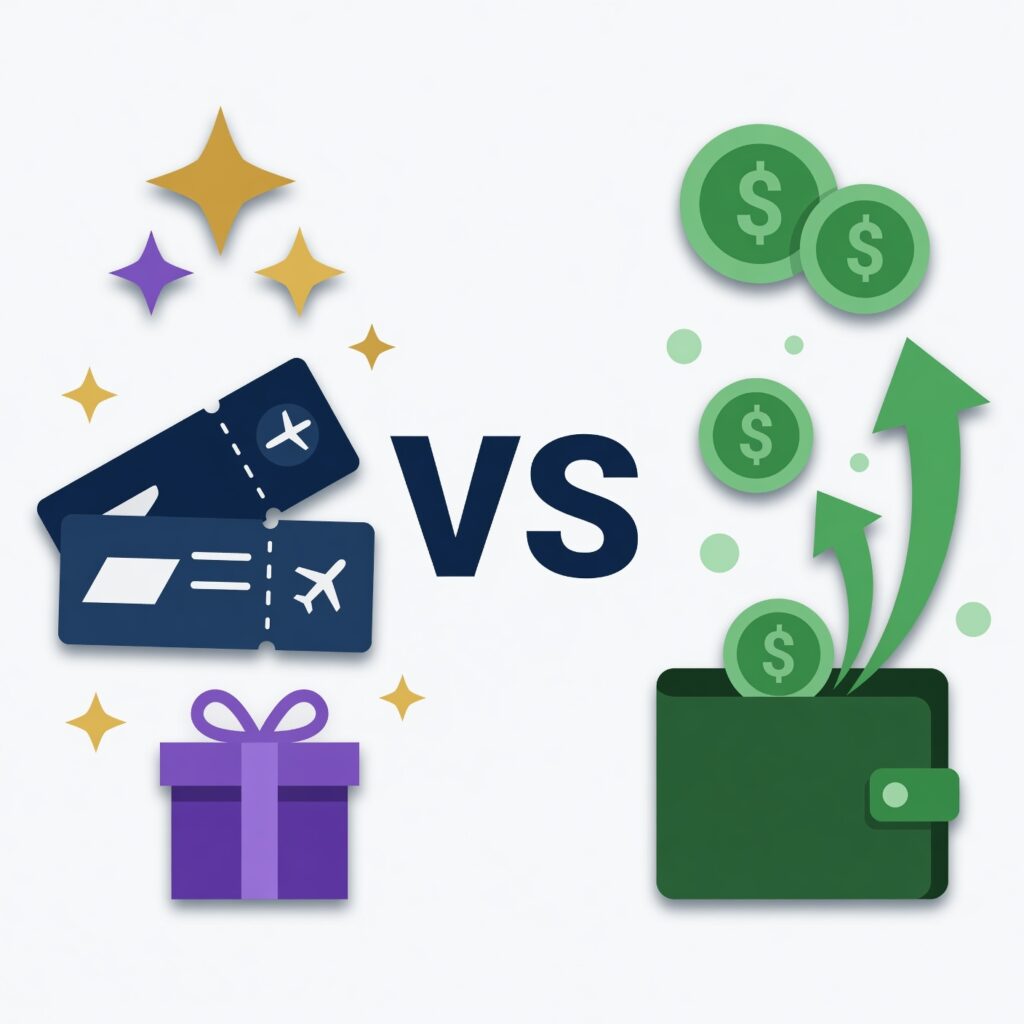
image for illustrative purposes only.
Choosing the right credit card is one of the most impactful financial decisions you can make. Every time you swipe, tap, or insert your card, you are leaving money on the table or unlocking future value. The fundamental question every savvy consumer faces is simple yet complex: Should you choose travel points and miles, or stick to straightforward cashback?
At first glance, this might look like a simple preference between immediate gratification and long-term travel goals. However, when analyzed through the lens of personal finance optimization, it becomes a strategic equation. Your spending habits, travel frequency, tolerance for complexity, and financial discipline all dictate which path will yield the highest return on your everyday purchases.
Understanding the Core Mechanics of Credit Card Rewards

Before diving into a head-to-head comparison, it is essential to understand how both reward structures operate in the modern financial landscape. Card issuers design these programs not out of generosity, but to drive customer loyalty, merchant fee revenue, and ongoing spending engagement.
What is Cashback and How Does It Work?
Cashback is the ultimate embodiment of simplicity. For every dollar you spend, the card issuer rebates a specific percentage back to you. This can manifest as a statement credit, a direct deposit into a checking or savings account, or a physical check.
- Flat-Rate Cards: These offer a consistent percentage (typically 1.5% to 2% cash back) on every single purchase, regardless of the category.
- Tiered or Bonus Category Cards: These offer higher percentages (such as 3% to 6%) on specific spending categories like groceries, dining, gas, or online shopping, while dropping to 1% for everything else.
The primary allure of cashback is liquidity and certainty. One dollar of cashback is always worth one dollar. There are no blackout dates, no transfer partners to master, and no complex redemption math required.
What Are Points and Miles?
Points and miles operate on a proprietary currency system managed by banks (such as Chase Ultimate Rewards, American Express Membership Rewards, or Capital One Miles) or specific airline and hotel loyalty programs.
Instead of receiving a direct monetary rebate, you earn a multiplier of points per dollar spent (e.g., 3x points per dollar on dining or travel). These points accumulate in a digital balance until you are ready to redeem them.
- Portal Redemption: You can often redeem points directly through the issuer’s travel portal at a fixed rate (e.g., 1 cent to 1.25 cents per point).
- Transfer Partners: This is where the magic (and complexity) happens. Advanced users transfer their credit card points to partner airlines and hotels, where booking luxury flights or five-star hotel stays can yield a value significantly higher than the baseline cash value.
The Psychology of Spending: Why Rewards Alter Consumer Behavior
Behavioral economics plays a massive role in credit card rewards. Financial institutions rely on the psychological perception of “free money” to encourage higher spending volumes.
When consumers use cashback cards, they often view the rewards as a minor discount on their purchases. A 2% cashback return feels like getting a small markdown on necessities. Conversely, points and miles tap into experiential desires. Accumulating 100,000 points feels like unlocking a free vacation, which triggers emotional excitement.
However, this psychological trigger can be a double-edged sword. Studies show that consumers holding rewards cards often spend more than those using debit cards or cash. If chasing points leads you to buy items you do not need—or worse, carry a monthly balance that incurs interest—any rewards earned are instantly wiped out by high-interest debt. Rule number one of the rewards game is that you must pay your statement balance in full every single month.
Analyzing the Math: When Points Outperform Cashback
To determine whether points are truly worth more than cashback, you have to calculate the Value Per Point (VPP).
The Baseline Calculation
If a travel card earns 3x points on dining, and a cashback card earns 3% back on dining, they appear equal on the surface. If you value a point at 1 cent, 3 points equal 3 cents, matching the 3% cashback.
However, transfer partners change the equation entirely. Consider transferring flexible bank points to an international airline partner for a business-class seat that retails for $4,000, but only costs 60,000 points plus $100 in taxes.
- Calculation: ($4,000 value – $100 taxes) / 60,000 points = $3,900 / 60,000 = 6.5 cents per point.
In this scenario, your 3x earning rate effectively transforms into a 19.5% return on your spending (0.065 x 3). No standard cashback card on the market can compete with that kind of leverage.
The Hidden Costs of Travel Hacking
While the potential return on points is astronomical, it requires significant effort. Maximizing points involves:
- Tracking multiple sign-up bonuses and minimum spend requirements.
- Understanding airline alliance networks (Star Alliance, Oneworld, SkyTeam).
- Navigating dynamic award pricing and finding seat availability months in advance.
- Managing annual fees that often range from $95 to $695.
If you value your free time and prefer a friction-free financial life, the administrative burden of points may outweigh the financial upside.
Analyzing the Convenience: Why Cashback Wins for the Majority

For the average consumer who does not want a part-time hobby managing credit card portfolios, cashback is almost always the superior choice.
Predictability and Liquidity
Cash is king. When you earn cashback, you receive liquid funds that can be allocated toward investments, emergency savings, debt reduction, or everyday bills. You are never locked into a specific ecosystem or forced to travel to extract value from your spending.
No Annual Fees Required
While the best travel cards come with hefty annual fees that require active management to offset through perks and credits, the market is flooded with exceptional cashback cards that charge $0 annual fees. This means your net profit is pure and unburdened by upfront costs.
Protection Against Devaluations
Airline and hotel loyalty programs are notorious for devaluing their currencies overnight. A program can change its award chart without warning, instantly cutting the value of your accumulated points in half. Cashback, by contrast, suffers no such volatility. One dollar today remains a dollar tomorrow (minus normal inflation).
Lifestyle Factors: Which Strategy Fits Your Profile?
Choosing between points and cashback is not about finding the objectively “best” card on the market; it is about finding the card that aligns with your specific lifestyle, financial goals, and personal preferences.
The Traveler Profile
You should lean heavily toward points and miles if:
- You take at least one or two major domestic or international trips per year.
- You are willing to learn the nuances of airline transfer partners and booking windows.
- You aspire to fly in premium cabins (Business or First Class) that you would otherwise never pay for out of pocket.
- Your annual spending is high enough to comfortably meet large minimum spend requirements for lucrative sign-up bonuses.
The Simplifier Profile
You should stick to cashback if:
- You prefer a set-it-and-forget-it financial strategy with zero mental overhead.
- You travel infrequently or prefer driving, camping, or staying with family over traditional vacations.
- You want your rewards immediately available to offset monthly expenses or fund your savings goals.
- You dislike paying annual fees and want to keep your financial life as streamlined as possible.
Combining Strategies: The Hybrid Approach
Advanced financial planners often realize that this does not have to be an all-or-nothing proposition. Many savvy consumers utilize a hybrid strategy to capture the best of both worlds.
A hybrid approach typically involves holding one premier travel card for category spending that aligns with travel habits (such as dining, flights, and hotels), while maintaining a portfolio of no-fee cashback cards for everyday incidental purchases like utility bills, insurance, and miscellaneous shopping.
Furthermore, many flexible point systems allow you to cash out your points at a baseline rate (usually 1 cent per point) if your travel plans change or if you find yourself needing immediate liquidity. This flexibility provides a safety net, ensuring you are never trapped in a currency you cannot use.
Key Questions to Ask Yourself Before Applying
Before you pull out your wallet and apply for your next piece of plastic, ask yourself these crucial diagnostic questions:
- How much time am I willing to invest? Are you excited about researching redemption sweet spots, or does looking at award charts feel like a chore?
- What does my current budget look like? Do my natural spending categories support high point multipliers, or are my biggest expenses fixed costs that only earn flat-rate returns?
- Am I disciplined enough to avoid lifestyle inflation? Will chasing rewards tempt me into buying things I do not need just to hit a spending bonus?
- Do I travel enough to justify annual fees? Will I actually use the airport lounge access, hotel status, and statement credits offered by premium cards, or are those perks wasted on me?
Your answers to these questions will immediately illuminate the path that makes the most financial sense for your unique situation.
Maximizing Your Purchasing Power
At the end of the day, neither points nor cashback is universally superior. They are simply different financial instruments designed for different types of consumers.
If your goal is absolute simplicity, guaranteed value, and liquid returns with zero annual fees, cashback is the clear winner. It puts money directly back into your pocket with minimal effort.
If your goal is aspirational travel, luxury experiences, and extracting outsized value from your everyday expenditures through strategic planning, points and miles offer an unmatched return on investment.
Evaluate your habits, audit your monthly spending, and choose the system that rewards your lifestyle without adding unnecessary stress to your financial routine.