Fidelity vs. Charles Schwab: Which Brokerage Is Better for Long-Term Investors?
image for illustrative purposes only.
When building a wealth-generation strategy that spans decades, choosing the right brokerage account is one of the most critical decisions you will make. In the landscape of retail finance, two massive titans tower over the competition: Fidelity Investments and Charles Schwab. Both manage trillions of dollars in assets, offer zero-commission online trading for standard U.S. stocks and exchange-traded funds (ETFs), and maintain impeccable reputations for safety and reliability.
However, beneath their nearly identical pricing models lie distinct corporate philosophies, product ecosystems, and user experiences. For a long-term investor focused on compounding wealth, retirement planning, and low-cost index fund accumulation, understanding these underlying nuances can significantly impact your net worth over a 20- or 30-year horizon. This comprehensive analysis breaks down how Fidelity and Charles Schwab stack up across key categories tailored specifically to long-term wealth builders.
Understanding the Foundation: Fee Structures and Account Costs for Buy-and-Hold Portfolios

For decades, discount brokerages competed fiercely on transaction fees, ultimately driving the cost of buying stocks and ETFs down to absolute zero. Both Fidelity and Charles Schwab charge $0 commission for online trades of U.S.-listed equities and ETFs. Furthermore, neither firm requires an account minimum to open a standard brokerage account or an Individual Retirement Account (IRA), making them exceptionally accessible whether you are investing your first fifty dollars or your fiftieth thousand.
When evaluating long-term costs, however, you must look beyond headline commissions into incidental fees, fund expense ratios, and cash sweep yields:
-
Mutual Fund and ETF Expense Ratios: Both platforms provide access to thousands of low-cost passive index funds. Fidelity stands out uniquely by offering several zero-expense-ratio index funds (such as zero fee total market and international index funds), allowing investors to keep 100% of their investment returns without paying management fees. Schwab counters with an extensive suite of proprietary Schwab index funds featuring ultra-low expense ratios that rival any in the industry.
-
Cash Sweep and Uninvested Cash: Long-term investors often hold a small allocation of cash waiting for market pullbacks. The default cash sweep options yield modest returns at both firms, though active management of idle cash into money market funds or short-term Treasuries is simple and frictionless on both interfaces.
-
Transfer and Outbound Fees: If you ever decide to transfer your assets elsewhere, Fidelity does not charge outbound full-account transfer fees, whereas Charles Schwab typically assesses a standard administrative fee. While minor for buy-and-hold investors who rarely move accounts, it remains a point in Fidelity’s favor for cost transparency.
Investment Product Lineup: Mutual Funds, Fractional Shares, and Asset Diversity
Long-term investing relies heavily on diversification and consistency. To build a resilient portfolio, you need seamless access to domestic equities, international markets, fixed income, and specialized savings vehicles.
Both brokerages cover the essentials completely, providing traditional and Roth IRAs, SEP IRAs, rollover accounts, and standard taxable brokerage accounts. However, subtle differences in asset availability and purchasing flexibility matter significantly for systematic accumulators:
Fractional Shares and Dollar-Cost Averaging
Dollar-cost averaging—investing a fixed amount of money at regular intervals regardless of market fluctuations—is the gold standard for long-term equity accumulation. Fidelity excels here by offering robust fractional share trading combined with automated recurring investments for both stocks and ETFs. This means you can schedule automatic weekly or monthly purchases of high-priced shares or broad-market ETFs down to the penny. Schwab has expanded its fractional capabilities (often branded as Stock Slices), but its automated recurring investment features for broad ETF portfolios are traditionally less flexible than Fidelity’s streamlined implementation.
Proprietary Funds and Fixed Income
Charles Schwab provides a phenomenal selection of proprietary mutual funds and an exceptional bond-trading desk. Investors who prefer building portfolios out of institutional-grade mutual funds will find Schwab’s screening tools clean and intuitive. Conversely, Fidelity is frequently celebrated for its specialized account offerings, such as fully integrated Health Savings Accounts (HSAs), which act as powerful tax-advantaged vehicles for long-term medical and retirement expenses.
Platform Usability, Mobile Apps, and Research Depth for Self-Directed Investors
Managing a portfolio over a multi-decade timeline requires clarity, reliable tools, and deep educational resources. You want a digital dashboard that encourages clear decision-making without inducing panic during market volatility.
Fidelity’s Ecosystem
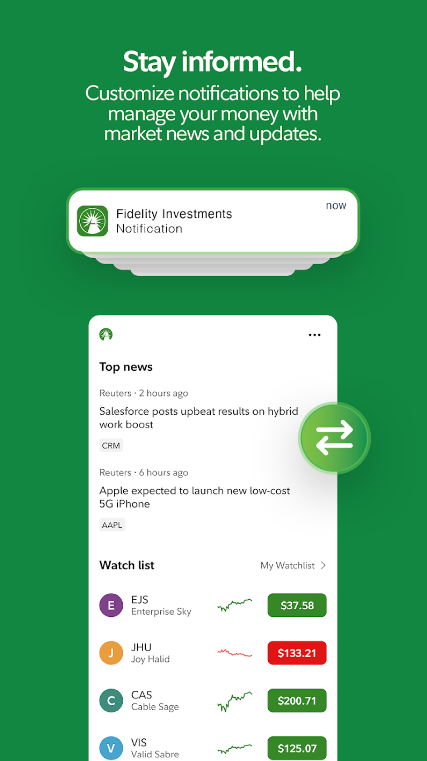
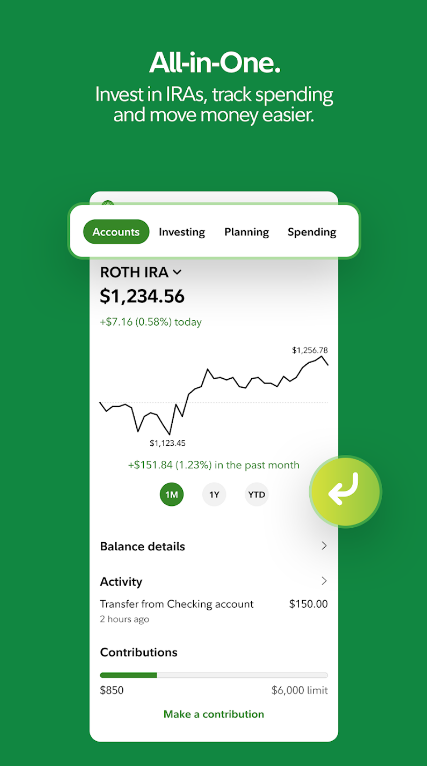
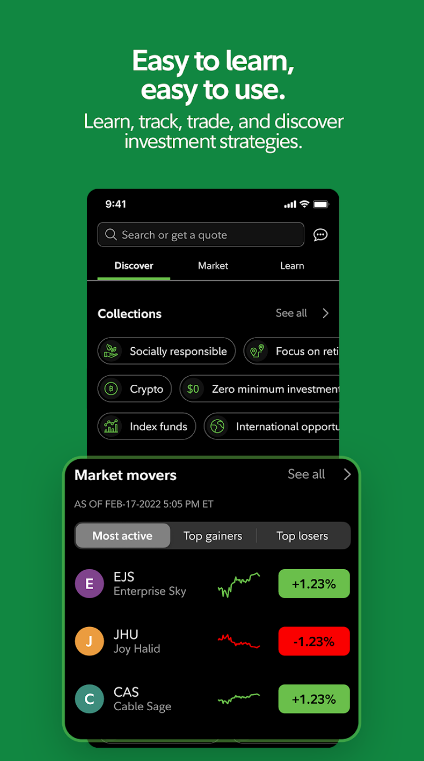
Fidelity balances depth and accessibility. Its primary mobile app features a modernized “Discover” tab that integrates educational guides, market commentary, and portfolio analytics into an approachable feed. For desktop users, Active Trader Pro offers robust technical indicators and screening tools, though its interface leans toward traditional desktop software design. Fidelity’s overarching strength lies in its comprehensive retirement planning calculators and wealth-projection tools, which help long-term investors visualize whether their current savings rate aligns with their future retirement milestones.
Charles Schwab’s Ecosystem
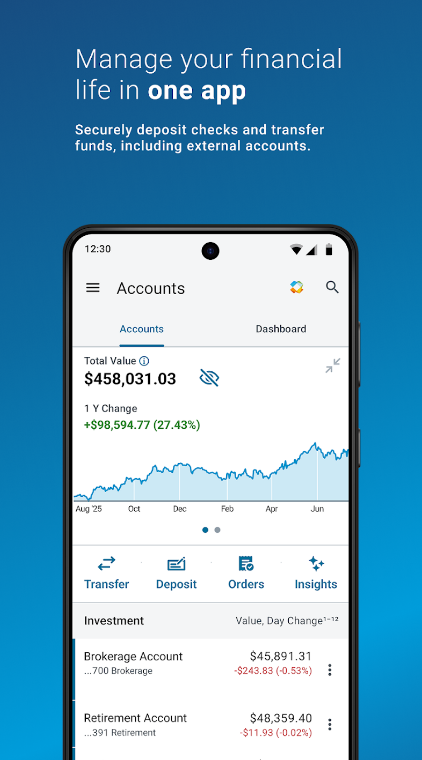
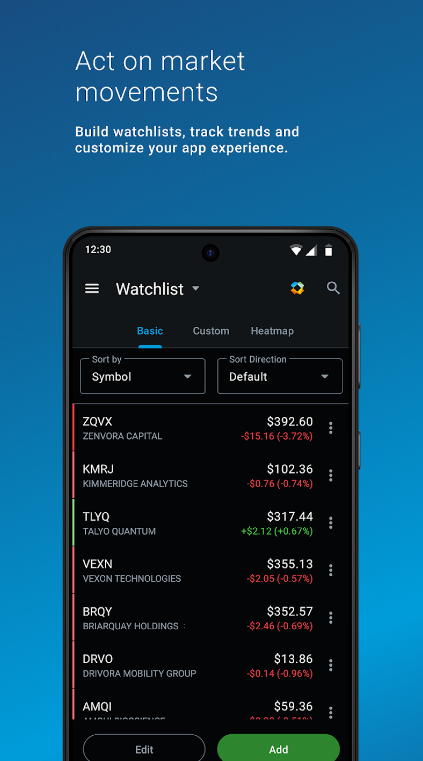
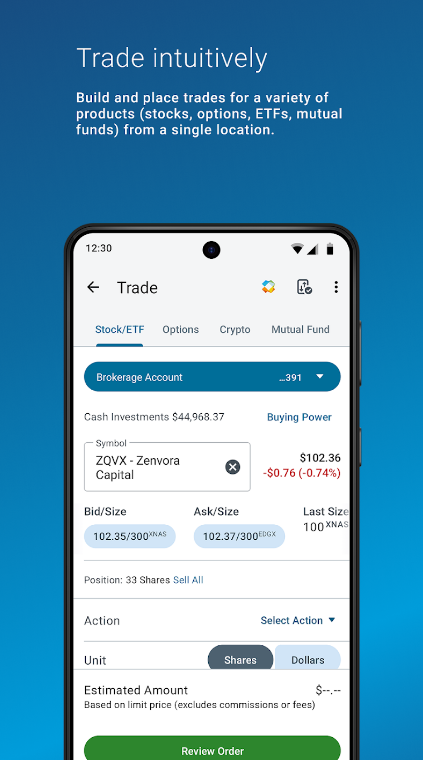
Charles Schwab approaches platform architecture with a focus on seamless design and elite multi-asset accessibility. Following its integration of TD Ameritrade, Schwab offers the world-class thinkorswim platform suite. While thinkorswim is engineered primarily for active options and equity traders, long-term investors who appreciate deep analytical depth, comprehensive macro research reports, and custom charting will find immense value in Schwab’s technical infrastructure. Furthermore, Schwab’s general web interface is widely praised for its clean layout, minimal clutter, and intuitive portfolio-tracking views.
Customer Service, Physical Branches, and Long-Term Guidance
When managing life savings across volatile economic cycles, knowing you can speak with a knowledgeable professional is invaluable. Both Fidelity and Charles Schwab bridge the gap between digital-first fintech apps and traditional brick-and-mortar banking by maintaining extensive networks of physical branch locations across the United States.
-
Branch Access: Whether you need assistance executing a complex estate transfer, depositing physical documents, or sitting down for a face-to-face retirement consultation, both firms allow walk-in access at hundreds of local branches nationwide.
-
24/7 Support: Both brokerages provide round-the-clock telephone and live-chat customer service staffed by licensed representatives rather than automated bots. Industry reviews consistently rank both Fidelity and Charles Schwab at the pinnacle of customer satisfaction, praising their response times and problem-resolution competence.
-
Educational Content: For long-term investors striving to master tax-efficient withdrawal strategies, estate planning, or asset allocation, both firms offer massive libraries of webinars, articles, structured courses, and market insight reports completely free of charge.
Automated Investing and Robo-Advisors for Hands-Off Wealth Building
Not every long-term investor wants to manually select individual stocks, bonds, or sector ETFs. For those who prefer a completely automated, hands-off approach, both brokerages provide proprietary robo-advisory services:
-
Fidelity Go: This automated platform builds and manages a diversified portfolio tailored to your risk tolerance and timeline. It features no advisory fees for account balances under $25,000, and a low, transparent 0.35% annual advisory fee once balances scale past that threshold. It represents one of the most cost-effective entry points into professionally managed digital portfolios for smaller initial balances.
-
Schwab Intelligent Portfolios: Schwab’s flagship robo-advisor charges $0 advisory fees and zero program management fees. However, the catch lies in its mandatory cash allocation: portfolios hold a designated percentage of cash swept into affiliated Schwab bank accounts, which earns interest for the firm. While convenient, investors should evaluate whether that mandated cash drag fits their long-term growth objectives compared to fully invested models.
Which Brokerage Wins for Your Long-Term Goals?
Choosing between Fidelity and Charles Schwab ultimately comes down to investment style rather than fundamental quality, as both represent the absolute gold standard of retail brokerages.
-
Choose Fidelity if: Your primary objective is passive, long-term buy-and-hold investing, retirement planning, or utilizing zero-expense-ratio index funds. Fidelity’s superior fractional share automation, recurring investment scheduling for ETFs, integrated Health Savings Accounts (HSAs), and accessible robo-advisory tiers make it an exceptionally smooth home for systematic wealth accumulation.
-
Choose Charles Schwab if: You value an immaculate, clean user interface, deep multi-asset capabilities (such as futures and extensive forex access), robust macroeconomic research reports, and the option to scale seamlessly into advanced trading suites like thinkorswim. Schwab is also ideal if you desire a powerful all-in-one brokerage and banking ecosystem backed by a massive nationwide branch footprint.
Regardless of which platform you select, opening an account, automating your regular contributions, and maintaining discipline through market cycles will matter far more than the minor differences separating these two legendary financial institutions.