Building a Diversified Investment Portfolio From Scratch

image for illustrative purposes only.
Entering the world of investing can feel like stepping onto a high-stakes playing field. With countless asset classes, market trends, and financial terminologies competing for attention, beginners often make the critical mistake of chasing quick gains or putting all their capital into a single high-profile stock. However, sustainable, long-term wealth creation is rarely built on speculation; it is engineered through discipline, patience, and, most importantly, strategic diversification.
At its core, building a diversified investment portfolio from scratch is about managing risk while optimizing return potential. By spreading your investments across various asset classes, industries, and geographic regions, you protect your hard-earned capital from the unpredictable downturns of any single market sector. This comprehensive guide will walk you through every phase of constructing a robust, resilient portfolio designed to weather market volatility and grow steadily over time.
1. Defining Your Financial Horizon and Risk Tolerance

Before you purchase your first asset, you must establish a clear financial roadmap. Jumping into the market without a strategy is like setting sail without a compass. Your portfolio must reflect your unique life circumstances, financial goals, and emotional comfort with market fluctuations.
Assessing Your Investment Timeline
Your investment horizon—the length of time you expect to hold your investments before needing the cash—dictates your asset allocation.
-
Short-Term Goals (1 to 3 years): Goals like buying a car or saving for a wedding require capital preservation. High-risk assets like individual stocks are usually inappropriate here because a sudden market correction could wipe out your savings right when you need them.
-
Medium-Term Goals (3 to 10 years): Goals such as funding a down payment on a home allow for a balanced approach, incorporating a mix of fixed-income assets and moderate-growth equities.
-
Long-Term Goals (10+ years): Retirement planning falls squarely into this category. With a multi-decade timeline, you have the luxury of weathering short-term market volatility, allowing you to lean heavily into growth-oriented assets.
Evaluating Risk Tolerance and Capacity
Risk tolerance is your emotional ability to watch your portfolio value fluctuate, while risk capacity is your financial ability to absorb losses. Ask yourself honest questions: How would you react if your portfolio dropped 20% in a single month? If the thought keeps you awake at night, your portfolio is likely too aggressive. Balancing your psychological comfort with your financial realities ensures you won’t panic-sell during a market downturn.
2. Understanding Asset Classes: The Building Blocks of Your Portfolio
A truly diversified portfolio relies on low correlation between its underlying components. When one asset class zigs, another should ideally zag, smoothing out the overall ride. Let’s examine the primary asset classes available to modern investors.
Equities (Stocks)
Stocks represent ownership shares in publicly traded companies. They are the primary engine of growth in most portfolios. Historically, equities have outperformed almost all other asset classes over long horizons, though they come with heightened volatility.
-
Large-Cap Stocks: Established, stable corporations with massive market capitalizations. They offer steady growth and often pay regular dividends.
-
Mid-Cap and Small-Cap Stocks: Smaller companies with higher growth potential, accompanied by increased volatility and risk.
-
International Stocks: Equities issued by companies based outside your home country. Including international markets guards against domestic economic downturns and captures global growth.
Fixed Income (Bonds)
Bonds are essentially loans you make to corporations or governments in exchange for regular interest payments (coupons) and the return of the principal upon maturity. They act as the shock absorbers of your portfolio. When equity markets stumble, high-quality government bonds often hold their value or rise, providing stability and predictable cash flow.
Real Estate and Alternative Assets
Real estate offers a tangible hedge against inflation and a steady stream of rental income. While purchasing physical property requires significant capital, modern investors can access real estate through publicly traded Real Estate Investment Trusts (REITs). Other alternative assets, such as commodities (gold, energy) or infrastructure funds, provide further diversification away from traditional stock and bond correlations.
3. Designing Your Core Asset Allocation Strategy
Once you understand the available building blocks, you must decide how much money to allocate to each category. This is known as asset allocation, and financial research consistently shows that it is the single most important determinant of your portfolio’s long-term performance.
The Traditional Stock-to-Bond Ratio
A classic starting point for beginners is the age-based rule of thumb, such as subtracting your age from 110 to determine your equity percentage. For instance, a 30-year-old following this formula would hold 80% equities and 20% fixed income. While simple, this formula can be customized based on your personal risk profile. Younger investors with stable income streams can often afford an allocation of 90% equities and 10% fixed income, maximizing long-term compounding growth.
Core-Satellite Approach
A sophisticated yet accessible strategy for building a portfolio from scratch is the core-satellite approach.
-
The Core: Comprises 70% to 80% of your portfolio and consists of broad-market index funds or exchange-traded funds (ETFs) that track major benchmarks like the S&P 500 or total global stock market. This provides low-cost, reliable market exposure.
-
The Satellites: Comprises the remaining 20% to 30% and is dedicated to specific sector plays, individual growth stocks, emerging markets, or alternative assets. This allows you to chase higher alpha without risking the stability of your core wealth.
4. Selecting Investment Vehicles: Mutual Funds, ETFs, and Indexing
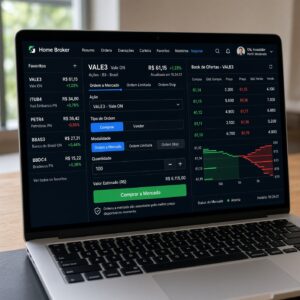
Gone are the days when individual investors had to manually buy dozens of individual stocks to achieve diversification. Today, pooled investment vehicles make diversification instant and affordable.
The Power of Exchange-Traded Funds (ETFs) and Mutual Funds
An ETF or mutual fund pools money from thousands of investors to buy a basket of assets. By purchasing a single share of a broad-market ETF, you instantly own tiny fractions of hundreds or thousands of different companies. This eliminates single-stock risk—the danger that one company’s bankruptcy could ruin your financial future.
Keeping Costs Low: The Impact of Expense Ratios
Fees are the silent killer of investment returns. Every fund charges an annual management fee, known as an expense ratio, expressed as a percentage of your assets under management.
-
Actively managed funds, where professional managers attempt to beat the market, often carry high expense ratios (ranging from 0.5% to over 1.5%) and frequently fail to outperform basic market benchmarks over long periods.
-
Passively managed index funds and ETFs simply track a market index, resulting in minimal administrative costs (often under 0.10%). Over a 30-year investment horizon, minimizing fees can save you tens of thousands of dollars in compounded wealth.
5. Implementing Dollar-Cost Averaging for Risk Mitigation
One of the most paralyzing fears for a beginner investor is market timing: “What if I invest all my money today, and the market crashes tomorrow?” Dollar-cost averaging (DCA) is the definitive psychological and tactical antidote to this concern.
How Dollar-Cost Averaging Works
Instead of investing a lump sum all at once, DCA involves committing a fixed dollar amount to your portfolio at regular intervals—such as weekly, bi-weekly, or monthly—regardless of whether market prices are high or low.
-
When the market is booming, your fixed contribution buys fewer shares.
-
When the market experiences a downturn, your fixed contribution automatically buys more shares at a discount.
Why DCA Excels for Beginners
DCA removes emotion from the investment process. It enforces disciplined saving habits and naturally lowers your average cost per share over time. By automating your contributions through your brokerage account, you eliminate the temptation to time the market—a futile exercise that even professional traders rarely master.
6. Automating Your Contributions and Building an Emergency Fund
Building a sustainable investment habit requires removing willpower from the equation. Wealth accumulation is not a one-time event; it is a continuous, automated lifestyle process.
Prioritizing Your Emergency Fund First
Before deploying capital into volatile markets, ensure you have an emergency fund containing three to six months’ worth of essential living expenses. This cash reserve should sit in a high-yield savings account, completely separate from your investment portfolio. Having this safety net guarantees that unexpected life events, such as medical emergencies or temporary job loss, will not force you to liquidate your investments during a market downturn at a steep loss.
Setting Up Automation
Once your emergency fund is established, treat your investment contributions like a non-negotiable monthly bill. Set up automatic transfers from your primary checking account to your brokerage account on payday. By automating your savings and investments, you ensure that money is put to work before you have the opportunity to spend it on discretionary wants.
7. Monitoring, Rebalancing, and Maintaining Discipline

Once your diversified portfolio is up and running, your job shifts from active construction to passive maintenance. Portfolios require periodic check-ins to ensure they haven’t drifted from their original strategy.
The Necessity of Portfolio Rebalancing
Over time, different asset classes grow at different rates. If equities have a stellar multi-year bull run, your initial 80/20 stock-to-bond allocation might naturally drift to a 90/10 split. While higher equity exposure sounds appealing, it means your portfolio has taken on more risk than you originally intended.
-
Rebalancing involves periodically selling a portion of your winning assets and buying underperforming ones to return your portfolio to its target allocation.
-
Most financial planners recommend checking your portfolio once or twice a year, or whenever your asset allocation drifts by more than 5% from your target.
Mastering the Psychology of Investing
The greatest obstacle to long-term investment success is not economic recessions or market corrections; it is human psychology. Fear and greed have derailed countless portfolios throughout history. Successful investors view market volatility not as a crisis, but as a normal characteristic of wealth building. By sticking to your written investment plan, ignoring short-term financial media noise, and maintaining a long-term perspective, you position yourself to achieve true financial independence and security.