Vanguard: How Its Investment Platform Works
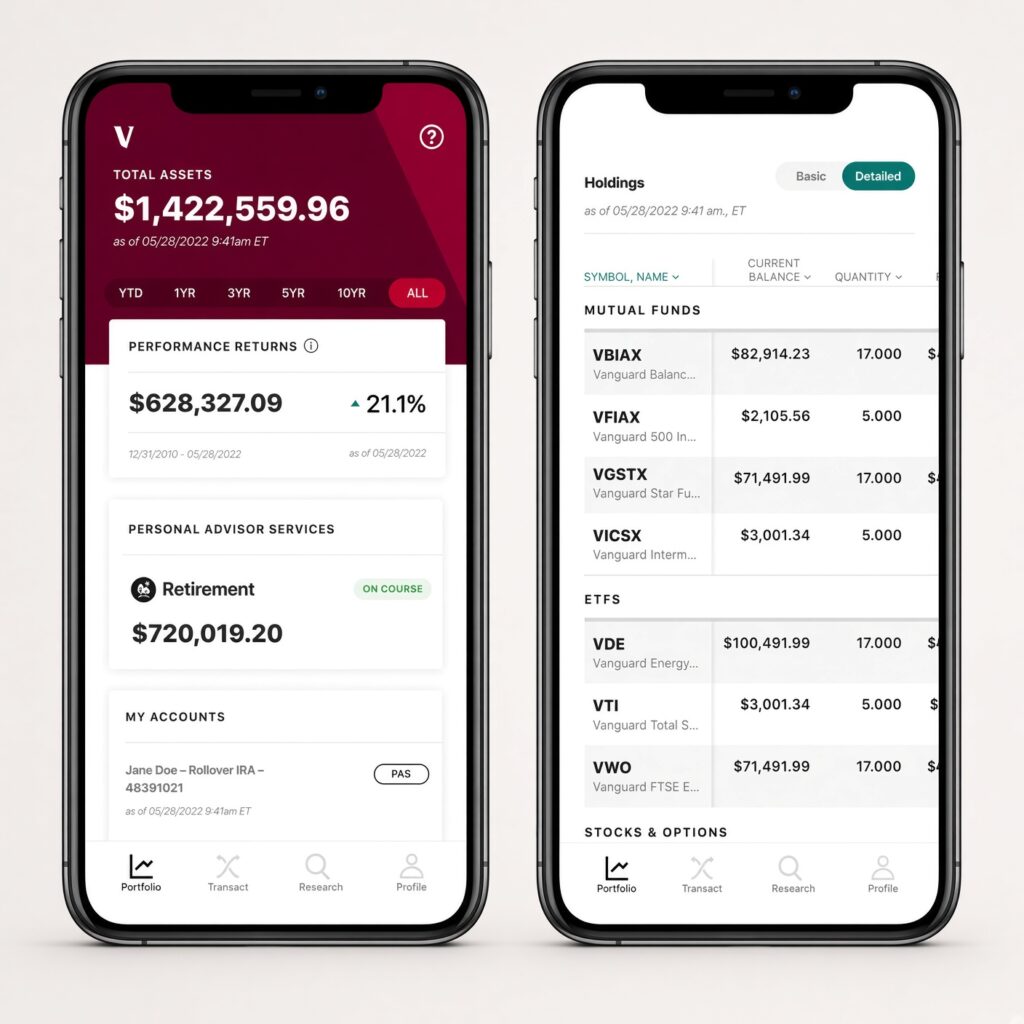
image for illustrative purposes only.
Navigating the world of personal finance and wealth-building requires a reliable vehicle, and few names carry as much weight in the financial landscape as Vanguard. Known globally for managing trillions of dollars in assets, the firm operates as a titan in passive and long-term investing. But for those looking to open an account or transfer assets, understanding the mechanics of its infrastructure is crucial. This comprehensive guide explores how the platform functions, what tools are available to everyday account holders, and how you can optimize your financial strategy using its services.
The Unique Ownership Structure and Philosophy
To understand how the platform works, one must first look at its foundational architecture. Unlike traditional publicly traded brokerage firms that answer primarily to external shareholders or private corporate owners, Vanguard operates under a distinct client-owned model.
In this structure, the funds themselves own the company, and the investors who buy those funds own the funds. This circular ownership alignment creates an environment where corporate profits are funneled back into lowering operational costs rather than padding external investor pockets. This philosophy directly impacts the expense ratios passed down to retail participants, resulting in industry-low fees that preserve portfolio growth over decades.
Account Types and Setup Options
Before executing trades or allocating capital, users must choose the appropriate container for their money. The platform accommodates a wide variety of taxable and tax-advantaged structures tailored to different stages of life and financial milestones:
-
Standard Brokerage Accounts: Flexible, taxable accounts with no restrictions on withdrawals, ideal for general wealth accumulation outside of retirement.
-
Retirement Accounts: Traditional and Roth IRAs designed to maximize tax efficiencies for golden years planning.
-
Education Savings: Dedicated 529 plans and custodial accounts (UGMA/UTMA) engineered to help save for children’s educational expenses.
-
Small Business Solutions: Specialized plans including SEP-IRAs, SIMPLE IRAs, and individual 401(k) options for entrepreneurs and freelancers.
Opening an account involves a straightforward digital onboarding sequence. Users provide standard verification details, link an external bank account via Automated Clearing House (ACH) transfers, and fund their portfolios with zero initial deposit minimums for standard brokerage setups.
Exploring the Core Investment Marketplace
Once funded, the dashboard acts as a gateway to a vast array of asset classes. While famous for pioneering index funds, the platform functions as a full-service brokerage supporting multiple investment vehicles:
-
Exchange-Traded Funds (ETFs): Market-traded funds that track broad indexes, sectors, or commodities, offering intraday liquidity with low management costs.
-
Mutual Funds: Professionally managed or index-based pools of securities priced once per market close.
-
Individual Equities: Direct access to buying and selling individual stocks listed on major domestic exchanges with zero commission fees.
-
Fixed Income Products: Extensive inventories of Treasury bonds, municipal bonds, corporate debt, and Certificates of Deposit (CDs).
-
Money Market Instruments: Cash-equivalent funds utilized for parking uninvested capital while earning prevailing short-term yields.
Order Execution and Trading Interface Mechanics
The platform interface is purposefully built to support a “buy-and-hold” strategy rather than fast-paced, speculative day trading. When executing a trade, users encounter standard order types designed for straightforward execution:
-
Market Orders: Executes transactions immediately at the current best available market price.
-
Limit Orders: Specifies a precise ceiling or floor price, ensuring shares are only bought or sold if the market reaches that exact threshold.
-
Automatic Investment Plans: A cornerstone feature allowing participants to schedule recurring, automated transfers from a bank account directly into specific funds on a weekly, bi-weekly, or monthly basis.
Fractional share trading is also supported for proprietary funds and select equities, allowing individuals to put every single dollar to work without needing to afford a full share price.
Advisory Services and Automated Wealth Management
For those who prefer a hands-off approach or desire professional guidance without paying traditional steep wealth-management fees, the ecosystem provides tiered advisory solutions:
-
Digital Robo-Advisory: An automated, algorithm-driven service that assesses risk tolerance through a questionnaire and builds a diversified, low-cost portfolio of ETFs. It automatically rebalances holdings as market conditions shift.
-
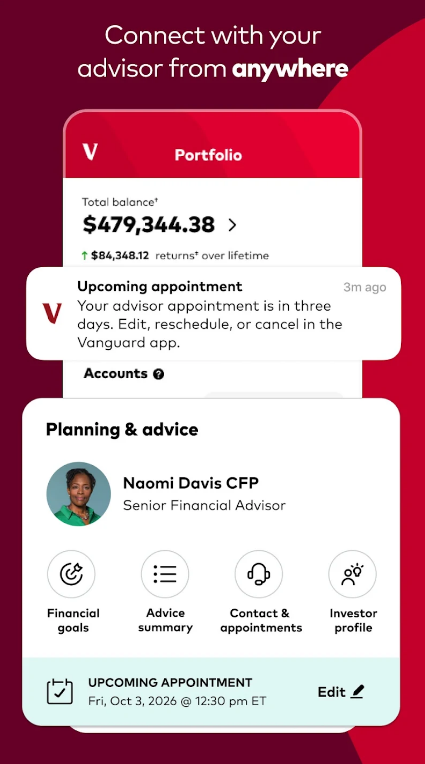
Personal Hybrid Advisory: Combines automated portfolio management with scheduled access to human financial professionals. This tier helps clients navigate complex milestones such as tax planning, retirement drawdown strategies, and estate planning considerations.
Corporate Governance and Shareholder Voting Rights
An evolving feature of modern account administration is the direct inclusion of individual voices in corporate governance. Through specialized proxy-voting programs, eligible participants holding equity index funds can dictate how their proportionate share of corporate stock votes on key public company resolutions—ranging from environmental policies to executive compensation packages. This shifts traditional passive investing into a more interactive ownership experience, giving everyday account holders a direct say in major corporate decisions.
Managing Costs, Fees, and Value Retention
The overarching mechanism that drives long-term success on the platform is its minimization of friction costs. Expense ratios—the annual fee charged by funds to cover operating expenses—hover dramatically below industry norms. By keeping administrative overhead minimal, investors retain a significantly higher percentage of their compound returns over 10-, 20-, and 30-year horizons.
While account maintenance fees are generally nonexistent for electronic statement users, keeping transaction habits aligned with long-term goals ensures that wealth compounds efficiently without being eroded by hidden charges.
Evaluating User Experience and Platform Suitability

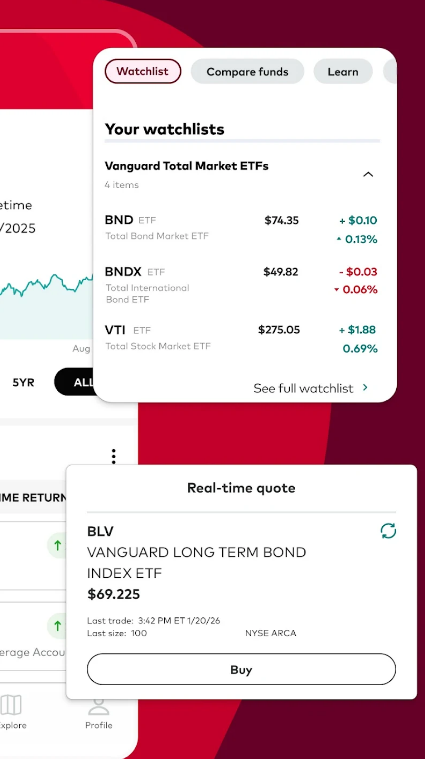
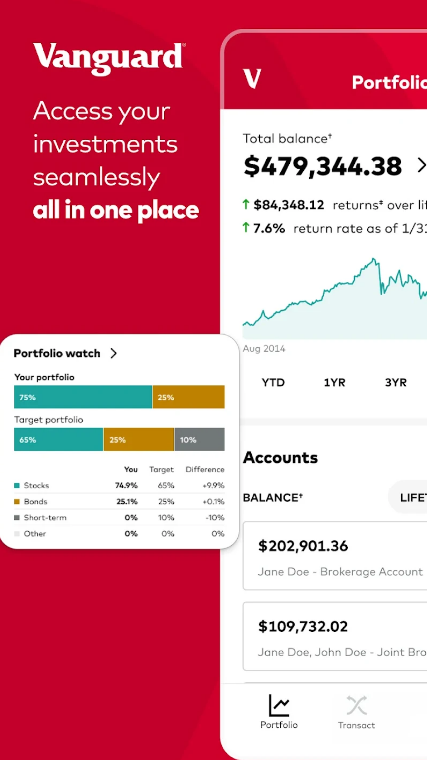
The digital dashboard provides clean overviews of total net worth, asset allocation breakdowns, performance history charts, and consolidated external account tracking. Users can monitor external assets alongside their primary holdings to maintain a holistic view of their financial health.
Ultimately, the ecosystem is finely tuned for long-term accumulators, retirement planners, and buy-and-hold enthusiasts who prioritize cost-efficiency and steady asset allocation over lightning-fast day trading execution. By mastering its core features, automation tools, and diverse asset offerings, investors can build resilient, low-cost portfolios designed to weather market cycles and achieve sustainable financial independence.