Hot wallet or cold wallet: which is more secure?
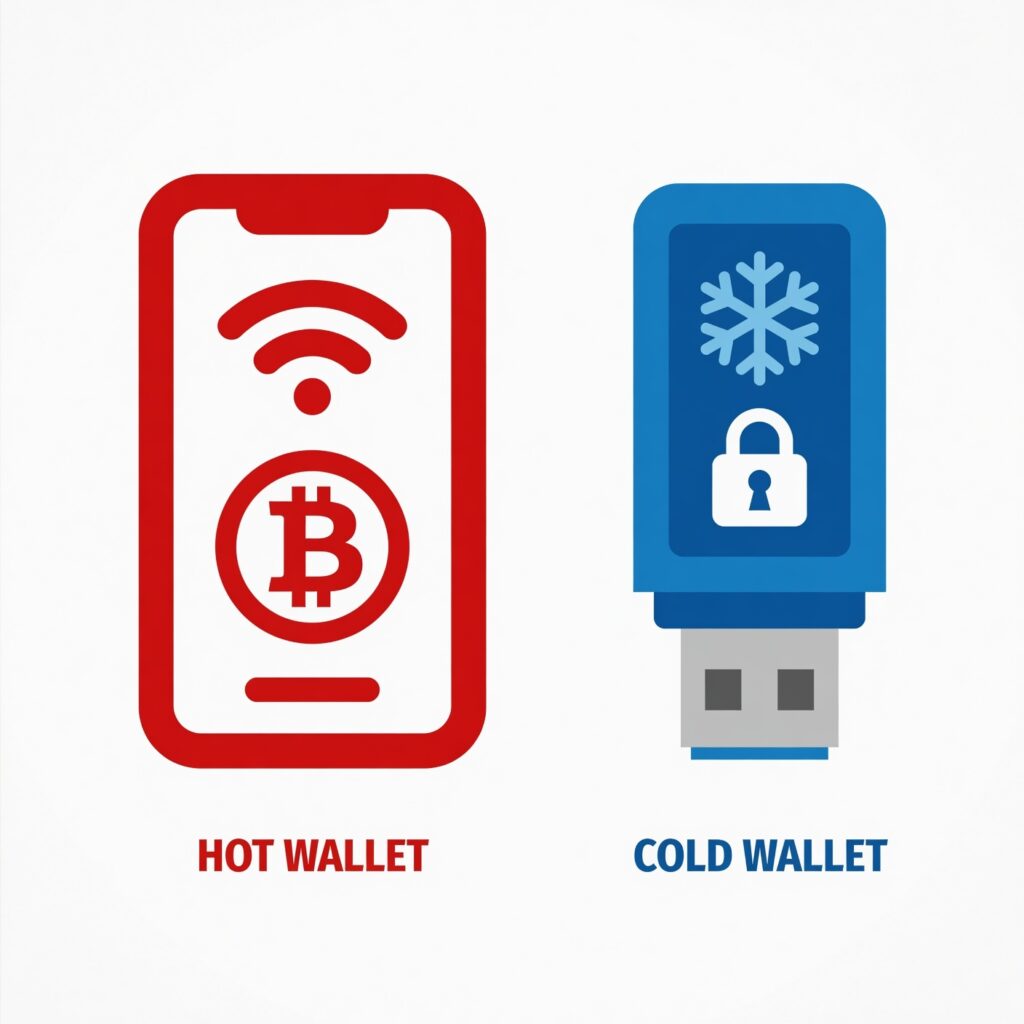
image for illustrative purposes only.
Navigating the landscape of digital assets requires a deep understanding of self-custody principles. When you step into the world of blockchain holdings, you become your own financial institution. This newfound independence shifts the responsibility of asset protection entirely onto your shoulders. The foundation of this protection lies in how you manage your private keys—the cryptographic signatures that grant access to your funds on the distributed ledger. Choosing the right storage mechanism is arguably the most critical decision a participant can make.
The debate between online and offline key management has persisted since the inception of decentralized currencies. On one side, users look for seamless accessibility and rapid interaction with decentralized applications. On the other side, capital preservation demands uncompromising defense mechanisms against remote exploits. Understanding the mechanics, vulnerabilities, and ideal use cases for each methodology helps build a resilient portfolio defense strategy.
Understanding the Fundamentals of Digital Asset Storage
To evaluate security effectively, one must first clarify what a digital storage tool actually accomplishes. Wallets do not physically contain coins or tokens; those assets permanently reside on their respective blockchains. Instead, these applications and devices generate, manage, and safeguard private keys. Whoever controls these keys controls the associated value.
The industry broadly divides these tools into two primary categories based on their relationship with the internet: applications that remain continuously connected to web networks and physical hardware devices that isolate keys away from digital connectivity. Each architecture serves a distinct purpose, balancing user friction against threat exposure.
What Is a Hot Wallet and How Does It Function?

A hot wallet is any key management interface that maintains an active connection to the internet. This category encompasses browser extensions, mobile applications installed on smartphones, and desktop software clients. Because these applications communicate continuously with web environments, they facilitate rapid deployment of capital.
The primary utility of an internet-connected application lies in its agility. Users can execute token swaps, interact with decentralized finance protocols, and transfer value across borders within seconds. The software handles the generation of transactions and broadcasts them directly to the network. However, this convenience introduces inherent structural vulnerabilities. Because the private keys reside within an environment exposed to web traffic, any compromise of the host device—such as malicious malware, compromised browser extensions, or deceptive phishing interfaces—can expose the keys to unauthorized external actors.
What Is a Cold Wallet and Why Is It Considered an Offline Fortress?

A cold wallet refers to storage mechanisms designed to keep private keys entirely isolated from internet connectivity. The most prevalent manifestation of this architecture is a dedicated hardware device—a specialized physical unit equipped with a secure element chip.
When utilizing an offline physical device, the private keys never leave the hardware boundary. When a transfer or interaction is required, the transaction details are transmitted to the device in an unsigned format. The user physically inspects the parameters on the hardware screen and approves the action using onboard buttons. The device signs the data internally and exports only the completed signature back to the online interface. This procedural isolation neutralizes remote attack vectors, meaning that even if the companion computer or smartphone is heavily infected with sophisticated malware, malicious actors cannot remotely extract the private keys.
Direct Security Comparison: Attack Vectors and Vulnerabilities
Evaluating the defensive posture of these storage classes requires analyzing how they handle specific threat models.
-
Remote Exploits and Malware: Internet-connected environments face constant scanning from automated scripts and sophisticated cyber threats. Key loggers, clipboard hijacking software, and malicious application updates target software environments continuously. Offline hardware largely renders these automated remote attacks obsolete because the signing mechanism lacks a digital pipeline for data exfiltration.
-
Phishing and Social Engineering: Human error remains the weakest link in digital asset protection. Deceptive websites designed to mimic legitimate applications frequently trick users into approving malicious smart contract permissions. While hardware devices protect the core keys from direct theft, users can still fall victim to signing fraudulent transactions if they fail to meticulously verify on-screen transaction data.
-
Physical Compromise: While offline devices protect against digital intruders, they introduce physical risk factors. If a physical device is stolen, advanced laboratory attacks can theoretically compromise weak hardware chips, though PIN codes and passphrase encryptions add layers of resistance. Conversely, if a smartphone running a software application is stolen without proper biometric or passcode locks, the exposure is immediate.
Practical Implementation: Balancing Speed and Maximum Protection

Achieving optimal asset defense rarely involves adopting a singular approach. Experienced participants frequently employ a hybrid strategy that leverages the strengths of both paradigms.
Under this model, the vast majority of long-term holdings reside within offline hardware storage, shielded entirely from web-based threats. Meanwhile, a carefully managed software application holds a minimal allocation of capital dedicated to active trading, minor transactional needs, or participation in decentralized applications. This compartmentalization ensures that an operational mistake or minor security breach on an active day-to-day application compromises only a negligible fraction of one’s total net worth.
Essential Best Practices for Self-Custody Defense
Regardless of which storage architecture you choose, implementing rigorous operational habits is mandatory to safeguard your capital.
-
Secure the Recovery Phrase: Every self-custody setup generates a master backup sequence—typically a series of twelve to twenty-four words. This sequence represents the ultimate backup of your keys. It must be recorded physically on durable material and stored away from environmental hazards. Never photograph this phrase, store it in cloud notes, or type it into digital communication channels.
-
Verify Every Transaction Parameter: Always cross-reference destination addresses and transaction values on trusted display screens before granting final authorization.
-
Maintain Firmware Integrity: For physical hardware devices, ensure that updates are sourced exclusively from official manufacturing channels to patch operational vulnerabilities over time.
Ultimately, the choice between online accessibility and offline isolation boils down to your specific behavioral patterns and capital allocation goals. Prioritizing robust isolation for long-term accumulation while utilizing agile tools strictly for active participation creates a balanced, professional-grade defense system for the modern digital economy.