How to diversify investments in digital assets
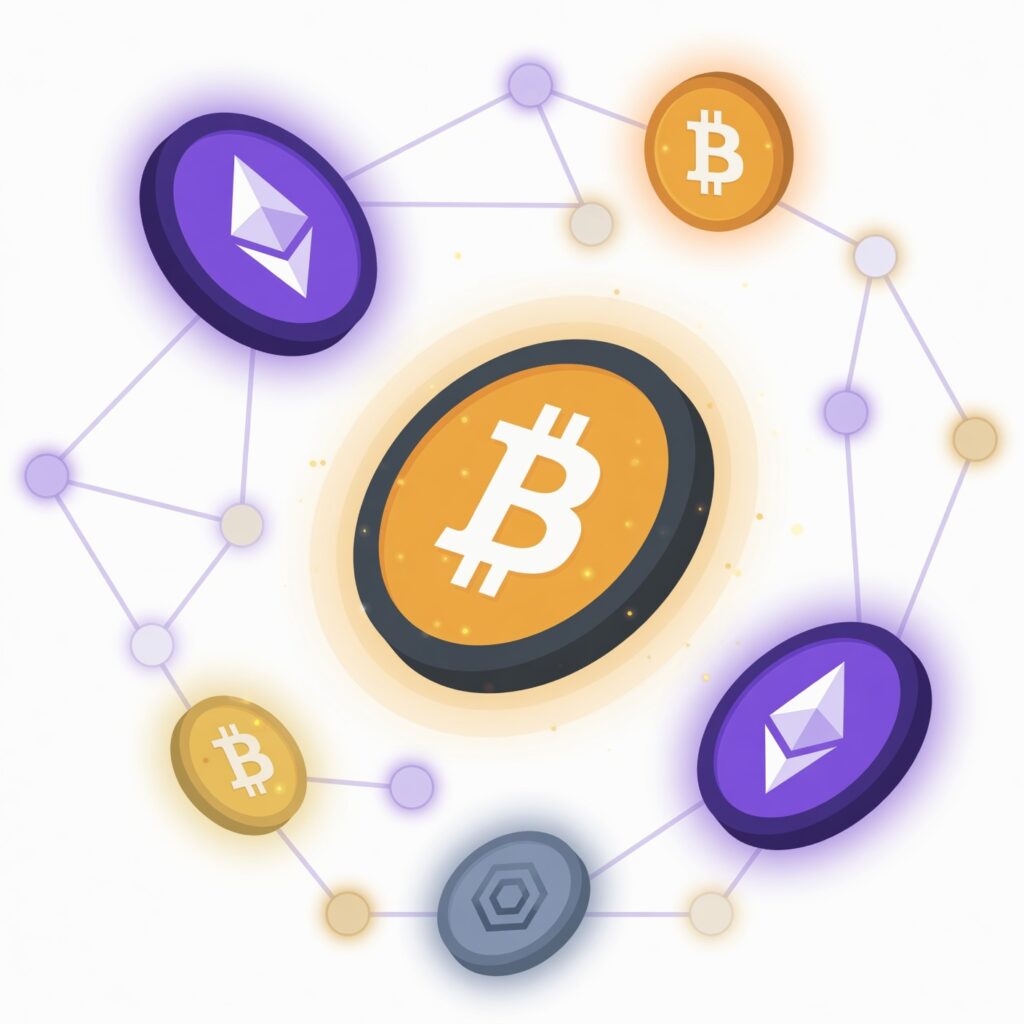
image for illustrative purposes only.
The landscape of financial markets has undergone a radical transformation over the past decade. Traditional portfolios composed solely of equities and fixed-income assets no longer offer the robust hedging capabilities required to navigate modern economic shifts. Digital assets have emerged as a permanent asset class, capturing the attention of institutional investors, hedge funds, and sophisticated retail participants worldwide.
However, the high volatility characteristic of the cryptocurrency and digital token ecosystem means that a naive approach—such as purchasing a single high-cap token—exposes an investor to catastrophic downside risk. True capital preservation and asymmetric upside generation require a rigorous, multi-layered approach to portfolio diversification.
Diversifying within the digital asset economy goes far beyond merely holding ten different speculative altcoins. It involves understanding underlying blockchain architectures, risk-adjusted yield generation, decentralized finance (DeFi) primitives, tokenomics, and structural macro correlations. This comprehensive guide explores institutional-grade methodologies to structure, rebalance, and safeguard a high-performing digital asset portfolio.
Understanding the Core Anatomy of the Digital Asset Ecosystem

To effectively diversify, an investor must first map out the vast taxonomy of the digital asset landscape. Treating all cryptocurrencies as a monolith is a primary pitfall for beginners. The ecosystem is segmented into distinct sectors, each carrying unique risk-reward profiles, macroeconomic sensitivities, and utility frameworks.
1. Layer-1 Base Protocols
These are the foundational blockchain networks that secure consensus, settle transactions, and host decentralized applications. Examples include established networks like Ethereum and Solana, alongside alternative high-throughput chains.
-
Risk Profile: Moderate to High.
-
Role in Portfolio: Acts as the equity equivalent or foundational blue-chip layer of the digital economy.
2. Layer-2 Scaling Solutions and Interoperability Networks
Built on top of base layers, these protocols enhance transaction throughput and reduce gas fees. Interoperability protocols allow seamless communication across disparate blockchains.
-
Risk Profile: High.
-
Role in Portfolio: Growth and beta play, capturing adoption velocity of scalable infrastructure.
3. Decentralized Finance (DeFi) Primitives
DeFi encompasses lending markets, automated market makers (AMMs), synthetic asset platforms, and derivative exchanges operating via smart contracts without intermediaries.
-
Risk Profile: High to Very High (incorporating smart contract risk).
-
Role in Portfolio: Yield generation, liquidity provision, and alternative income streams.
4. Real-World Asset (RWA) Tokenization
The tokenization of traditional financial instruments, such as US Treasury bills, real estate equity, private credit, and commodities on public or permissioned ledgers.
-
Risk Profile: Low to Moderate relative to native crypto assets.
-
Role in Portfolio: Stability anchor, bridging traditional macroeconomic yields with blockchain efficiency.
5. Utility, Governance, and Ecosystem Tokens
Tokens powering specific applications, decentralized autonomous organizations (DAOs), or niche web3 services.
-
Risk Profile: Extremely High.
-
Role in Portfolio: Speculative alpha generation with strict position sizing limits.
Core Frameworks for Portfolio Allocation
Constructing a diversified digital asset portfolio requires disciplined mathematical modeling rather than emotional allocation. Below are three distinct asset allocation models designed for different risk appetites.
The Core-Satellite Strategy
The Core-Satellite approach divides your capital into two distinct pools:
-
The Core (60% to 70% of portfolio): Allocated to dominant base-layer assets and tokenized real-world assets. This section prioritizes long-term survival, liquidity, and stability against market downturns.
-
The Satellites (30% to 40% of portfolio): Allocated to high-growth sectors, including specialized DeFi protocols, emerging Layer-2 networks, and specialized utility tokens. These positions are actively managed to capture outsized market movements.
Risk-Weighted Capital Allocation Matrix
| Asset Category | Conservative Allocation | Moderate Allocation | Aggressive Allocation |
| Base Layer Protocols | 70% | 50% | 30% |
| Real-World Asset (RWA) Tokens | 20% | 15% | 5% |
| Layer-2 & Scaling Solutions | 5% | 15% | 25% |
| DeFi & Yield Primitives | 3% | 15% | 20% |
| Experimental/Speculative Altcoins | 2% | 5% | 20% |
Advanced Diversification Techniques Beyond Simple Token Selection
Diversification is not just about what you buy, but how you hold, deploy, and manage those assets across different dimensions of the financial ecosystem.
Geographical and Custodial Diversification
Single-platform risk is one of the most overlooked hazards in digital asset investing. Storing an entire portfolio on a single centralized exchange or interacting exclusively with one hardware wallet brand introduces systemic points of failure.
-
Multi-Custody Approach: Split holdings across multiple institutional-grade custodians, self-custodial hardware devices, and secure multi-signature (multisig) vaults.
-
Jurisdictional Separation: Utilize platforms operating under different regulatory frameworks to protect against localized regulatory sudden changes or banking interruptions.
Temporal Diversification (Advanced Dollar-Cost Averaging)
Deploying lump-sum capital into a volatile asset class can introduce severe psychological stress and timing risk. Advanced temporal diversification involves algorithmic dollar-cost averaging (DCA) combined with volatility-triggered scaling rules.
-
Dynamic Scaling: Instead of purchasing fixed amounts on fixed dates, configure automated systems to increase purchase velocity during periods of extreme market fear and compress allocation during euphoric market peaks.
Correlation-Based Asset Selection
Many retail investors believe they are diversified because they hold twenty different altcoins. However, during market corrections, the correlation coefficient of most altcoins approaches 1.0 against the leading digital asset.
-
To achieve true non-correlation, look for assets whose fundamental value drivers are independent of broad market sentiment. For instance, protocols generating sustainable fee revenues through real economic activity often decouple from pure speculative trends during bear cycles.
Yield Generation and Risk Mitigation within Diversified Portfolios

Holding idle assets in a digital wallet leaves potential efficiency gains on the table, but chasing unsustainable yields exposes capital to catastrophic protocol collapse. A sophisticated diversification strategy incorporates robust risk-adjusted yield farming frameworks.
Understanding the Risk Spectrum of Yield
-
Staking Rewards: Participating directly in proof-of-stake consensus mechanisms by validating network transactions. This is considered the baseline organic yield of the digital economy.
-
Liquidity Provision (LP): Providing trading pairs to decentralized exchanges. Investors must account for impermanent loss, a phenomenon where the divergence in price between pooled assets results in less value than simply holding them separately.
-
Overcollateralized Lending: Supplying assets to secure borrowing markets. The primary risk here is smart contract vulnerabilities and oracle manipulation attacks.
To protect the portfolio, cap your total yield-generating exposure to a safe threshold (e.g., no more than 25% of your total net asset value), ensuring that the vast majority of core capital remains safely in cold storage or liquid base layers.
Managing Market Cycles and Systematic Rebalancing
A diversified portfolio is not a static construct; it is a living financial engine that drifts away from its target risk parameters as market prices fluctuate wildly. Without systematic rebalancing, a conservative portfolio can inadvertently transform into a high-risk speculative vehicle during a powerful bull market.
Calendar-Based vs. Threshold-Based Rebalancing
-
Calendar Rebalancing: Reviewing and adjusting portfolio weights at fixed intervals (e.g., quarterly or bi-annually). This method is emotionally detached and easy to automate.
-
Threshold Rebalancing: Triggering a portfolio rebalance whenever an asset class deviates by a specific percentage (e.g., 5% or 10%) from its target allocation. For instance, if your Layer-1 allocation surges from 50% to 65% of your total portfolio value due to rapid price appreciation, you systematically trim profits and reallocate them into undervalued defensive sectors like RWAs or stablecoin reserves.
Psychological Disciplines and Risk Management Guardrails
Even the most mathematically sound diversification strategy will fail if executed with poor emotional discipline. Digital asset markets operate 24 hours a day, 365 days a year, fueling rapid cycles of euphoria and despair.
Establishing Hard Rules
-
Position Sizing Limits: Never allocate more capital to a single speculative asset than you are fully prepared to lose entirely.
-
Thesis-Driven Investing: Write down the explicit fundamental thesis for every asset added to your portfolio. If the fundamental thesis breaks, exit the position regardless of paper losses or gains.
-
Liquidity Buffers: Always maintain a healthy reserve of stable assets or fiat liquidity. Forced liquidation during market troughs to cover personal financial emergencies destroys long-term compounding potential.

Diversifying a digital asset portfolio is a continuous, disciplined exercise in risk management, structural analysis, and strategic execution. By moving beyond simple token selection and embracing a comprehensive framework that includes core-satellite allocations, real-world asset integration, custodial diversification, and systematic rebalancing, investors can effectively tame the inherent volatility of the crypto market.
Building a resilient financial future in the digital economy requires patience, rigorous research, and an unwavering commitment to protecting capital through all phases of the macroeconomic cycle. Implement these strategies methodically, maintain strict psychological discipline, and position your portfolio for sustainable, long-term growth.