How Does Chainlink Provide Data to Blockchain Smart Contracts?
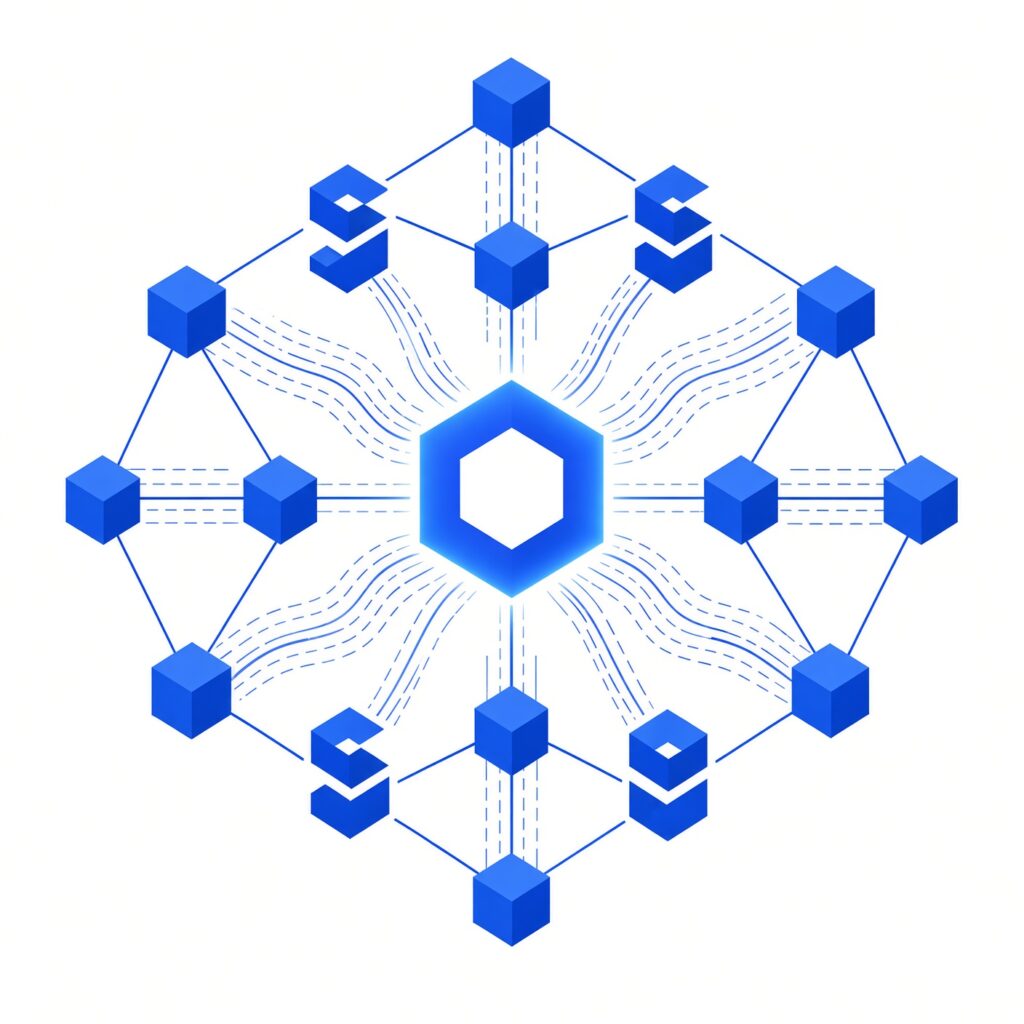
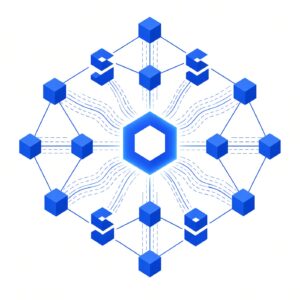
image for illustrative purposes only.
Smart contracts have revolutionized the world of decentralized applications (dApps), offering immutable, trustless execution of code on blockchains like Ethereum, Polygon, and Avalanche. However, this revolutionary technology has one fundamental limitation: blockchains are deterministic systems by design. They operate in a closed environment and cannot natively access real-time external data, such as the current price of Bitcoin, weather conditions, sports scores, or traditional financial feeds.
This isolation is known as the “oracle problem.” Without external data, smart contracts are severely limited in their real-world utility. Enter Chainlink, the industry-standard decentralized oracle network designed to bridge this crucial gap. By securely connecting blockchains to off-chain data sources and APIs, Chainlink enables smart contracts to execute based on real-world events. Understanding how this infrastructure operates is essential for developers, investors, and enthusiasts looking to grasp the backbone of modern decentralized finance (DeFi) and Web3.
Understanding the Blockchain Oracle Problem: Why Smart Contracts Need External Data
To appreciate Chainlink’s architecture, it is first necessary to understand why blockchains cannot simply fetch data from the internet on their own. Blockchains rely on a distributed network of nodes that must reach consensus on the state of the ledger. Every transaction must be independently verified by every node running the network.
If a smart contract were programmed to query a standard web API directly—such as
api.weather.com—consensus would break down. Web APIs are centralized, mutable, and prone to downtime or malicious alteration. If Node A queries the API and gets one result, while Node B queries it a second later and gets a slightly different result due to a fluctuating variable, the network cannot achieve consensus. This creates a single point of failure and violates the core tenet of trustlessness.To maintain security, smart contracts require data that is delivered in a way that preserves decentralization, verifiability, and tamper-resistance. This is where decentralized oracle networks step in, acting as a secure middleware layer between the blockchain and the outside world.
What Is Chainlink and How Does the Decentralized Oracle Network Operate?
Chainlink is a decentralized oracle network (DON) that provides inputs and outputs to smart contracts on any blockchain. Rather than relying on a single centralized server to fetch and deliver data—which would reintroduce the vulnerabilities of traditional systems—Chainlink utilizes a decentralized architecture composed of independent, highly reliable node operators.
When a smart contract requires external data, it initiates a request that is picked up by the Chainlink network. Multiple independent nodes independently fetch the requested data from various off-chain sources. These individual responses are then aggregated, filtered for anomalies, and processed through a consensus mechanism before a single, validated data point is delivered back on-chain to the smart contract.
This multi-node aggregation model eliminates single points of failure, mitigates the risk of downtime, and protects against data manipulation or man-in-the-middle attacks.
The Core Architecture of Chainlink: On-Chain and Off-Chain Components
Chainlink’s system design is divided into two primary environments: on-chain architecture and off-chain infrastructure. Together, they form a seamless pipeline for data ingestion and verification.
The On-Chain Components
The on-chain components consist of smart contracts deployed on the target blockchain. These include:
-
Reading and Writing Contracts: The client smart contract that needs the data, and the Chainlink core contract (often called the
Oraclecontract) that receives requests and logs events. -
Reputation Contracts: Contracts that track node performance metrics, such as uptime, successful response rates, and historical accuracy, allowing requesters to filter for high-quality nodes.
-
Aggregating Contracts: Specialized contracts that collect data from multiple independent nodes and compute a final aggregated value (such as a median) before passing it to the consuming application.
The Off-Chain Components
The off-chain components consist of the Chainlink node infrastructure itself:
-
Core Software: The software running on independent servers that listens to the blockchain for events, parses requests, and coordinates data retrieval.
-
External Adapters: Modular plugins that allow nodes to connect to specialized APIs, perform complex computations, or interact with proprietary databases.
-
Cryptographic Verification: Mechanisms ensuring that data cannot be altered while in transit between the off-chain source and the on-chain destination.
Step-by-Step Breakdown: How Data Flows From the Real World to a Blockchain
To visualize how Chainlink operationalizes data delivery, consider a decentralized lending platform that needs to check the collateral value of a user’s digital assets in real-time. The lifecycle of a data request follows a structured, multi-step process:
-
Request Initiation: A user interacts with a decentralized application (dApp), triggering a smart contract function that requires external data. The smart contract emits an event log containing the parameters of the data request (e.g., “What is the current ETH/USD price?”).
-
Event Detection: Chainlink core nodes monitor the blockchain for these specific event logs. Once a node detects the request, it registers the parameters and prepares to fulfill it.
-
Off-Chain Data Retrieval: The Chainlink node uses its external adapters to query multiple independent data providers, APIs, or web sources. By fetching data from diverse sources, the network avoids relying on a single compromised feed.
-
Data Processing and Signing: Once the node retrieves the raw data, it processes, formats, and cryptographically signs the response using its private key, establishing accountability and provenance.
-
Aggregation on the Blockchain: The responses from all participating nodes in the oracle network are submitted back to an aggregating smart contract on-chain. This contract computes a weighted median or average, discarding outliers or malicious submissions.
-
Smart Contract Execution: The final validated data value is written directly to the requesting smart contract’s storage. The contract can now use this data to execute its pre-programmed logic, such as liquidating an undercollateralized loan or executing a derivatives trade.
Chainlink Price Feeds: Securing Decentralized Finance (DeFi)

The most prominent and widely adopted use case for Chainlink is its Price Feeds. Decentralized finance protocols—including lending markets, synthetic asset platforms, stablecoins, and decentralized exchanges—rely entirely on accurate, tamper-proof pricing data to function safely.
Chainlink Price Feeds aggregate data from numerous premium data aggregators and high-volume exchanges. This ensures that the price data representing assets like Bitcoin, Ethereum, and thousands of other tokens reflects true global market depth rather than the localized volatility of a single exchange.
Furthermore, Chainlink Price Feeds utilize automated updating mechanisms triggered by heartbeat intervals (time-based updates) and deviation thresholds (percentage-based updates). If an asset’s price moves by more than a pre-set percentage within a short timeframe, the oracle network immediately updates the on-chain price, protecting protocols from sudden market crashes or flash loan attacks.
Advanced Security Measures: Ensuring Trust in Decentralized Oracles
Security is paramount when billions of dollars in value depend on oracle data. Chainlink implements a multi-layered defense strategy to safeguard its network against attacks, manipulation, and downtime.
Decentralization of Data Providers
Instead of trusting a single API provider, Chainlink sources data from dozens of independent, professional data providers. Even if one API experiences an outage or attempts to provide fraudulent data, the aggregation layer neutralizes the impact by relying on the consensus of the majority.
Decentralization of Node Operators
The nodes executing the data requests are operated by independent, highly reputable entities, including enterprise telecom companies, security firms, and prominent blockchain infrastructure providers. This geographic and operational diversity prevents collusion and censorship.
Cryptographic Proofs and Verifiable Randomness
Beyond standard data feeds, Chainlink provides tools like Chainlink VRF (Verifiably Random Function), which generates cryptographically secure randomness for use cases like gaming, NFT minting, and fair lotteries. Every random number generated is accompanied by a cryptographic proof verifying that the process was unbiased and tamper-proof.
Economic Security and Staking
Chainlink’s cryptoeconomic security model incentivizes honest behavior through staking mechanisms. Node operators stake LINK tokens as collateral. If a node operator acts maliciously, provides inaccurate data consistently, or experiences extended downtime, a portion of their staked tokens can be slashed, providing a strong financial deterrent against bad behavior.
Expanding Horizons: Cross-Chain Communication and Real-World Asset Tokenization
As the blockchain ecosystem matures, Chainlink’s role has expanded far beyond basic price feeds. The introduction of infrastructure like the Cross-Chain Interoperability Protocol (CCIP) allows smart contracts to communicate securely across entirely different blockchain networks. CCIP enables seamless token transfers, cross-chain messaging, and unified liquidity management, solving the fragmentation issue plaguing multi-chain environments.
Simultaneously, traditional financial institutions are leveraging Chainlink to bridge legacy banking systems with public and private blockchains. By utilizing Chainlink’s data and interoperability standards, banks can tokenize Real-World Assets (RWAs)—such as real estate, government bonds, and corporate debt—bringing institutional finance into the decentralized Web3 economy. This integration represents the next major evolutionary step for global financial markets, positioning secure oracle infrastructure at the very center of modern financial architecture.
The evolution of decentralized applications is inextricably linked to the reliability of the data that feeds them. Without secure communication bridges to the outside world, smart contracts would remain isolated code snippets with limited practical application. Chainlink successfully solves the blockchain oracle problem through a robust decentralized architecture, multi-source data aggregation, rigorous cryptographic verification, and advanced economic security. By seamlessly connecting off-chain reality with on-chain execution, Chainlink provides the essential infrastructure required to scale Web3, secure billions of dollars in decentralized finance, and power the future of global asset tokenization.