How Does the Federal Reserve Influence the Economy?
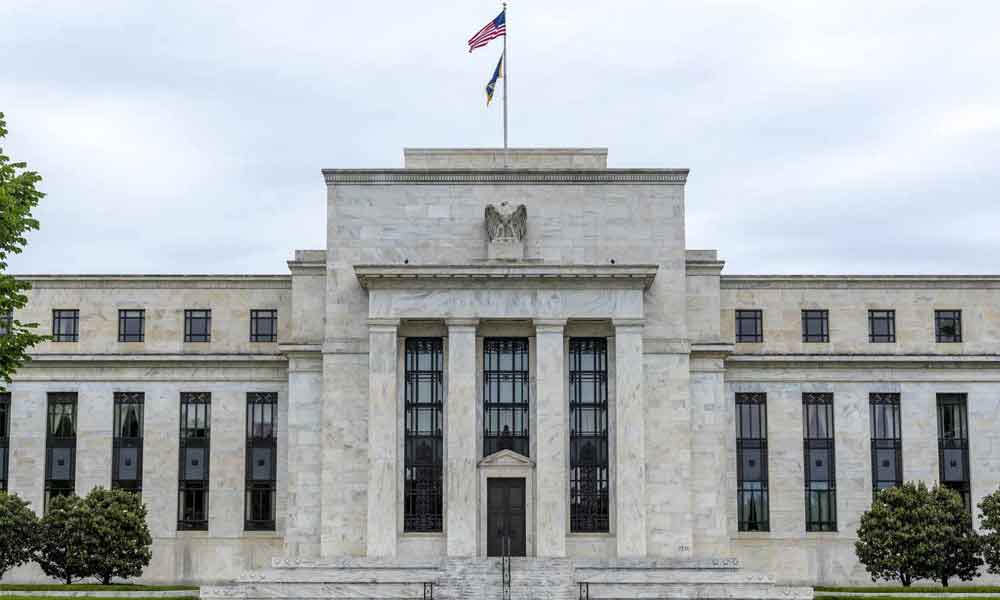
Federal Reserve
The modern financial ecosystem is vast, dynamic, and deeply interconnected, yet its heartbeat is regulated by a single institution: the Federal Reserve. Often referred to simply as the Fed, this central bank serves as the architect of monetary policy, steering the world’s largest economy through cycles of expansion, contraction, turbulence, and growth.
Understanding how the Federal Reserve influences the economy requires looking beneath the surface of daily market headlines. From the interest rates on residential mortgages and car loans to corporate hiring decisions and the global valuation of the U.S. dollar, the Fed’s policy choices ripple across every facet of financial life.
The Dual Mandate: Understanding the Core Objectives of Central Banking
At the legislative foundation of the Federal Reserve’s existence lies the congressional mandate known as the dual mandate. Congress charged the central bank with two primary responsibilities: promoting maximum employment and maintaining stable prices. These twin objectives guide every decision made by the Federal Open Market Committee (FOMC), the policy-making arm of the institution.
Maximum employment does not mean zero unemployment. Instead, it represents the highest level of sustainable employment that an economy can support without triggering destabilizing imbalances. Stable prices, on the other hand, refer to a low and predictable rate of inflation—typically targeted at an average of 2 percent over the long run.
Balancing these two goals is an ongoing exercise in economic calibration. When employment surges, consumer spending increases, which can sometimes push inflation upward. Conversely, cooling a runaway inflation rate often requires dampening economic activity, which can temporarily place pressure on the labor market. The Fed navigates these competing forces by adjusting its monetary policy stance to keep the macroeconomic environment on an even keel.
The Federal Funds Rate: The Primary Lever of Monetary Policy
The most powerful tool in the Federal Reserve’s arsenal is its ability to manipulate short-term borrowing costs, anchored by the federal funds rate. This is the interest rate commercial institutions charge one another for overnight loans of reserve balances. While it sounds like an obscure interbank mechanism, changes to this benchmark rate trigger a domino effect that impacts virtually all consumer and corporate debt.
When the FOMC decides to lower the federal funds rate, it is signaling an easing of monetary policy. Commercial banks experience lower costs of capital, passing those savings on to consumers and businesses through cheaper credit card APRs, auto loans, lines of credit, and mortgages. Lower borrowing costs encourage households to make major purchases and enable businesses to invest in capital equipment, expand facilities, and hire personnel.
Conversely, when the economy exhibits signs of overheating or inflation climbs well above the target threshold, the Fed raises the federal funds rate. Higher borrowing costs cool down demand by encouraging saving over spending, softening the housing market, and prompting businesses to exercise greater discipline in capital allocation. This deliberate friction helps stabilize price pressures and prevent economic bubbles from forming.
Transmission Mechanisms: How Policy Decisions Ripple Through Financial Markets
Monetary policy decisions do not affect the economy overnight; they operate through a series of transmission channels that gradually alter financial conditions. When the central bank adjusts its policy rate, the impact travels along the yield curve, influencing intermediate and long-term interest rates that govern corporate bonds, municipal debt, and fixed-rate mortgages.
Asset prices respond dynamically to these shifts. Fixed-income markets adjust inversely: as benchmark interest rates climb, the market value of existing, lower-yielding bonds declines, while newly issued debt becomes more attractive to yield-seeking investors. Equity markets also react, as higher discount rates can compress corporate valuations, whereas low-rate environments often support corporate earnings and stock market expansions.
Furthermore, foreign exchange markets are highly sensitive to U.S. monetary policy. Higher domestic interest rates tend to attract international capital inflows because investors seek out superior returns denominated in U.S. assets. This dynamic frequently strengthens the U.S. dollar relative to foreign currencies, altering the landscape for international trade, import costs, and export competitiveness.
Balance Sheet Operations and Quantitative Management
Beyond adjusting overnight interest rates, the Federal Reserve manages a massive portfolio of assets—primarily U.S. Treasury securities and agency mortgage-backed securities—to influence broader financial liquidity. Managing this balance sheet serves as a critical operational framework for maintaining ample reserves within the banking system.
During periods of severe economic stress or financial market dysfunction, traditional interest rate cuts may prove insufficient. In these exceptional scenarios, the central bank can deploy large-scale asset purchases, often referred to as quantitative easing. By purchasing long-term securities directly from financial institutions, the Fed injects liquidity into the financial system, drives down long-term borrowing costs, and supports the smooth flow of credit when private markets seize up.
Conversely, when normalizing policy, the central bank allows assets to mature or actively sells holdings to reduce the size of its balance sheet. This process drains excess liquidity from the financial system, ensuring that monetary policy remains appropriately calibrated to prevailing economic conditions without creating structural distortions.
Forward Guidance and Market Expectations
An often-overlooked dimension of central banking is the power of communication. Forward Guidance refers to the systematic way the Federal Reserve signals its future policy intentions to the public, investors, and business leaders.
Financial markets are forward-looking entities that price in expected future events long before they actually occur. By providing clear, transparent insights into how the FOMC interprets incoming economic data—such as employment reports, inflation indexes, and wage growth metrics—the Fed helps anchor market expectations.
If businesses and consumers understand the central bank’s reaction function, they can make more confident long-term financial commitments. Transparent communication reduces market volatility, prevents unexpected panic during economic transitions, and maximizes the real-world effectiveness of monetary policy adjustments before they are fully implemented.
Political Independence as a Cornerstone of Economic Stability

The structural design of the Federal Reserve grants it a unique degree of political independence. While its creation stems from an act of Congress and its leadership is confirmed through public legislative processes, its day-to-day monetary policy decisions do not require approval from the executive branch or legislative lawmakers.
This insulation is deliberate and vital. Short-term political cycles often prioritize immediate popularity, such as keeping interest rates artificially low ahead of an election. However, maintaining long-term price stability and sustainable employment frequently requires making difficult, unpopular choices—such as raising rates to combat inflation even when it causes short-term economic friction. By insulating monetary policy from political pressures, the central bank maintains its institutional credibility, protects the purchasing power of the currency, and safeguards the long-term health of the broader economy.
The Continuous Balancing Act of Macroeconomic Governance
The influence of the Federal Reserve over the economy is pervasive, structural, and ongoing. Through the careful adjustment of the federal funds rate, management of its expansive balance sheet, transparent forward guidance, and adherence to its dual mandate, the institution serves as the ultimate stabilizer of financial cycles.
As global economic realities, technological advancements, and labor markets continue to evolve, the central bank’s framework remains adaptable, relying on rigorous data analysis to navigate future uncertainties. Ultimately, the Fed’s success is measured by its ability to foster an environment of enduring price stability and broad-based economic opportunity for the entire nation.