Bank vs. Brokerage: Where Should You Start Investing?

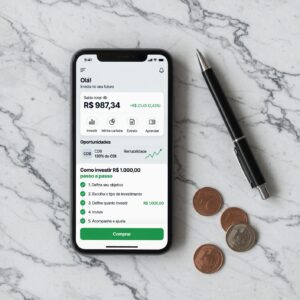
image for illustrative purposes only.
Deciding where to open your investment account is one of the most important first steps in your financial journey. For many beginners, the landscape can feel overwhelming. You might be staring at your local bank’s mobile app or browsing the sleek, feature-rich websites of major brokerage firms, wondering: “Does it really matter where I put my money?”
The short answer is yes—but perhaps not for the reasons you might think. Whether you choose a traditional bank or a dedicated brokerage firm can influence how much you pay in fees, how much control you have over your portfolio, and how much educational support you receive.
Understanding the Difference: Bank vs. Brokerage
At its core, a bank is primarily designed for safekeeping and liquidity. It is the place for your emergency fund, your daily transactions, and your savings goals that require immediate access to cash. When a bank offers investment services, it is often an “add-on” to their primary banking relationship.
A brokerage, on the other hand, is a specialized financial institution built specifically for the markets. It acts as an intermediary between you and the stock exchanges, allowing you to buy and sell a wide range of assets, from individual stocks and bonds to complex exchange-traded funds (ETFs) and mutual funds.
Why Investors Choose Banks for Investing
For those who value convenience, the primary appeal of a bank is the “all-in-one” experience.
The Power of Integration
If you already have your checking and savings accounts at a major bank, seeing your investment balance right next to your rent money can be psychologically comforting. It simplifies your life by keeping your financial ecosystem in a single place.
Professional Guidance
Many banks offer “full-service” wealth management. If you are someone who prefers to sit down with a human advisor to discuss your retirement plans or estate goals, a bank is often the natural choice. You aren’t just buying stocks; you are paying for the expertise and the relationship.
The “Safety” Perception
There is an inherent trust associated with brick-and-mortar banks. For a beginner, the ability to walk into a branch and speak to a person can be a powerful deterrent against the anxiety that often accompanies market volatility.
Why Investors Choose Brokerage Firms
If you are looking to take the driver’s seat in your financial future, brokerage firms—particularly online discount brokers—are generally the industry standard.
Lower Costs and Higher Efficiency
In the age of digital finance, competition has driven trading commissions for stocks and ETFs to zero at many major brokerages. Because these firms focus exclusively on investing, they don’t have the overhead costs of maintaining massive retail branch networks, allowing them to pass those savings on to you.
Vast Investment Selection
While a bank might limit you to a “curated” list of mutual funds or proprietary products, a dedicated brokerage firm opens the doors to the entire market. You gain access to a wider variety of ETFs, individual bonds, and even sophisticated tools for market analysis that are rarely found in standard banking apps.
Advanced Research Tools
Online brokerages are not just platforms for trading; they are hubs for financial education. They provide real-time market data, advanced charting tools, company research reports, and screeners that help you filter investments based on your own criteria. For the self-directed investor, these tools are invaluable.
Factors to Consider Before You Choose
Before you make your decision, evaluate your own habits and goals. Here are the key questions you should answer:
-
How involved do you want to be? If you want to research companies and build your own portfolio, a brokerage is better. If you want someone else to manage it for you, a bank or a robo-advisor might be better.
-
What is your budget? Fees can eat into your long-term returns. Compare the account maintenance fees, transaction costs, and advisory fees of both options.
-
Do you need other financial products? If you also need a mortgage, a car loan, or a business line of credit, keeping your assets at a bank might earn you “relationship perks” that could lower your interest rates on those loans.
-
What is your experience level? Beginners often benefit from the educational resources and simplified interfaces provided by larger online brokerages.
The Role of FDIC and SIPC Protection
A common concern among new investors is the safety of their assets. It is vital to understand the two different types of protection:
-
FDIC (Federal Deposit Insurance Corporation): This protects your cash in traditional bank deposit accounts (savings, checking, CDs) up to $250,000 per depositor. It does not protect your stocks or mutual funds if they lose value in the market.
-
SIPC (Securities Investor Protection Corporation): This is for brokerage accounts. If your brokerage firm goes bankrupt, SIPC protection helps return your securities and cash. It does not protect you against the losses you incur if the stocks you bought simply go down in value.
Understanding this distinction is crucial: neither a bank nor a brokerage protects you from the risk of the market, but they both provide institutional protection against fraud or firm insolvency.
Developing a Disciplined Investing Strategy

Regardless of where you open your account, your success will depend more on your discipline than on the platform you use.
The Importance of an Emergency Fund
Before you invest a single dollar in the stock market, ensure you have an emergency fund. This should be kept in a high-yield savings account (a bank product) that is easily accessible. You should never be in a position where you have to sell your stocks during a market downturn just to pay for an unexpected car repair or medical bill.
Diversification and Long-Term Vision
Successful investing is rarely about “getting rich quick.” It is about the power of compound interest over time. By diversifying your portfolio—spreading your investments across different sectors and asset classes—you reduce the risk that a single bad event will wipe out your savings.
Ignoring the Noise
One advantage of using a dedicated brokerage platform is that you can set it up to avoid daily “check-ins.” Markets are volatile by nature. The most successful investors are often those who define their long-term strategy, set up automatic contributions, and then let their investments grow over years or decades without overreacting to daily headlines.
Choosing the Right Path
There is no “perfect” choice that applies to everyone. For some, the simplicity of having all their finances under one roof at a bank is worth the potential for higher fees. For others, the autonomy, lower costs, and advanced tools of an online brokerage are the keys to building long-term wealth.
Take your time. Do not feel pressured to rush into your first trade. Research a few providers, look at their fee structures, read their customer reviews, and pick the one that feels most aligned with your personal financial goals. The most important step isn’t choosing the best institution—it’s choosing an institution and starting your journey toward financial independence.