The Difference Between Stocks and Shares Explained

For anyone looking to break into the world of investing, the financial industry can feel like an endless maze of terminology. From “bull markets” and “dividends” to “market caps” and “liquidity,” the learning curve seems steep.
Among the very first terms any new investor encounters are stocks and shares.
You hear financial anchors on television say, “The stock market is up today,” and in the next breath, they might mention that “shares of Apple have reached an all-time high.” This constant shifting between terms raises a fundamental question for beginners: Is there an actual difference between stocks and shares, or are people just using two different words for the exact same thing?
The short answer is that while they are closely related and frequently used interchangeably in casual conversation, they carry distinct technical definitions in the financial world. Understanding the subtle difference between them is crucial for building solid financial literacy and navigating your investment accounts with confidence.
This comprehensive guide will break down the precise differences between stocks and shares, examine how they function in the real world, explore the different types of equities you can own, and provide you with a clear blueprint for building your portfolio.
Demystifying Financial Jargon: What Is the Real Difference Between Stocks and Shares?

To understand the relationship between these two terms, it helps to think of them through the lens of grammar and scale. The core distinction lies entirely in context and precision.
The Golden Rule: “Stock” is a broad, generalized term used to describe corporate ownership as a whole. “Shares” represent the specific, quantifiable units of that ownership belonging to an individual investor.
To make this completely clear, let us look at a non-financial analogy: food.
If you walk into a bakery, you might point to a display case and say you love cake. “Cake” is the general category of food. However, if you sit down at a table to eat, you do not order “a cake”—you order a slice of cake.
In this scenario:
-
Stock is the entire cake (the general asset class of corporate ownership).
-
Shares are the individual slices of that cake (the precise units you can buy, hold, and sell).
If you tell someone, “I invest in stocks,” you are describing the general asset class you own. If you tell someone, “I own 50 shares of Microsoft,” you are declaring the exact quantity of ownership you possess in that specific corporation.
Understanding Stocks: The Broad Term for Corporate Ownership
When we use the word “stocks,” we are talking about a collective asset class. It refers to the legal certificates of ownership in one or more public corporations.
                       [ THE GENERAL ASSET CLASS ]
                                    │
                        ┌───────────┴───────────┐
                        ▼                       ▼
                  Company A Stock         Company B Stock
The Origins of Stock
When a business wants to scale up, build new factories, hire specialized workers, or launch new products, it requires a massive influx of money (capital). Historically, companies could only get this cash by taking out large bank loans or finding wealthy private investors.
To solve this problem, corporations began dividing the legal ownership of their business into pieces and selling those pieces to the public. The collective pool of these ownership pieces is called the company’s stock.
When you buy into this pool, you become a stockholder (or shareholder). The primary reason individuals buy stock is to grow their wealth over time. As the global economy expands and corporations become more profitable, the value of their stock tends to rise, allowing investors to outpace inflation and compound their savings over the long term.
Using the Term Correctly
You should use the word “stock” when you are speaking globally or referencing multiple companies. For example:
-
“I am planning to shift some of my cash reserves into the stock market.”
-
“My investment portfolio consists of stocks, bonds, and real estate.”
-
“He owns stock in several technology companies.”
Notice that in all these examples, the term is used to describe a general investment category rather than a specific numeric quantity.
Understanding Shares: The Precise Unit of Measurement in Your Portfolio

While “stock” tells us what kind of asset you own, “shares” tell us exactly how much of it you own. A share is the fundamental unit of currency within corporate equity. It is a specific, legally binding piece of property that can be bought, sold, or transferred on a public stock exchange.
The Math Behind a Share
Every public company has a specific number of total shares outstanding. To find out exactly what your investment represents, you look at your share count relative to the company’s total share count.
For example, let us imagine a fictional business called Universal Goods Inc.
-
Universal Goods Inc. has a total of 1,000,000 (one million) total shares outstanding.
-
You log into your online brokerage account and purchase 10,000 shares of Universal Goods Inc.
By holding those 10,000 individual shares, you can calculate your exact fractional ownership stake in the corporation using a simple formula:
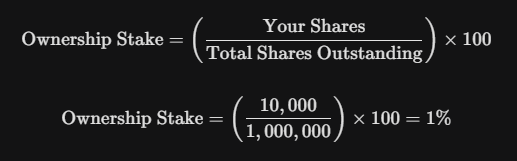
By purchasing those specific shares, you legally own exactly $1\%$ of Universal Goods Inc. This means you have a claim to $1\%$ of its assets, $1\%$ of its earnings, and you hold $1\%$ of the total voting power during company decisions.
Using the Term Correctly
You should use the word “shares” when you are referencing specific numbers, prices, or transactions involving a singular company. For example:
-
“I just bought 50 shares of Apple today.”
-
“The company’s share price dropped by two dollars after the earnings report.”
-
“How many shares do you own in that company?”
Stocks vs. Shares Summary: Key Differences at a Glance
To reinforce this concepts, let’s look at a structural comparison of how these two terms behave across different operational scenarios:
| Feature / Context | Stocks | Shares |
| Core Definition | The general asset class representing ownership in corporations. | The specific individual units of ownership in a single corporation. |
| Level of Precision | Broad and generalized. | Specific and quantifiable. |
| Grammatical Usage | Used to describe your overall investment strategy or market sector. | Used when specifying exact numbers, prices, or individual transactions. |
| Portfolio Context | “I want to buy some energy stocks.” | “I want to buy 25 shares of Chevron.” |
| Plurality Nuance | Can refer to holdings across multiple companies simultaneously. | Refers to multiple units of ownership within a specific corporation. |
Why Do People Use Stocks and Shares Interchangeably?
If there is a clear structural difference between a general asset class and a specific unit of measurement, why do financial professionals, news anchors, and everyday investors use them as synonyms?
The answer comes down to linguistic evolution, cultural shifts, and regional preferences across the global financial landscape.
1. The Blurring of Context
In casual financial conversations, the line between the general and the specific frequently blurs without causing any real confusion. If someone says, “I own Walmart stock,” and another person says, “I own Walmart shares,” both listeners understand the exact same underlying reality: both individuals have capital invested in Walmart. Because the practical outcome is identical, the industry has grown incredibly casual about separating the two terms.
2. Regional and International Differences
Geography plays a massive role in which term dominates the local financial media:
-
American English Domination: In the United States, the word “stock” is the undisputed heavy hitter. Americans almost universally refer to the “stock market,” look at “stock charts,” and discuss their “stock portfolios.” The word “shares” is typically reserved for the exact moment a trade is being executed inside a brokerage app.
-
British and International Nuances: In the United Kingdom, Australia, and parts of Europe, the word “shares” or “equities” is much more common. International investors are far more likely to refer to the “share market” or discuss their “shareholdings.”
Furthermore, British corporate law historically refers to standard investments as “ordinary shares,” whereas American corporate documentation uniformly lists them as “common stock.”
The Different Types of Stock You Can Buy as an Investor

Now that you understand the terminology, it is time to look at what you are actually buying when you enter the market. When companies issue stock, they generally categorize it into two primary classes: Common Stock and Preferred Stock. Each class offers a radically different set of risks, rewards, and legal protections.
1. Common Stock (The Retail Standard)
When everyday retail investors log into an app to buy a stock, they are buying common stock. This is the standard form of equity that represents true operational ownership in a business.
Key Features of Common Stock:
-
Growth Potential: Common stock offers unlimited upside potential. If a company grows from a small startup into a global powerhouse, your common shares will skyrocket in value alongside that growth.
-
Voting Rights: Common shareholders are granted voting rights (typically one vote per share owned). These votes allow you to participate in electing the company’s board of directors and approving major corporate changes during annual meetings.
-
The Downside (Highest Risk): Common shareholders sit at the very bottom of the corporate priority ladder. If a company goes bankrupt and liquidates its assets, all banks, bondholders, tax agencies, and preferred shareholders are paid first. Common stockholders only get what is left over, which is frequently nothing.
2. Preferred Stock (The Income Hybrid)
Preferred stock behaves like a financial crossbreed between a standard stock and a corporate bond. It is designed for investors who prioritize reliable, steady income over explosive capital growth.
Key Features of Preferred Stock:
-
Fixed Dividend Priority: Preferred shareholders receive a fixed, guaranteed dividend payout at regular intervals. This payout structure operates much like the interest payments on a bond. Furthermore, as the name implies, preferred shareholders must be paid their dividends before any common shareholders can receive a dime.
-
Bankruptcy Protection: If a company faces financial ruin and liquidates, preferred shareholders have a higher legal claim to the company’s remaining assets than common shareholders.
-
The Downside (Limited Growth & No Voting Rights): Preferred stock prices are highly stable and do not typically experience aggressive upward price climbs, meaning you miss out on massive corporate growth cycles. Additionally, preferred stock almost never carries voting rights.
How Corporations Issue Shares: Understanding the Share Lifecycle
To fully comprehend how the shares inside your investment account function, you must look at how those shares are created, tracked, and categorized by corporate boards. The lifecycle of a share involves several distinct stages.
┌────────────────────────────────────────┐
│           Authorized Shares            │  <-- Total legal limit
│  ┌──────────────────────────────────┐  │
│  │          Issued Shares           │  │  <-- Distributed pieces
│  │  ┌────────────────────────────┐  │  │
│  │  │     Outstanding Shares     │  │  │  <-- Held by the public/insiders
│  │  └────────────────────────────┘  │  │
│  └──────────────────────────────────┘  │
└────────────────────────────────────────┘
1. Authorized Shares
Authorized shares represent the absolute maximum number of shares a corporation is legally allowed to issue over its entire lifespan under its official corporate charter. This number is set when the company is first incorporated. A company cannot exceed this limit unless its board of directors and a majority of shareholders vote to amend the charter.
2. Issued Shares
Issued shares are the actual pieces of the company that the board of directors decides to distribute. The company can sell these shares to the public during an IPO, hand them out to employees as stock options, or use them to acquire rival businesses. The number of issued shares can never exceed the number of authorized shares.
3. Outstanding Shares
Outstanding shares are the issued shares that are currently held by the public, including retail investors, institutional mutual funds, global hedge funds, and corporate insiders (like the CEO and founders).
This is the most critical metric for everyday investors because it is the number used to calculate a company’s total market capitalization and its earnings per share (EPS).
4. Treasury Stock (Repurchased Shares)
Sometimes, a company’s board of directors decides that their share price is undervalued on the open market. They will use their corporate cash reserves to buy back their own shares from the public.
Once the company repurchases these shares, they are stored securely inside the company’s treasury. These are called treasury stock. Treasury shares do not pay dividends, carry no voting rights, and are completely excluded from outstanding share calculations.
How Corporate Actions Impact Your Shares: Stock Splits and Buybacks
Once you own shares in a company, your holdings are not static. Corporations frequently execute structural adjustments that directly alter your share count and share price without changing the actual value of your investment. These adjustments are known as corporate actions.
1. Forward Stock Splits
A forward stock split occurs when a company artificially multiplies its total number of outstanding shares while simultaneously dividing its share price by the exact same factor. The most common variation is a 2-for-1 stock split.
Imagine you own 10 shares of a company, and each share is trading at a high price of $100. Your total investment value is $1,000 ($10 \times \$100$).
The company announces a 2-for-1 stock split:
-
Your share count automatically doubles: $10 \times 2 = \mathbf{20\text{ shares}}$.
-
The share price is cut in half: $\$100 \div 2 = \mathbf{\$50}$.
Following the split, you now own 20 shares priced at $50 each. Your total investment value remains exactly $1,000 ($20 \times \$50$). Companies execute forward splits simply to lower their per-share price, making the stock look more affordable and visually attractive to retail beginner investors.
2. Reverse Stock Splits
A reverse stock split is the exact opposite of a forward split. The company reduces its total number of outstanding shares while multiplying its share price. This action is usually taken by struggling companies whose share prices have dropped dangerously low (often below $1).
If a stock falls too low, it risks being completely delisted from major stock exchanges like the NYSE or NASDAQ. A reverse split artificially inflates the stock price back into a healthy zone, though it does not change the underlying financial health of the business.
3. Share Buybacks (Repurchases)
As mentioned briefly in the treasury stock section, a share buyback happens when a company goes out onto the open market and buys back its own outstanding shares from investors.
Because the company is taking shares out of circulation, the total number of outstanding shares decreases. This reduction makes the remaining shares in your portfolio scarcer and more valuable. With fewer shares outstanding, each remaining share now owns a larger percentage of the company’s total earnings, which often provides a steady upward lift to the stock price over time.
How Dividends and Capital Gains Apply to Your Shares
When you invest in corporate equities, your primary objective is to generate a return on your capital. This financial return manifests in two distinct formats across your shareholdings.
1. Capital Gains (The Buy-Low, Sell-High Model)
Capital gains represent the direct growth in the market value of your individual shares.
-
Paper Profits (Unrealized): If you purchase 100 shares at $10 a share, and the price climbs to $15, your shares are worth $1,500. You have an unrealized capital gain of $500. This wealth is real, but it fluctuates daily with market movements.
-
Locked-In Profits (Realized): The moment you sell those shares on the exchange, that $500 profit becomes a realized capital gain, moving out of the stock asset and into your spendable cash balance.
2. Dividend Payouts (The Passive Cash Flow Model)
Dividends are cash payments distributed to shareholders directly out of a company’s net corporate profits. Instead of forcing you to sell your shares to generate income, dividend-paying companies deposit cash rewards directly into your brokerage account on a regular schedule (usually quarterly).
[ Company Profits ] ──► Board Approves Dividend ──► Cash Deposited Per Share Owned
                                                             │
                                             ┌───────────────┴───────────────┐
                                             ▼                               ▼
                                      [Cash Payout]                   [DRIP Program]
                                  Spend or save the cash.       Automatically buys more shares.
Your total dividend income is tied directly to the number of shares you hold. If a company pays a quarterly dividend of $0.50 per share, your income scales smoothly based on your portfolio size:
-
If you own 10 shares, you receive $5.00 every three months.
-
If you own 1,000 shares, you receive $500.00 every three months in pure passive cash flow.
How to Start Buying Your First Shares of Stock Safely

Transitioning from understanding financial terminology to executing your very first trade is a straightforward process. Thanks to modern digital infrastructure, you can set up a secure investment framework in a few simple steps.
Step 1: Open a Highly Regulated Brokerage Account
To buy shares of public companies, you must open a specialized financial account called a brokerage account. Look for established, mainstream online brokerages that offer:
-
Zero-Commission Trades: You should never pay a flat transaction fee to buy or sell standard stocks or ETFs.
-
No Minimum Deposit Limits: You should be free to fund the account with whatever small amount you feel comfortable starting with.
-
SIPC Protection: Ensure the broker is a member of the Securities Investor Protection Corporation, which legally protects your assets up to $500,000 if the brokerage firm itself goes bankrupt.
Step 2: Fund Your Account and Establish a Budget
Before picking assets, establish an investing budget that respects your personal financial foundations. Never invest money that you will need to pay for near-term everyday expenses like rent, insurance, or groceries within the next three to five years.
Additionally, prioritize paying off high-interest toxic debt (like credit cards) and building a stable emergency fund containing 3 to 6 months of living expenses in cash before deploying capital into volatile markets.
Step 3: Choose Between Individual Shares and Diversified Funds
As a beginner, you must decide how to structure your holdings:
-
Individual Shares: Buying shares of single companies (like Disney, Tesla, or Nike). This strategy requires deep fundamental research, ongoing analysis of corporate financial balance sheets, and a high tolerance for aggressive price swings.
-
Index ETFs (Exchange-Traded Funds): Instead of trying to pick a single winning stock, you can buy an ETF that tracks an index like the S&P 500. A single share of an S&P 500 ETF acts like a pre-packaged basket, automatically spreading your money across 500 of the largest, most profitable corporations in America simultaneously. This offers instant, built-in diversification and dramatically lowers your individual portfolio risk.
Step 4: Execute a Consistent Investment Plan
The most effective way to build wealth over the long haul is to completely remove emotion and guesswork from the process. Utilize a strategy called Dollar-Cost Averaging (DCA).
Set up your brokerage account to automatically invest a set, fixed amount of money (e.g., $50 every month or every two weeks) into your chosen index funds or shares, regardless of whether the market is up or down. When prices are high, your money buys fewer shares; when the market drops, your money automatically buys more shares at a discount.
Frequently Asked Questions About Stocks and Shares (FAQ)
Is it legally wrong to use “stocks” and “shares” as synonyms?
No, it is not legally wrong. In everyday financial conversations, contract negotiations, and mainstream financial news reporting, using the terms interchangeably is completely accepted. Everyone on Wall Street will understand exactly what you mean. The distinction is purely a matter of technical precision and scale.
What happens to my shares if my online brokerage firm goes out of business?
If your online brokerage firm experiences a complete financial collapse, you do not lose your investments. Your shares are not assets belonging to the broker; they are your personal legal property, securely tracked by corporate registries.
Furthermore, under SIPC protection rules, your assets are legally insured up to $500,000. In the event of a brokerage failure, regulatory agencies step in and seamlessly transfer your entire portfolio of shares over to a healthy, functioning brokerage firm without disrupting your ownership.
Can I buy less than one full share of a company?
Yes, thanks to a feature called fractional shares offered by almost all modern online brokerages. If a single full share of an elite company costs $2,000, you can choose to invest just $20. Your broker will seamlessly allocate exactly $1\%$ of a single share to your portfolio, allowing you to participate in that company’s capital growth and dividend distributions proportionally.
How do I make money from a share if I don’t sell it?
You make money from an unsold share through dividend distributions. If a company chooses to share its corporate profits with investors, they will deposit cash dividends directly into your account on a regular basis. Your share count remains completely unchanged, but you receive regular, passive income simply for being a loyal part-owner of the business.
Do all stocks pay out dividends to their shareholders?
No, many highly successful companies do not pay dividends. Younger, fast-growing companies (especially in the technology and biotechnology sectors) prefer to take 100% of their net profits and immediately reinvest that cash back into corporate research, development, hiring, and infrastructure expansion.
With these “growth stocks,” investors do not expect regular cash payouts; instead, they make money entirely through long-term capital gains as the share price climbs over time.
Your Action Blueprint for Financial Freedom
Mastering the foundational vocabulary of the financial markets is your first real step toward true financial independence. Now that you know the precise difference between stocks and shares, you have the clarity needed to navigate investment discussions and brokerage platforms effectively.
Remember that building generational wealth does not require you to perfectly predict the future or find the next viral breakout stock overnight. Real wealth is built through continuous discipline, radical diversification, and maximizing your time in the market.
Choose a reliable, commission-free brokerage platform, set up a realistic automated budget, buy into highly diversified index funds or stable corporate shares, and let the incredible, unstoppable compounding power of the global economy work its magic on your financial future.