How Investors Identify Undervalued Stocks

Imagine walking into your favorite retail store and noticing a high-end jacket that typically costs $300 marked down to $100 due to a temporary inventory overstock. You know the quality of the fabric, you know the brand’s reputation, and you know the item is worth far more than the sticker price. Buying that jacket is a no-brainer because you are getting immense value at a massive discount.
In the financial world, this exact strategy is called value investing, and the discounted items are known as undervalued stocks.
Every single day, the stock market behaves like an emotional, fast-moving marketplace. Due to short-term panic, bad news headlines, or institutional shifts, the market frequently prices high-quality companies far below their true financial worth. For smart, disciplined investors, these mispricings represent the ultimate wealth-building opportunities.
Identifying these hidden gems requires stepping away from market hype and learning how to look under the hood of a business. This comprehensive guide will teach you exactly how investors identify undervalued stocks, break down the core financial metrics you need to know, and give you a practical roadmap to find bargain investments on your own.
What Is an Undervalued Stock and Why Does the Market Misprice Them?

An undervalued stock is a security trading at a market price that is significantly lower than its underlying intrinsic value. Intrinsic value represents the true, inherent worth of a business based on its tangible assets, revenues, profit margins, cash flow, and future growth potential.
If a company’s financial health suggests its shares should be worth $50 each, but the stock exchange is currently trading them at $30, that stock is fundamentally undervalued.
But if the stock market is filled with brilliant analysts and sophisticated computer algorithms, how do these massive pricing discrepancies happen in the first place? The market becomes inefficient for several key reasons:
1. Short-Term Market Overreactions
The stock market is driven by human psychology, which frequently swings between extreme greed and irrational fear. When a company reports a single quarter of slightly lower-than-expected earnings, or faces a temporary supply chain issue, short-term traders often panic and dump their shares. This aggressive selling pressure drives the stock price down far lower than the long-term fundamentals justify.
2. Broad Industry Sell-Offs
Sometimes, an entire sector of the economy falls out of favor. For instance, if oil prices drop globally, almost every energy company’s stock price will fall simultaneously. During these sector-wide liquidations, the market often punishes the best-managed companies in that industry just as harshly as the worst-managed ones, creating textbook value opportunities.
3. The “Unloved” or Overlooked Factor
Wall Street institutional analysts focus the vast majority of their attention on glamorous, fast-growing mega-cap stocks like Apple, Nvidia, or Tesla. Smaller, quieter companies that operate in “boring” industries—like packaging, agricultural supplies, or regional utility networks—often get completely overlooked. Because fewer people are researching them, their stock prices can drift significantly below their true operational worth.
The Core Philosophy of Value Investing: Intrinsic Value vs. Market Price
To master the art of finding undervalued stocks, you must embrace the philosophy pioneered by Benjamin Graham (the father of value investing) and popularized by his most famous student, Warren Buffett.
This philosophy relies on a clear distinction between price and value. As Buffett famously stated: “Price is what you pay. Value is what you get.”
The Concept of Market Efficiency
Mainstream financial theory often argues for the Efficient Market Hypothesis (EMH), which states that stock prices always reflect all available information perfectly. Value investors radically disagree with this theory. They view the market not as a perfect calculator, but as an emotional partner.
Graham famously used the analogy of “Mr. Market” to explain this dynamic:
The Mr. Market Analogy: Imagine you own a small piece of a private business with a partner named Mr. Market. Every single day, Mr. Market appears at your door and offers to either buy your share or sell you his at a specific price.
Some days, Mr. Market is wildly optimistic, naming an incredibly high price. Other days, he wakes up deeply depressed, sees nothing but trouble ahead, and names a ridiculously low price.
You are completely free to ignore him or take advantage of his emotional state. When he is irrationally depressed, you buy his shares at a deep discount.
Understanding the Margin of Safety
The single most crucial concept in value investing is the Margin of Safety. This is the buffer zone an investor creates by purchasing a stock well below its estimated intrinsic value.

If you calculate a stock’s intrinsic value to be $100 per share, and you buy it at a market price of $70, you have established a 30% Margin of Safety.
This buffer protects your capital in two distinct ways:
-
Protection Against Analytical Errors: If your research was slightly too optimistic and the company’s true intrinsic value is actually only $85, you are still completely safe because you bought in at $70.
-
Protection Against Unforeseen Economic Crises: If the broader economy enters an unexpected recession, the deep discount you secured helps absorb the market shock far better than someone who bought the asset at peak valuation.
Top Financial Ratios to Find Undervalued Stocks Fast
Quantitative analysis—evaluating a company’s financial statements—is the primary tool used to separate undervalued businesses from overhyped ones. Investors utilize several key valuation ratios to quickly gauge whether a stock is priced attractively.
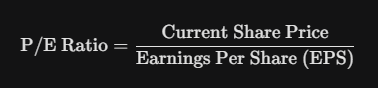
1. The Price-to-Earnings (P/E) Ratio
The Price-to-Earnings ratio is the most widely recognized metric in equity analysis. It measures the relationship between a company’s current stock price and its net earnings per share (EPS) over the trailing 12 months.
-
How to interpret it: A lower P/E ratio relative to direct industry competitors or the broader market average (like the S&P 500) indicates that you are paying less for every dollar of corporate profit the company generates.
-
The Caveat: A low P/E ratio can occasionally indicate that a company’s business model is fundamentally failing. Always compare P/E ratios within the same industry, as technology companies naturally maintain much higher historical P/E ratios than utility or manufacturing companies.
2. The Price-to-Book (P/B) Ratio
The Price-to-Book ratio compares a company’s total stock market value to its book value. Book value (also known as net asset value) represents the net worth of the company if it were completely liquidated today—all physical assets sold and all corporate debts paid off in full.

-
How to interpret it: A P/B ratio below 1.0 means the stock is trading for less than the paper value of its physical assets. You are essentially buying a dollar bill for 80 or 90 cents.
-
Best used for: Capital-intensive, asset-heavy industries such as commercial banking, insurance firms, real estate development, and traditional manufacturing.
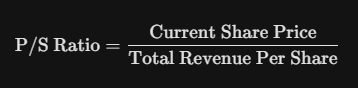
3. The Price-to-Sales (P/S) Ratio
The Price-to-Sales ratio compares a company’s total stock price to its top-line annual revenues. This is an incredibly valuable metric when evaluating cyclical companies or younger businesses that are highly valuable but currently generating low net profits due to aggressive reinvestment.
-
How to interpret it: A low P/S ratio indicates that the market is valuing the company’s total sales volume very cheaply, which can signal an immense turnaround opportunity if the management team can successfully optimize its profit margins.
4. The Price/Earnings-to-Growth (PEG) Ratio
One major flaw of the standard P/E ratio is that it completely ignores a company’s future growth prospects. The PEG ratio fixes this by dividing the current P/E ratio by the company’s expected annual earnings growth rate over the next 3 to 5 years.

-
How to interpret it:
-
A PEG ratio of 1.0 indicates that the stock is priced perfectly fairly relative to its growth.
-
A PEG ratio below 1.0 is considered an exceptional find, indicating that the stock is significantly undervalued because its future earnings growth is outstripping its current valuation price.
-
Advanced Fundamental Analysis Metrics for Value Hunters
While basic financial ratios offer an excellent starting line, professional value investors conduct deeper fundamental analysis to ensure a company’s financial foundation is rock solid. Here are the advanced metrics they prioritize.
1. Free Cash Flow (FCF) and FCF Yield
Net income on an earnings report can occasionally be distorted by complex corporate accounting rules, depreciation, and one-time non-cash entries. Because of this, value investors rely heavily on Free Cash Flow. FCF represents the actual, cold hard cash a business generates after paying for all its daily operational expenses and necessary capital expenditures (like buying equipment or updating property).
Once you know the FCF, you can calculate the Free Cash Flow Yield:

A high FCF yield tells you that a business is a cash-generating engine. This excess cash can be deployed to pay out regular dividends, execute share buybacks, pay down corporate debt, or acquire smaller competitors.
2. Return on Equity (ROE) and Return on Invested Capital (ROIC)
It is not enough for a company to simply generate large profits; you must evaluate how efficiently the management team uses investor capital to generate those profits.
-
Return on Equity (ROE): Measures the net income generated relative to total shareholder equity.
-
Return on Invested Capital (ROIC): A more robust metric that measures the efficiency of allocating all available capital, including both equity and interest-bearing corporate debt.
A company that consistently maintains an ROIC above 15% demonstrates that its management team possesses exceptional operational skills, making it a prime target if its stock price drops into undervalued territory.
3. Debt-to-Equity (D/E) Ratio
A stock might look incredibly cheap on a P/E basis, but if the business is buried under an unmanageable mountain of debt, it carries a high risk of insolvency during an economic downturn.
The Debt-to-Equity ratio measures a company’s total liabilities against its total shareholder equity. Value investors typically look for companies with a conservative D/E ratio (frequently below 1.5), ensuring that the business has the financial resilience to weather recessions comfortably without facing bankruptcy.
Summary of Valuation Metrics
To help you visualize how these metrics work together during your analysis, refer to this reference table:
| Valuation Metric | Formula / Calculation | Target Value for Value Investors | Primary Strength |
| P/E Ratio | Price per Share / Earnings per Share | Lower than industry peers | Quick snapshot of basic profitability valuation. |
| P/B Ratio | Price per Share / Book Value per Share | Ideally near or below 1.0 | Exceptional for valuing banks and asset-heavy firms. |
| PEG Ratio | P/E Ratio / Expected EPS Growth Rate | Below 1.0 | Factors in future corporate earnings expansion. |
| FCF Yield | Free Cash Flow per Share / Price per Share | High percentage (e.g., 7%+) | Focuses on pure cash generation rather than paper accounting. |
| D/E Ratio | Total Liabilities / Total Shareholder Equity | Lower values (ideally < 1.5) | Protects investors from highly leveraged, risky companies. |
Qualitative Analysis: Evaluating a Company’s Economic Moat and Management
Analyzing the numbers on a financial statement is only half the battle. To ensure that an undervalued stock will eventually recover and grow, you must perform qualitative analysis—evaluating the non-numerical, competitive strengths of the underlying business.
Identifying the “Economic Moat”
Another foundational term popularized by Warren Buffett is the concept of an economic moat. A moat is a company’s sustainable competitive advantage that protects its market share and long-term profits from being eroded away by aggressive competitors.
A stock is only truly undervalued if its core business can survive competition over the next decade. There are four primary types of economic moats:
[ Your Investment ]
         │
         ├──► Brand Power (Premium pricing capability - e.g., Coca-Cola)
         ├──► High Switching Costs (Incredibly difficult for clients to leave - e.g., enterprise software)
         ├──► Network Effects (Platform value scales with users - e.g., Visa/Mastercard)
         └──► Cost Advantages (Unmatched operational scale - e.g., Walmart)
-
Brand Power: A brand so dominant that consumers are willingly prepared to pay a premium price for it over generic alternatives (e.g., Apple, Nike).
-
High Switching Costs: A scenario where moving away from a company’s product or ecosystem is so expensive, disruptive, or painful that corporate clients prefer to remain loyal customers indefinitely (e.g., Microsoft Office, specialized medical software).
-
Network Effects: A business model where the actual value of the platform scales upward automatically as more people use it (e.g., Visa, Mastercard, Alphabet’s Google search network).
-
Cost Advantages: Massive operational scale or proprietary infrastructure that allows a business to produce goods at a price point that competitors simply cannot match structurally (e.g., Walmart, Costco).
Evaluating Management Integrity
When you buy stock in a company, you are handing your capital over to corporate executives. You must ensure they act as responsible stewards of your wealth.
Review the management team’s history:
-
Are they transparent during quarterly earnings calls, or do they shift blame when things go wrong?
-
Do they have a history of smart capital allocation, or do they waste corporate cash on expensive, flashy acquisitions that fail to deliver a return?
-
Do insiders (executives and board members) personally own a meaningful amount of the company’s stock? High insider ownership aligns the management team’s personal financial incentives directly with yours.
Value Traps vs. Undervalued Stocks: How to Avoid Buying Dying Businesses

One of the biggest mistakes a beginner value investor can make is falling into a Value Trap.
A value trap is a stock that looks incredibly cheap based on traditional financial ratios (like a rock-bottom P/E ratio of 5 or a P/B ratio of 0.4), but is actually a dying business whose shares will continue to slide downward indefinitely.
       [ VALUE TRAP ]                          [ TRULY UNDERVALUED ]
  • Cheap for terminal reasons             • Cheap for temporary reasons
  • Outdated technology/products           • Temporary operational hurdle
  • Market share eroding permanently       • Strong balance sheet, high FCF
  • Trapped in a declining industry        • Retains a permanent economic moat
To safeguard your capital, you must learn to differentiate between a company facing a temporary, fixable problem and one experiencing a terminal decline.
Warning Signs of a Value Trap:
-
A Structurally Declining Industry: A company might look cheap, but if its primary product is becoming obsolete due to technological advances (e.g., physical video rental stores in the age of streaming, or traditional print media), its cheap valuation is completely justified.
-
Persistent Margin Compression: Look closely at the trend of the company’s gross and net profit margins over the last 5 years. If margins are steadily shrinking year after year, it indicates that the company has lost its pricing power and is being eaten alive by competitors.
-
High Debt Combined with Declining Cash Flow: A company with declining revenues that simultaneously relies on borrowing money to sustain its operations or artificially pay out dividends is a ticking financial time bomb.
Step-by-Step Blueprint: How to Screen for Undervalued Stocks as a Beginner
You do not need to manually research thousands of independent companies on public exchanges to find a value opportunity. Instead, you can utilize a digital tool called a Stock Screener (available for free on financial platforms like Yahoo Finance, Finviz, or through your online brokerage account).
Here is a practical, step-by-step screening blueprint to find your first pool of undervalued stock candidates:
Step 1: Input Your Valuation Filters
Log into a stock screener and set up the following conservative filters to eliminate overvalued and highly risky companies immediately:
-
P/E Ratio: Set to “Under 20” or “Below Industry Average.”
-
PEG Ratio: Set to “Under 1.2.”
-
P/B Ratio: Set to “Under 1.5.”
-
Debt-to-Equity Ratio: Set to “Under 1.2” to ensure safety.
-
Current Ratio: Set to “Over 1.5” (ensuring the company has plenty of short-term liquidity to pay near-term bills).
Step 2: Analyze the Filtered Results
Your screener will instantly reduce thousands of stocks down to a manageable list of candidates. Group these remaining companies by sector and look for clusters. If you notice several high-quality companies in a specific sector showing up, research what industry-wide event is temporarily depressing prices.
Step 3: Conduct the Deep Fundamental Analysis
Pick one or two companies from the list and pull up their financial history over the last 5 to 10 years. Look for a track record of stable or expanding revenues, healthy free cash flow generation, and consistent profitability. Read the company’s recent quarterly reports (10-Q) and annual reports (10-K) to identify the specific catalyst behind the recent price drop.
Step 4: Assess the Qualitative Factors and Moat
Verify that the company possesses a sustainable competitive advantage and that its products or services will remain relevant and highly demanded a decade from now.
Step 5: Calculate Your Target Entry Price
Estimate the company’s true intrinsic value using your chosen methodology. Apply a strict Margin of Safety (at least 20% to 30%) to determine your maximum buy price. If the current market price is at or below that target, you have successfully identified a genuinely undervalued stock.
Frequently Asked Questions About Identifying Undervalued Stocks (FAQ)

How long does it take for an undervalued stock to reach its true value?
There is no fixed timeline. It can take months, or sometimes several years, for the broader stock market to realize its mistake, re-evaluate a company’s fundamentals, and bid the share price back up to its true intrinsic value. Because of this, value investing requires an immense amount of patience. If you invest capital that you will need back for immediate life expenses next year, you are exposing yourself to the risk of being forced to sell your undervalued positions prematurely at a loss.
Can a stock remain undervalued forever?
Yes. If a stock lacks a clear positive catalyst to turn its business around or capture Wall Street’s attention, it can stay underpriced indefinitely—a phenomenon often referred to as a “chronic value stock” or a value trap. This is why evaluating qualitative factors like innovative management, a strong economic moat, and clear future revenue catalysts is just as vital as reviewing low financial ratios.
Is value investing safer than growth investing?
Value investing is fundamentally designed around capital preservation and risk management through the implementation of a strict Margin of Safety. By buying assets for significantly less than they are worth, you naturally limit your downside risk compared to growth investing, where people buy highly expensive stocks trading at massive P/E ratios based purely on optimistic expectations of explosive future performance. However, both strategies can be highly lucrative when executed with proper discipline and asset diversification.
What is the difference between trailing P/E and forward P/E?
-
Trailing P/E: Utilizes the company’s actual, verified net earnings over the past 12 months. It is highly reliable because it is based on historical fact, but it does not reflect recent changes in business operations.
-
Forward P/E: Utilizes estimated, projected corporate earnings over the next 12 months based on analyst forecasts. It is highly forward-looking, but it carries a degree of uncertainty because analyst projections can turn out to be incorrect if economic conditions suddenly shift.
The Value Investor’s Path to Financial Success
Learning how to identify undervalued stocks is an incredibly empowering financial superpower. It transforms the stock market from a confusing, high-risk casino into an orderly, predictable clearance sale where patient, disciplined investors can consistently buy dollar bills for seventy cents.
Success in this arena does not require a brilliant math background or access to expensive institutional trading desks. It requires the emotional discipline to stay completely calm when the rest of the market is panicking, the curiosity to perform basic fundamental research on a company’s financial statements, and the patience to hold your high-quality assets until the rest of the world finally recognizes their true worth.
Equip yourself with a reliable stock screener, implement a strict Margin of Safety to safeguard your capital, look beyond short-term market noise, and watch the incredible compounding engine of value investing unlock true, multi-generational wealth for your financial future.