How to Start Investing with Little Money in 2026
For decades, there was a pervasive myth that the stock market was a playground reserved exclusively for the wealthy. People believed that unless you had tens of thousands of dollars to hand over to a suit-and-tie stockbroker, you were essentially locked out of the wealth-creation engine of the global economy.
As we move through 2026, that myth has been completely dismantled. Thanks to the evolution of fintech, the democratization of trading platforms, and the rise of fractional ownership, the barrier to entry has never been lower. Today, you can start your journey toward financial independence with as little as $1, $5, or $10.
In this comprehensive guide, we will explore exactly how you can build a robust investment portfolio starting with small amounts of capital. We’ll cover the tools, the strategies, and the mindset required to turn a few spare dollars into a life-changing nest egg.
The Psychology of Micro-Investing: Why Starting Small is Your Greatest Advantage

Many people wait until they have a “significant” amount of money to start investing. Unfortunately, “someday” rarely comes. The greatest asset any investor has isn’t their bank balance—it is time.
The Power of Time Over Capital
Because of compound interest, a dollar invested in your 20s is worth significantly more than a dollar invested in your 40s. When you start with little money, you aren’t just investing capital; you are investing in the habit of consistency.
Overcoming the “It’s Not Enough” Mental Trap
If you wait until you have $10,000 to start, you miss out on the learning curve. Starting with $10 or $50 allows you to make “cheap mistakes.” You learn how market volatility feels, how to navigate a brokerage app, and how to read a ticker symbol without the stress of losing your life savings. By the time you do have a large sum of money, you will be a seasoned investor.
Best Investment Platforms for Small Capital in 2026: Low Fees and High Access
In 2026, the “best” platform is no longer just about who has the most features; it’s about who has the lowest barriers for small-scale investors. When you are starting with little money, fees are your biggest enemy. A $5 commission on a $50 investment is a 10% instant loss—a hurdle almost impossible to overcome.
Commission-Free Trading
Most major US-based brokerages (like Charles Schwab, Fidelity, and Vanguard) have moved to zero-commission models for stocks and ETFs. This means 100% of your money goes toward buying the asset, not paying the middleman.
Micro-Investing Apps and Round-Ups
Apps like Acorns or Stash popularized the “round-up” feature. Every time you buy a coffee for $3.50, the app rounds the transaction to $4.00 and invests the $0.50 difference. While $0.50 seems negligible, for a beginner, it creates a “passive” investment habit that requires zero willpower.
How Fractional Shares Revolutionized the Market for Beginners
Before fractional shares, if you wanted to own a piece of a high-performing company like Amazon, Google (Alphabet), or Chipotle, you might have needed several hundred or even thousands of dollars just to buy a single share.
Owning the Giants for One Dollar
Fractional shares allow you to buy “slices” of a company based on a dollar amount rather than a share count. If you have $10, you can own $10 worth of a $3,000 stock.
Why This Matters for Diversification
Diversification (not putting all your eggs in one basket) is the key to reducing risk. With fractional shares, a $100 budget allows you to own 10 different companies at $10 each. This was impossible just a decade ago for the average retail investor.
Building a Foundation with Low-Cost ETFs and Index Funds
If you are starting with a small amount of money, picking individual stocks can be risky and time-consuming. The most efficient way to grow a small pot of money is through Exchange-Traded Funds (ETFs).
What is an Index ETF?
An ETF is essentially a “basket” of stocks. When you buy one share of an S&P 500 ETF (like VOO or SPY), you are buying a tiny piece of the 500 largest companies in the United States.
The Advantage of “Broad Market” Exposure
Instead of trying to guess which company will win, you are betting on the entire US economy. Historically, the S&P 500 has returned an average of about 10% annually over long periods. For a beginner, this is the “easy button” for wealth creation.
Expense Ratios: The Hidden Wealth Killer
When choosing an ETF, look at the expense ratio. This is the annual fee the fund charges. In 2026, you should look for funds with ratios below 0.05%. Every penny you save in fees is a penny that stays in your account to compound.
The $5-a-Day Strategy: How Consistency Trumps Market Timing

One of the most effective strategies for small-scale investors is Dollar-Cost Averaging (DCA). Instead of waiting for the market to “dip” or “crash,” you invest a set amount on a fixed schedule (e.g., every Monday morning).
The Math of $5 a Day
If you invest $5 a day ($150 a month) into a broad market index fund with a 10% average annual return:
-
After 10 Years: You would have approximately $30,000.
-
After 20 Years: You would have approximately $110,000.
-
After 30 Years: You would have approximately $330,000.
All of this comes from just $5 a day—the price of a fancy coffee. The secret isn’t the $5; it’s the consistency of the 30-year timeframe.
Utilizing Dividend Reinvestment Plans (DRIPs) to Accelerate Growth
When you own stocks or ETFs, many will pay you “dividends”—a share of the company’s profits sent to you as cash. When you are starting with little money, these checks might only be a few cents.
Don’t Spend the Change
Most brokerages offer a feature called DRIP. This automatically takes your dividend cash and uses it to buy more shares (or fractional shares) of the same investment.
The Compound Effect
By reinvesting dividends, you own more shares. Those more shares then pay more dividends. Over 10–20 years, this cycle accounts for a massive percentage of the total returns in the stock market. It is the ultimate way to “supercharge” a small account without adding extra money from your paycheck.
Tax-Advantaged Accounts: Protecting Your Small Gains from the IRS
If you are investing for the long term (like retirement), the type of account you use is just as important as what you buy.
The Roth IRA: The Beginner’s Best Friend
In a Roth IRA, you invest money that has already been taxed. The magic happens later: all the growth and all the withdrawals you make after age 59.5 are 100% tax-free.
If you start with $100 and it grows into $10,000 over 30 years, you don’t owe the government a single cent of that $9,900 profit. For someone starting with little money, protecting every dollar from taxes is essential.
Avoiding the “Beginner Traps”: Scams, Penny Stocks, and High Leverage
When you have a small amount of money, you might feel a sense of urgency to “turn $100 into $10,000” quickly. This desperation is exactly what scammers and “get-rich-quick” schemes prey upon.
The Danger of Penny Stocks
Penny stocks (stocks trading for less than $5) are often highly volatile and subject to manipulation. While they seem “cheap,” they are usually cheap for a reason. You are much safer buying $5 worth of a great company (via fractional shares) than 500 shares of a failing company.
The Myth of Day Trading
Data shows that over 90% of day traders lose money over the long term. As a small investor, your edge is not speed; your edge is patience. Don’t try to out-trade the algorithms and AI of Wall Street; out-wait them.
Leveraging AI and Financial Tools in 2026
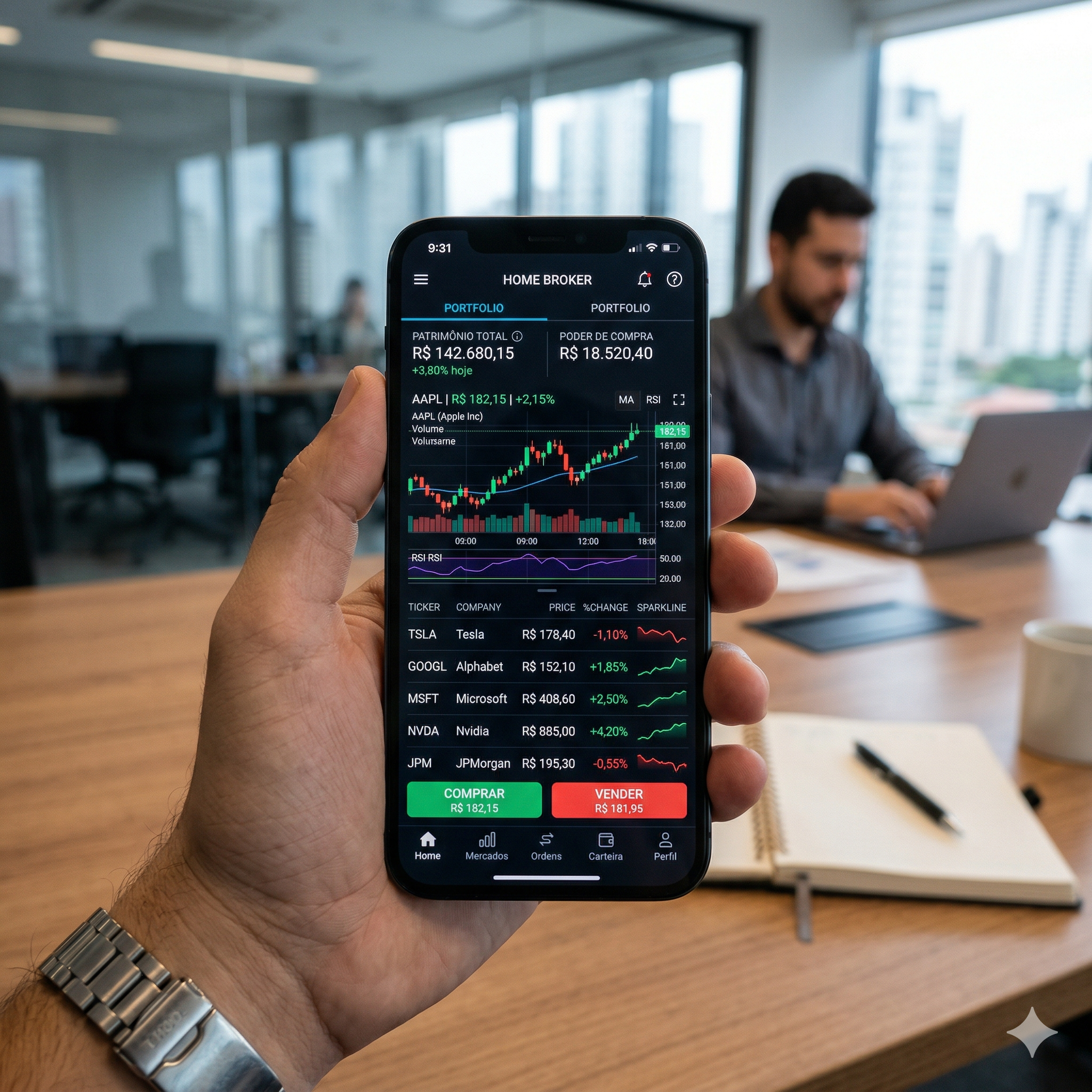
By 2026, AI-driven financial assistants have become standard features in most brokerage apps. Use these tools to your advantage.
-
Automated Rebalancing: Use AI to ensure your portfolio stays diversified.
-
Expense Tracking: Use AI to find “leakage” in your budget (like forgotten subscriptions) and redirect that money into your investments.
-
Educational Insights: Modern AI can explain complex financial reports in simple terms, helping you learn as you grow.
The Best Time to Start was Yesterday; The Second Best Time is Today
Starting to invest with little money isn’t just about the balance in your account; it’s about the identity you are building. When you invest your first $10, you stop being a “consumer” and start being an “owner.”
In 2026, the tools are in your pocket, the fees are gone, and the market is open. Don’t wait for a windfall. Start with what you have, stay consistent, and let the power of the global economy do the heavy lifting for you.