How Much Do You Need to Live Off Dividends?

The dream of “living off dividends” is the ultimate goal for many investors. Imagine waking up on the first of the month and seeing your bank account grow without you having to trade your time for a paycheck. This is the essence of passive income—allowing your money to work as hard for you as you once worked for it.
However, moving from the dream to the reality requires more than just a few shares of a blue-chip company. It requires a strategic calculation of your expenses, an understanding of market yields, and a solid grasp of how inflation and taxes will impact your long-term purchasing power.
In this comprehensive guide, we will break down the exact math, the risks, and the portfolio strategies you need to determine exactly how much you need to invest to retire on dividends.
The Core Equation: Understanding the Dividend Yield and Portfolio Size

To figure out your target number, you first need to understand the relationship between three variables: your annual expenses, your portfolio size, and your dividend yield.
The Mathematical Formula
The simplest way to calculate the required portfolio size is as follows:

For example, if you need $50,000 a year to cover your lifestyle and you invest in a portfolio with a 4% average dividend yield, the math looks like this:
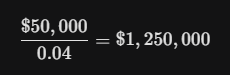
Why 4% is Often the “Goldilocks” Zone
In the world of dividend investing, a 2% yield is often seen as too low (requiring a massive $2.5 million for the same income), while a yield above 7% is often considered “high risk” (more on “Value Traps” later). A target yield of 3% to 5% is generally considered sustainable and allows for the underlying companies to still grow their businesses.
Defining Your Annual Expenses: The Foundation of the Plan
You cannot build a financial house if you don’t know the size of the foundation. Living off dividends means your payouts must cover 100% of your living costs—plus a little extra for a safety margin.
The “Bottom-Up” Budgeting Approach
To get an accurate number, don’t just guess your monthly spend. Categorize your expenses into:
-
Essential Costs: Mortgage/rent, groceries, utilities, and healthcare.
-
Discretionary Costs: Travel, dining out, and hobbies.
-
The “Unexpected” Fund: Car repairs, home maintenance, and emergency medical costs.
The Impact of Healthcare
If you are retiring early, healthcare is often the largest “wildcard” expense. Unlike a corporate job where your employer subsidizes your insurance, a dividend investor must account for the full cost of private insurance premiums, which can easily add $10,000 to $20,000 per year to your required income.
Dividend Growth vs. High Yield: Choosing Your Strategy
Not all dividend stocks are created equal. When building a portfolio to live on, you generally have to choose between two main philosophies: Dividend Growth and High Current Yield.
Dividend Growth Stocks (The Marathoners)
These are companies that pay a lower yield today (e.g., 1.5% to 2.5%) but increase their dividend every year.
-
Pros: The payout often grows faster than inflation. The stock price typically appreciates significantly over time.
-
Cons: You need a much larger initial investment to cover your bills today.
High-Yield Stocks (The Sprinters)
These are companies or funds that pay a high yield today (e.g., 6% to 9%). This often includes Real Estate Investment Trusts (REITs), Business Development Companies (BDCs), or covered call ETFs.
-
Pros: You get more cash immediately, allowing for a smaller initial portfolio.
-
Cons: These companies often have little to no stock price growth, and their dividends may be at risk during an economic downturn.
Accounting for the Silent Killer: Inflation

If you need $4,000 a month to live today, you might need $8,000 a month to live the same lifestyle in 20 years. This is the danger of a fixed-income mindset.
Protecting Your Purchasing Power
To survive a multi-decade retirement, your dividend income must grow. This is why “Dividend Aristocrats”—companies that have increased their dividends for at least 25 consecutive years—are so popular. Even if the market is flat, your income is receiving an “annual raise” from the companies you own.
Strategy Tip: Never plan to spend 100% of your dividends. By reinvesting 10% to 20% of your payouts back into the market, you create a “compounding buffer” that helps your income stay ahead of rising costs.
The Tax Man Cometh: Net Income vs. Gross Income
A common mistake for new investors is forgetting that the government takes a cut of your dividends. Your $50,000 dividend check is not $50,000 in your pocket.
Qualified vs. Non-Qualified Dividends
-
Qualified Dividends: In the U.S., these are taxed at the long-term capital gains rate (0%, 15%, or 20%), which is significantly lower than regular income tax.
-
Non-Qualified Dividends: These are taxed at your ordinary income tax rate. This includes most dividends from REITs and interest from bonds.
To maximize your “take-home” pay, you must be strategic about which assets you hold in taxable accounts versus tax-advantaged accounts like an IRA or 401(k).
Avoiding the “Yield Trap”: Why High Numbers Can Be Dangerous
It is tempting to look for stocks paying a 12% dividend and think, “I only need $400,000 to retire!” Unfortunately, a yield that high is often a warning sign from the market that the company is in trouble.
How a Yield Trap Works
A dividend yield is a calculation: (Dividend / Stock Price). If a company’s stock price crashes because they are losing money or going bankrupt, the “yield” will look artificially high. Eventually, the company will cut the dividend to zero, leaving the investor with a massive loss in share value and zero income.
Safe Indicators:
-
Payout Ratio: Look for companies that pay out less than 60% of their earnings as dividends.
-
Free Cash Flow: Ensure the company is generating actual cash, not just using debt to pay shareholders.
Portfolio Diversification: The Key to Sleeping at Night

You should never live off dividends from just five or ten stocks. If one of those companies fails, 10% to 20% of your “salary” disappears instantly.
The Ideal Sector Mix
A resilient dividend portfolio should span multiple sectors:
-
Consumer Staples: Food and household goods (Recession-proof).
-
Utilities: Water and electricity (Consistent cash flow).
-
Healthcare: Pharmaceuticals and medical devices.
-
Technology: Software companies with recurring revenue.
-
REITs: Physical real estate exposure.
By diversifying, you ensure that a downturn in one part of the economy doesn’t capsize your entire retirement plan.
Real-World Scenarios: How Much Do I Need?
Let’s look at three different lifestyles to see what the “Magic Number” looks like in 2026.
| Lifestyle | Annual Income Goal | Portfolio Size (4% Yield) |
| Lean FIRE (Minimalist) | $30,000 | $750,000 |
| Average Comfort | $60,000 | $1,500,000 |
| Fat FIRE (Luxury) | $120,000 | $3,000,000 |
Note: These figures assume a diversified portfolio and do not account for individual tax situations.
The Psychology of Living on Dividends
Perhaps the hardest part of this journey isn’t the math—it’s the mindset. When you live off dividends, you have to watch your portfolio value fluctuate by tens of thousands of dollars every day.
Focusing on the “Income Factory”
Successful dividend investors stop looking at their “Total Balance” and start looking at their “Annual Income.” If the market drops 20%, but your companies still pay their dividends, your lifestyle doesn’t change. This mental shift is what allows retirees to stay invested during market crashes while others panic-sell.
Starting Your Journey Today

Living off dividends is a marathon, not a sprint. Whether you need $500,000 or $5,000,000, the process is the same: consistently buy quality assets, reinvest your dividends during the “accumulation phase,” and stay disciplined.
The best time to start was ten years ago; the second best time is today. By building your “income factory” one share at a time, you are slowly purchasing your freedom.