Coinbase or Binance: which one to choose for investing in cryptocurrencies?

image for illustrative purposes only.
Navigating the digital asset landscape begins with selecting the right digital currency exchange. For anyone entering or expanding their footprint in the blockchain ecosystem, two industry giants immediately command attention: Coinbase and Binance. Both platforms dominate global trading volume, yet they cater to fundamentally different philosophies, user profiles, and operational strategies. Choosing the correct venue requires a thorough examination of fee schedules, security frameworks, asset availability, and user experience.
Understanding the Landscape of Modern Cryptocurrency Exchanges
The digital currency marketplace has matured significantly over the past decade. What once resembled an unregulated wild west has evolved into a sophisticated financial sector featuring institutional-grade custody solutions, deep liquidity pools, and stringent compliance frameworks. Within this ecosystem, exchanges act as the primary gateways for converting fiat currency into digital assets like Bitcoin and Ethereum.
Coinbase carved out its reputation by prioritizing regulatory compliance, user-friendly design, and robust security from its inception. Headquartered in the United States and publicly traded on the Nasdaq, it became the default entry point for risk-averse participants seeking a regulated environment. Conversely, Binance exploded onto the scene by offering lightning-fast execution, an extensive catalog of altcoin trading pairs, and exceptionally competitive transaction costs. Evaluating these two powerhouses side by side reveals which platform aligns best with specific financial goals.
Fee Structures and Trading Costs Compared
Transaction expenses directly impact long-term portfolio performance. Even minor percentage differences compound over hundreds of trades, making fee analysis a critical step in platform selection.
Coinbase Fee Architecture
Coinbase utilizes a tiered maker-taker pricing model for its advanced interface, alongside flat or percentage-based fees for its simplified consumer portal.
-
Simple Trade Interface: Standard purchases via the default interface incur variable spreads plus a flat fee or a percentage fee (typically around 1.49% for bank transfers and higher for credit card transactions).
-
Coinbase Advanced: For active participants, the platform offers volume-based maker and taker fees. Maker fees generally range from 0.00% to 0.40%, while taker fees range from 0.05% to 0.60% depending on the trailing 30-day trading volume measured in USD. Accounts maintaining high monthly volumes unlock zero-percent maker tiers.
Binance Fee Architecture
Binance is widely recognized for maintaining some of the most aggressive cost structures in the entire financial technology sector.
-
Standard Spot Trading: Baseline spot trading fees start at a flat 0.10% for both makers and takers.
-
BNB Discounts: Holding and utilizing the native ecosystem token (BNB) to settle transaction costs grants an automatic 25% discount, reducing the effective fee to 0.075%.
-
High-Volume and Promotional Tiers: High-volume accounts qualify for VIP tiers that drastically lower fees, and the platform frequently runs zero-fee promotional campaigns on specific stablecoin and major asset pairs.
When comparing direct transactional expenses, Binance consistently undercuts Coinbase at baseline levels, particularly for active participants utilizing native token discounts.
Security Protocols and Regulatory Compliance
Safeguarding digital wealth remains the paramount concern for any market participant. A platform’s structural approach to asset protection defines its reliability during periods of extreme market volatility.
Coinbase Security and Trust
Coinbase operates under strict regulatory oversight, functioning as a publicly traded entity subject to rigorous financial auditing and transparency requirements.
-
Asset Storage: The vast majority of customer digital assets are kept in offline cold storage, insulated from online threat vectors.
-
Insurance and Protection: USD cash balances held on the platform are typically protected by FDIC insurance up to $250,000 pass-through limits. Furthermore, the company maintains comprehensive commercial crime insurance policies covering digital assets against cybersecurity breaches.
-
Account-Level Security: Users benefit from mandatory two-factor authentication (2FA), biometric verifications on mobile apps, hardware security key support (such as YubiKey), and advanced address whitelisting capabilities.
Binance Security and Risk Management
Binance secures massive global volumes through sophisticated technological defenses, though its decentralized corporate history has historically invited closer regulatory scrutiny in various jurisdictions.
-
SAFU Fund: Binance established the Secure Asset Fund for Users (SAFU), an emergency insurance reserve funded by a percentage of trading fees, designed to protect customer funds in extreme security breach scenarios.
-
Technical Safeguards: The platform deploys real-time risk monitoring systems, strict biometric checks, device management protocols, and advanced multi-signature wallet configurations.
-
Compliance Evolution: Over time, the entity has localized operations globally through specialized regional branches (such as Binance.US) to comply with local regulatory mandates, though its global footprint handles vastly more complex and expansive derivatives and spot markets.
Asset Availability and Market Depth
The variety of tradeable instruments determines the flexibility an investor has to diversify a portfolio beyond mainstream assets.
-
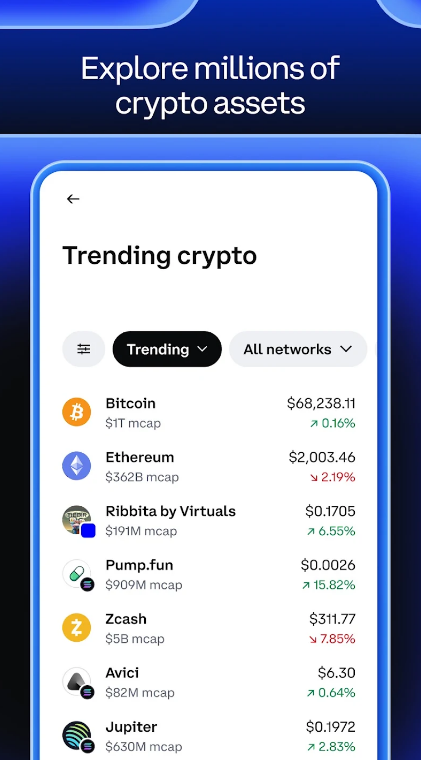
Coinbase Asset Selection: Coinbase hosts over 350 to 550 distinct spot market pairs. While it covers all major layer-1 protocols, decentralized finance tokens, and prominent stablecoins, its listing process is notoriously deliberate. Every asset undergoes intense legal and technical vetting before being approved, ensuring high quality but occasionally delaying access to newly launched tokens.
-
Binance Asset Selection: Binance offers access to hundreds of cryptocurrencies and over a thousand distinct trading pairs. It serves as an expansive digital marketplace where early-stage projects, niche altcoins, and specialized utility tokens frequently list first.
For investors seeking a curated selection of thoroughly vetted, highly liquid major assets, Coinbase excels. For those searching for breadth, depth, and early access to emerging altcoins, Binance provides unmatched variety.
User Interface, Tools, and Ecosystem Features
An intuitive interface assists beginners, while robust charting tools empower seasoned chartists.
Interface Usability
-
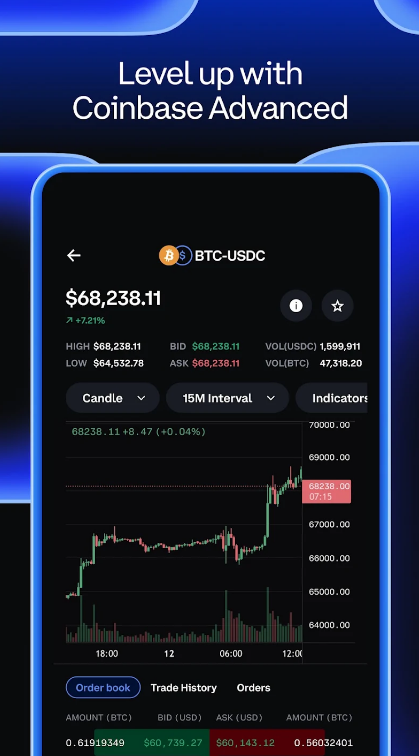
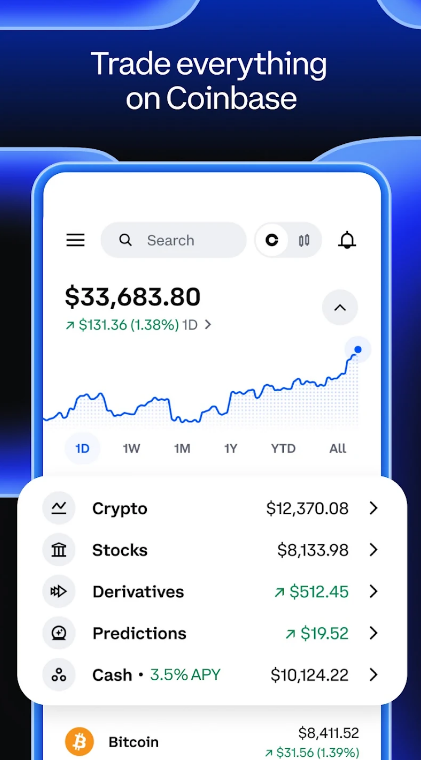
Coinbase: Renowned for its clean, minimalist design. The standard interface allows absolute beginners to purchase digital assets using a debit card or bank transfer within three clicks. For advanced participants, Coinbase Advanced provides TradingView integration, depth charts, and order-book transparency.
-
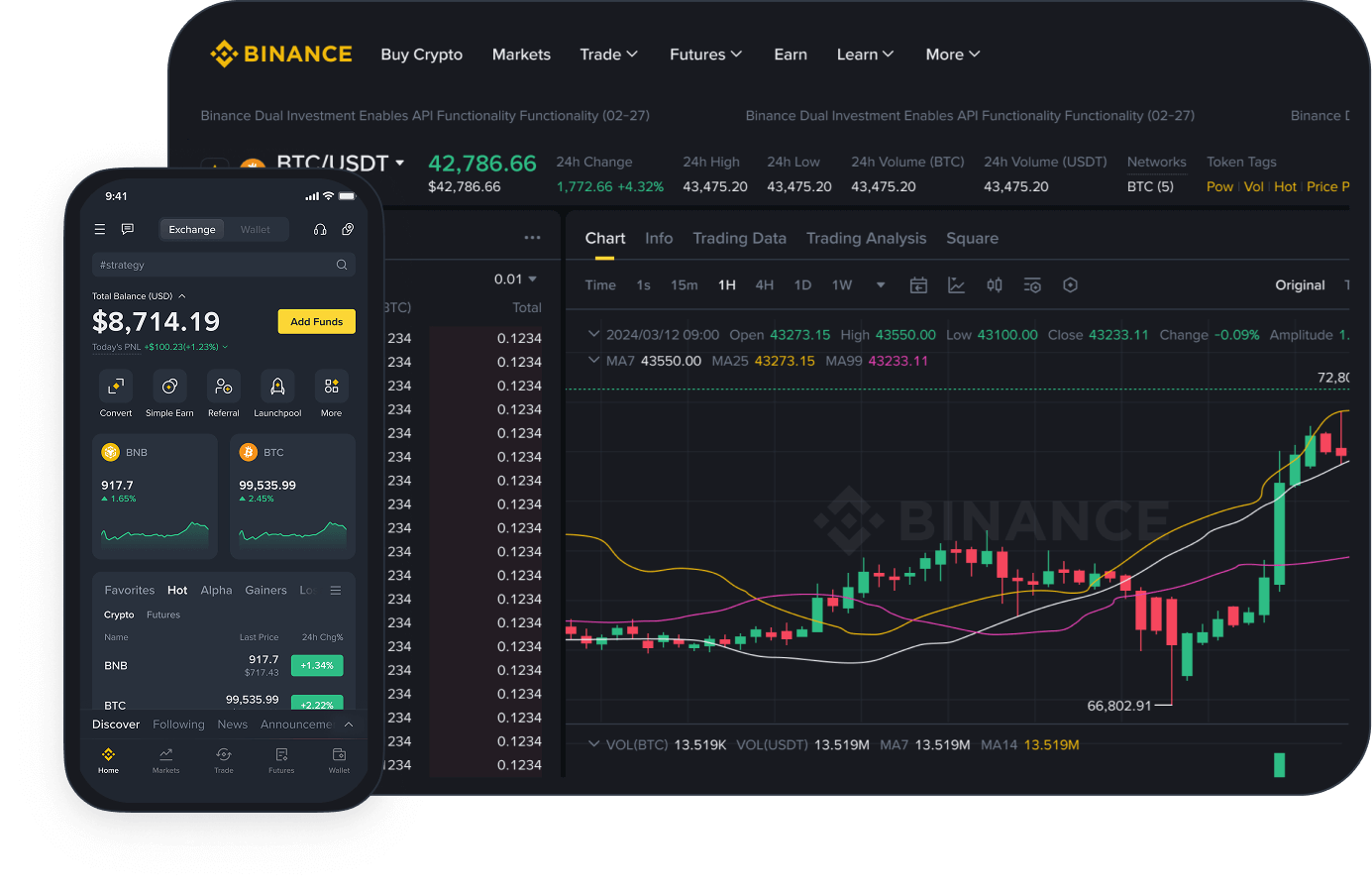
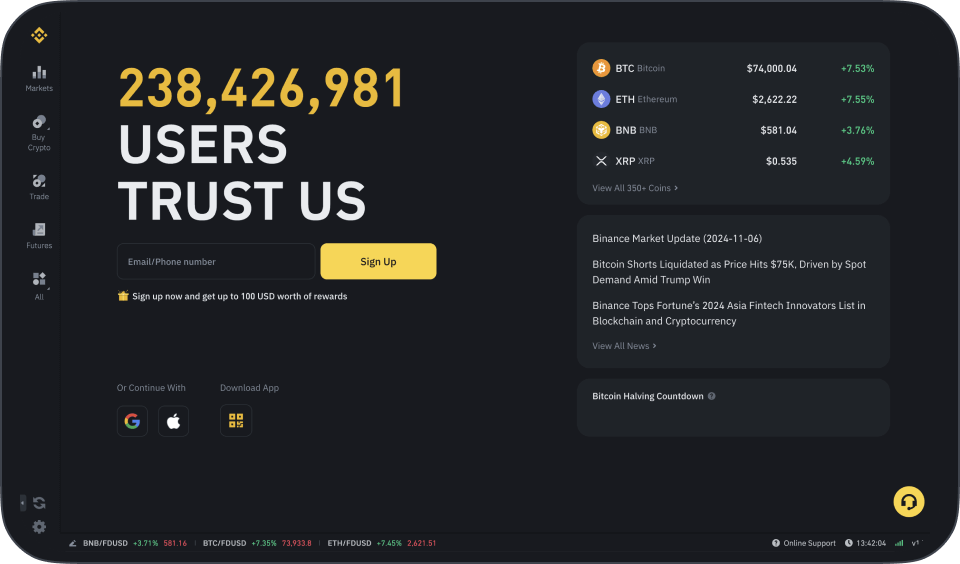
Binance: Features a data-dense, highly comprehensive interface. While it includes a “Lite” mode for casual users, the core platform is built for speed and technical depth. It presents complex order books, advanced technical indicators, multiple derivative products, automated trading bots, and flexible staking opportunities.
Yield Generation and Passive Income
Both venues allow participants to earn passive rewards on idle holdings:
-
Coinbase offers automated yield programs on USD stablecoins (such as USDC) and staking rewards for major proof-of-stake networks like Ethereum, Solana, and Cardano.
-
Binance features an extensive “Earn” ecosystem, offering flexible savings, locked staking, launchpools, dual-investment products, and high-yield promotional tiers across a vast array of digital assets.
Summary Evaluation Matrix
| Feature | Coinbase | Binance |
| Target Audience | Beginners to institutional investors seeking high regulatory compliance. | Active traders, altcoin enthusiasts, and cost-conscious participants. |
| Base Spot Fees | Higher on standard interface; up to 0.40% maker / 0.60% taker on advanced. | Flat 0.10% (lower with BNB discounts). |
| Asset Variety | Moderate, highly vetted selection (350+ to 550+ markets). | Massive variety, spanning thousands of global pairs and altcoins. |
| Regulatory Standing | Publicly traded, heavily compliant with U.S. frameworks. | Global reach with localized entities adapted to regional laws. |
| Security Measures | Cold storage dominance, FDIC-insured cash reserves, robust insurance. | SAFU emergency fund, advanced 2FA, real-time risk algorithms. |
Which Platform Fits Your Strategy?
The choice between Coinbase and Binance ultimately rests on individual priorities regarding cost, security, and asset variety.
Select Coinbase if your primary concerns are regulatory peace of mind, an exceptionally straightforward user experience, institutional-grade custody, and a curated list of reliable assets. It represents the gold standard for long-term holders and participants who prioritize compliance and simplicity above minimizing transaction overhead.
Select Binance if your objective is active trading, minimizing transaction costs through high-volume tiers or native token usage, and gaining immediate access to a vast, sprawling universe of digital altcoins and sophisticated financial tools. It remains the powerhouse choice for active market participants who demand maximum liquidity and maximum operational flexibility.