Which Broker Charges the Least?

image for illustrative purposes only.
This comprehensive guide breaks down the true cost of investing across the most popular platforms, helping you choose the most cost-effective brokerage for your specific trading strategy.
Understanding Brokerage Fees in the Modern Era

To accurately compare brokerage costs, it is essential to understand how the industry has evolved and how platforms structure their pricing models today. The days of paying your broker a flat fee just to place a simple stock order are largely behind us, but new revenue streams have taken their place.
The Shift to Zero-Commission Trading
For decades, standard practice involved paying a commission—sometimes as high as $50 per trade—just to execute a buy or sell order. As discount brokerages emerged, this fee dropped to around $9.95, and eventually to $4.95. In the early 2010s, newer financial technology companies disrupted the industry by introducing permanent zero-commission trading on basic stocks and Exchange-Traded Funds (ETFs).
By late 2019, nearly every major traditional brokerage was forced to eliminate base commissions on standard equity trades to remain competitive. Today, if you are paying a base commission to buy or sell standard stocks listed on major exchanges, you are paying too much. However, this zero-commission revolution only applies to specific assets, primarily standard stocks and ETFs.
How Brokerages Still Make Money
If trading is free, how do brokerages stay in business? Understanding their revenue streams is key to understanding where you might be paying hidden costs:
- Net Interest Margin: Brokerages sweep your uninvested cash into partner banks or proprietary accounts, earning high interest on it while paying you a fraction of a percent.
- Margin Lending: When you borrow money to buy stocks, the broker charges you a margin interest rate. This is one of the largest revenue drivers in the industry.
- Payment for Order Flow (PFOF): Many zero-commission brokers sell your market orders to high-frequency trading firms and market makers. The market maker executes the trade and pays the broker a fraction of a cent per share.
- Premium Subscriptions: Some platforms offer monthly subscription tiers that unlock lower margin rates, advanced data, or premium research tools.
Types of Investment Fees Explained
To evaluate which broker is the cheapest, you must audit the specific fees associated with the types of assets you plan to trade.
Trading Commissions vs. Expense Ratios
While stock trades are generally free, mutual funds often carry transaction fees. Some brokers charge up to $49.95 to buy or sell a mutual fund that is not on their “No Transaction Fee” (NTF) list. Furthermore, when you buy ETFs or mutual funds, you pay an expense ratio. This is not a fee billed by the broker directly, but rather an ongoing annual percentage deducted by the fund manager from the fund’s assets. Choosing a broker with proprietary, low-cost index funds can significantly reduce your expense ratios.
Options Contracts and Per-Contract Fees
Options trading involves different mechanics than stock trading. While the base commission for an options trade has dropped to zero across the industry, most major brokers still charge a “per-contract” fee. The industry standard is $0.65 per contract. If you are an active options trader executing multi-leg strategies with dozens of contracts, these fees can stack up to thousands of dollars per year.
Margin Interest Rates
Margin trading allows you to borrow capital against your existing portfolio to buy more securities. The broker charges an annualized interest rate on this borrowed money. This rate is usually tiered, meaning the more you borrow, the lower the interest rate you pay. Margin rates can vary wildly from one broker to another, making this the most critical metric for aggressive investors.
Transfer and ACAT Fees
When you decide to leave a broker and transfer your assets to a new institution, the outbound broker will usually hit you with an Automated Customer Account Transfer Service (ACAT) fee. This standard fee typically ranges from $75 to $100.
Which Broker Charges the Least for Stock Trading?
For the traditional buy-and-hold investor who solely purchases equities and ETFs with cash, almost all major brokerages tie for first place. However, the nuances of execution and platform access separate the best from the rest.
Robinhood: The Pioneer of Free Trading
Robinhood changed the brokerage landscape by offering genuinely free stock and ETF trading. The platform charges absolutely zero commissions on these trades and has zero account minimums. For the everyday retail investor buying small amounts of stock, Robinhood is extremely cost-effective. However, Robinhood generates heavy revenue through Payment for Order Flow, which means you may not always get the absolute best price improvement on large, block trades.
Webull and Moomoo: Zero Commissions for Active Traders
Platforms like Webull and Moomoo cater to active traders by offering advanced charting tools, Level 2 market data, and extended trading hours—all while maintaining zero commissions on stocks and ETFs. Like Robinhood, they rely on PFOF and alternative revenue streams, but they give away institutional-grade technical analysis tools that other brokers might charge for, making them highly cost-effective for technical traders.
Fidelity and Charles Schwab: The Traditional Titans
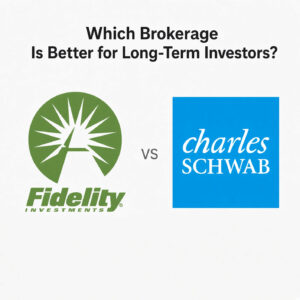
Both Fidelity and Charles Schwab offer zero-commission stock and ETF trading. What sets them apart is their routing practices. Fidelity, for instance, does not accept Payment for Order Flow for standard equity trades. Instead, they use smart order routing to find the best possible price execution in the market. For large orders, the price improvement you receive at Fidelity can save you more money than you would save using a standard zero-commission app, making them exceptionally cheap in terms of total execution cost.
Lowest Margin Rates in the Brokerage Industry
If your strategy involves borrowing capital, the landscape shifts dramatically. Many brokers that offer “free” trading subsidize those costs by charging exorbitant margin interest rates, sometimes exceeding 11% or 12%.
Interactive Brokers: The Undisputed King of Low Margin Rates
Interactive Brokers (IBKR) has long been the industry benchmark for cheap margin. Their pricing is directly tied to benchmark overnight rates, and their markup is incredibly thin. For their IBKR Pro tier, margin rates scale based on the size of the loan, often sitting at roughly 5% to 6% on standard balances, and dropping even lower for million-dollar portfolios. If you use leverage heavily, Interactive Brokers will almost certainly charge you the least over the course of a year.
Public.com and M1 Finance: Low-Cost Leverage for Retail
Recently, platforms like Public.com and M1 Finance have aggressively lowered their margin rates to compete with institutional brokers. Public offers highly competitive margin rates starting under 5% for larger balances, making it an excellent alternative for retail investors who want a modern interface without the punishing 11% rates seen at legacy brokerages. M1 Finance integrates margin directly into its automated portfolio “pies,” offering discounted rates to users who opt into their promotional or premium tiers.
Margin Rates Comparison
To illustrate the massive disparity in borrowing costs, here is a comparison of standard base margin rates across the industry for a $25,000 borrowed balance:
| Brokerage Platform | Estimated Base Margin Rate ($25k Balance) | Best For |
|---|---|---|
| Interactive Brokers (Pro) | ~ 5.13% | Active Margin Traders, Institutional |
| Public.com | ~ 5.00% | Retail Margin Users |
| Robinhood | ~ 5.00% | Retail Users (Requires Gold Subscription) |
| Charles Schwab | ~ 11.33% | Wealth Management, Cash Portfolios |
| Fidelity | ~ 11.33% | Retirement, Cash Portfolios |
| E*TRADE | ~ 12.25% | Options Traders, Cash Accounts |
Note: Margin rates are variable and fluctuate based on the Federal Reserve’s benchmark interest rates.
Best Low-Cost Brokers for Options Trading
Options traders face a different fee schedule than stock traders. Because options require complex routing and carry exchange fees, finding the cheapest broker depends entirely on your trading volume and contract size.
Robinhood and Webull: Zero-Fee Options Contracts

If you want absolutely zero fees, Robinhood and Webull are among the very few brokers that charge $0 base commissions and $0 per-contract fees. If you buy a single options contract on Robinhood, it costs exactly the premium of the contract and not a penny more (excluding mandatory regulatory fees which are fractions of a cent). For traders dealing in low quantities or cheap options, this is unbeatable.
Tastytrade: Built Specifically for High-Volume Options Traders
Tastytrade offers a unique and highly cost-effective pricing structure for heavy options traders. They charge $1.00 to open a contract and $0 to close it (effectively $0.50 per leg). However, their massive advantage is that fees are capped at $10 per leg per option class. If you buy 50 contracts of a specific stock, you only pay $10, not the $32.50 you would pay at a traditional broker charging $0.65 per contract. For high-volume traders, Tastytrade is incredibly cheap.
Charles Schwab, E*TRADE, and Fidelity: Industry Standards
The traditional heavyweights all settled on a standard pricing model: $0 base commission and $0.65 per contract. While this is slightly more expensive than the platforms mentioned above, these brokers offer advanced risk analysis platforms (like Schwab’s thinkorswim) that are provided for free. The quality of the free software often justifies the $0.65 fee for serious derivative traders.
Lowest Fees for Mutual Funds and Index Investing
For passive investors focused on retirement accounts and index funds, trading commissions and margin rates are irrelevant. The focus shifts entirely to expense ratios and mutual fund transaction fees.
Vanguard: The Benchmark for Low Expense Ratios

Vanguard is uniquely structured; it is owned by its funds, which are in turn owned by the investors. This structure forces Vanguard to operate at cost, resulting in some of the lowest expense ratios in the world. Buying Vanguard ETFs (like VOO or VTI) on the Vanguard platform is free, and the internal costs are near zero, ensuring maximum compounding over time.
Fidelity: Zero Expense Ratio Funds

Fidelity took index fund pricing a step further by introducing the industry’s first absolutely zero-expense-ratio index funds. Funds like the Fidelity ZERO Large Cap Index Fund (FNILX) and the Fidelity ZERO Total Market Index Fund (FZROX) charge 0.00% annually and require zero minimum investment. If you build a portfolio exclusively using these proprietary funds within a Fidelity account, you will pay exactly $0 in management fees over your entire lifetime—making Fidelity mathematically the cheapest broker for this specific strategy.
Hidden Brokerage Fees You Must Avoid
Even at the cheapest brokers, careless account management can trigger hidden administrative fees. Always review a broker’s complete fee schedule to avoid these common traps.
Paper Statement Fees
In an effort to go green and cut costs, nearly all brokers now charge a fee if you request physical paper statements mailed to your house. This fee usually ranges from $2 to $5 per statement. Always ensure your account is set to electronic delivery immediately upon opening.
Reorganization and Corporate Action Fees
When a company you own goes through a corporate action—such as a reverse stock split, a merger, or a spin-off—some discount brokers charge a mandatory reorganization fee. This fee can be incredibly frustrating, sometimes costing $38 or more, simply because a stock in your portfolio executed a reverse split. Traditional brokers like Fidelity often waive these fees, whereas smaller discount apps may pass them onto you.
Wire Transfer Fees
While standard Automated Clearing House (ACH) bank transfers are free at virtually all brokerages, sending a same-day wire transfer usually incurs a fee. Domestic outbound wires typically cost between $25 and $30. Unless you need capital immediately for a major purchase like real estate, always utilize standard ACH transfers to avoid this cost.
ADR (American Depositary Receipt) Fees
If you buy shares of foreign companies traded on US exchanges (like international tech or automotive companies), you are often buying ADRs. The banks that hold the foreign shares and issue the ADRs charge pass-through custody fees, usually ranging from $0.01 to $0.03 per share annually. No broker can waive this fee, as it comes from the custodian bank, but it is important to be aware of it so you do not think your broker is randomly draining pennies from your account.
How Payment for Order Flow (PFOF) Impacts Your True Costs
To understand which broker is truly the cheapest, you must understand Payment for Order Flow. When you submit a market order on a zero-commission app, the broker does not send that order straight to the New York Stock Exchange. They send it to a market maker.
Price Improvement vs. Zero Commission
Market makers execute your trade and profit off the bid-ask spread—the tiny difference between what buyers are willing to pay and sellers are willing to accept. In exchange for the broker routing the trade to them, the market maker pays the broker a rebate.
The hidden cost to you is execution quality. A broker that does not accept PFOF is incentivized to search the broader market to find you a price that is slightly better than the current quote (known as price improvement). A broker relying heavily on PFOF may execute your trade exactly at the quoted price, keeping the spread profit for themselves and their market maker partner. Over thousands of shares, missing out on a penny of price improvement costs you far more than a traditional commission would have. Therefore, a broker with superior order routing but slightly higher standard fees might actually be cheaper in the long run than a purely “free” app.
Choosing the Most Cost-Effective Brokerage for Your Strategy

Because fee structures are highly targeted, the answer to “Which broker charges the least?” depends entirely on your investor profile.
The Best Broker for the Buy-and-Hold Investor
If your goal is to buy index funds every month and hold them for thirty years, Fidelity is arguably the cheapest platform. With access to zero-expense-ratio mutual funds, no PFOF on equities, zero commissions, and no account maintenance fees, your total lifetime cost can effectively be reduced to zero.
The Best Broker for the High-Volume Day Trader
If you are rapidly trading stocks and managing complex portfolios, Interactive Brokers is the clear winner. Their “Pro” tier offers direct market access, meaning you can route your own orders directly to specific exchanges to capture liquidity rebates. Their execution speed, combined with rock-bottom margin rates, offsets any minor transaction fees they may charge.
The Best Broker for Options Traders
For traders executing complex, multi-leg options strategies, Tastytrade provides the best cost efficiency due to its $10 capped fee structure. However, if you only trade one or two contracts at a time, Webull offers a completely fee-free environment that will keep your costs lower.
The Best Broker for Margin Users
If you plan to hold leveraged positions overnight or use your portfolio as a line of credit, standard brokerages will drain your account through interest. Interactive Brokers and Public.com stand out as the most affordable options, offering borrowing rates that are less than half of what traditional institutions charge.
Final Thoughts on Minimizing Your Investing Costs
In the modern financial environment, managing fees is one of the few variables an investor can completely control. The market’s returns are unpredictable, but your costs are guaranteed. By aggressively auditing broker fee schedules, refusing to pay for standard stock executions, hunting down low margin rates, and utilizing low-expense index funds, you keep more of your money compounding where it belongs—in your own portfolio.
The cheapest broker is not simply the one with the boldest “Zero Fees” banner on its homepage. The cheapest broker is the one whose revenue model explicitly aligns with your personal trading style, allowing you to operate efficiently without triggering hidden costs or punitive interest rates. Take the time to match your strategy to the right platform, and your future portfolio will thank you.