What to Do If Your Credit Card Is Cloned
image for illustrative purposes only.
Finding an unfamiliar charge on your bank statement is an instantly recognizable, sinking feeling. In our highly digital economy, credit and debit card cloning remains one of the most widespread financial crimes in the world. Whether it happens through a hidden skimming device at a gas pump, a massive corporate data breach, or a sophisticated phishing scheme, having your card compromised can feel like a direct violation of your personal security.
However, panicking will not solve the problem—swift, calculated action will. The moment your card data is duplicated by bad actors, a clock starts ticking. The speed at which you respond directly dictates how much money you can recover, how quickly your lifestyle returns to normal, and how effectively you protect your broader credit score.
If you suspect or have definitive proof that your financial information has fallen into the wrong hands, here is the comprehensive, step-by-step roadmap to shutting down the hackers, reversing the damage, and securing your financial future.
Act Fast: The Critical First 60 Minutes After Discovering a Compromised Card

When a criminal clones your card, they rarely wait to use it. They often test the water with a tiny, imperceptible transaction—like a $1.00 purchase at an obscure online merchant—before immediately unlocking a massive spending spree on luxury electronics, high-end clothing, or untraceable digital gift cards. This is why the first hour after discovery is the most critical window for damage control.
Your very first move should always be to utilize your financial institution’s instant containment features. Do not waste precious minutes waiting on hold for a customer service representative if you have access to mobile banking.
Lock the Account via Your Mobile App
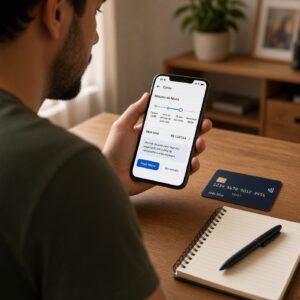
Log into your bank or credit card issuer’s smartphone application immediately. Nearly every modern financial institution features a prominent button that reads “Freeze Card,” “Lock Account,” or “Block Card.” Toggling this switch instantly disables all incoming point-of-sale transactions, ATM withdrawals, and online purchases.
Locking your card buying power buys you the valuable time needed to contact fraud departments without worrying about additional unauthorized charges slipping through the cracks.
Gather Your Transaction Evidence
Before the digital trail grows cold, document every piece of suspicious activity. Take high-resolution screenshots of your recent transaction ledger. Pay close attention to:
-
The exact timestamp of the fraudulent charge.
-
The listed merchant name (which is often coded or slightly altered by fraudsters to hide their location).
-
The specific dollar amount, down to the exact cent.
-
Any unusual “pending” charges that have not fully settled yet.
Having this information organized and readily available will streamline the upcoming conversations with your bank’s security personnel and any law enforcement agencies involved.
How to Contact Your Bank’s Fraud Department for a Stress-Free Resolution
Once the card is safely locked within your app, it is time to initiate the formal remediation process. While calling a major financial institution can sometimes feel daunting, knowing exactly what to say and which department to target can transform a frustrating administrative hurdle into a smooth, professional transaction.
When you call the number on the back of your physical card (or the official corporate hotline listed on their secure website), immediately ask to be transferred directly to the Fraud and Identity Theft Division, bypassing general customer service whenever possible.
Declare the Theft and Disavow the Charges
When speaking with the fraud investigator, use clear, definitive language. State plainly: “My card has been cloned, and I am officially disputing unauthorized transactions.” Walk the agent through the specific charges you compiled during your evidence-gathering phase.
Be sure to clarify that the physical card is still in your possession, which explicitly proves that the data was digitally duplicated or intercepted rather than the physical piece of plastic being lost or stolen.
Request a Comprehensive Security Reset
Once the fraudulent charges are flagged, request that the bank permanently close the compromised account number and issue a completely new card. Ensure the agent guarantees the following actions:
-
A Brand-New 16-Digit Card Number: The old number must be completely decommissioned.
-
A Fresh CVV/CVC Code: The three- or four-digit security code on the back must change.
-
An Updated Card Expiration Date: This alters the cryptographic validation parameters for online purchases.
-
A New PIN (Personal Identification Number): If your debit card was cloned, the old PIN must be scrubbed from the system entirely.
Clarify the Investigation Timeline and Provisional Credit
Before hanging up, ask the investigator about your temporary financial coverage. Most reputable credit card issuers will issue a provisional credit to your account within 24 to 48 hours. This temporary credit replaces the stolen funds while the bank conducts its internal investigation, ensuring you aren’t left short on cash for essential living expenses.
Always ask for a formal reference number or tracking case number for the dispute call, and request that a written confirmation of the conversation be sent directly to your secure email address.
Credit Cards vs. Debit Cards: Understanding Your Legal Liability and Financial Rights
The financial impact of a cloned card depends heavily on whether the compromised account is a credit card or a standard debit card connected directly to a checking account. The legal protections governing these two financial instruments are starkly different, and understanding your rights is crucial to managing your expectations during recovery.
| Feature / Protection | Credit Cards | Debit Cards |
| Source of Funds | The bank’s money (line of credit). | Your personal cash (checking account). |
| Immediate Cash Impact | None; your actual savings remain untouched. | Severe; your money is missing until refunded. |
| Maximum Legal Liability | Capped at $50 (and dropped to $0 by most issuers). | Up to $500 or unlimited if reported late. |
| Dispute Resolution Window | Highly favorable; often resolved within days. | Can take up to 10-45 business days to finalize. |
Under consumer protection regulations in major Western markets, credit card users enjoy exceptionally robust safety nets. If your physical credit card is still in your pocket and only the digital data was cloned, your legal liability for unauthorized charges is typically zero dollars. Furthermore, because a credit card utilizes the bank’s money rather than your own, a fraud event does not empty your wallet or prevent you from paying your mortgage while the issue is being sorted out.
Debit cards, conversely, carry significantly higher risk. When a debit card is cloned, real money disappears from your checking account instantly. If you fail to report the fraud within a couple of days of noticing it, your legal liability can escalate sharply, potentially leaving you responsible for hundreds of dollars in losses—or worse, the entire amount stolen. This stark reality is why financial advisors universally recommend using credit cards for daily transactions and reserving debit cards exclusively for secure ATM cash withdrawals.
Stopping the Domino Effect: Auditing Your Automated Recurring Payments

Once your old, compromised card number is cancelled and a new one is ordered, you might think the ordeal is completely over. However, many consumers forget that their old card was likely tethered to dozens of automated digital services, subscriptions, and recurring bills.
If you do not proactively manage this transition, you risk experiencing a wave of service disruptions, late fees, and dunning notices from companies attempting to charge a dead card.
Audit Your Digital Footprint
Sit down and compile a comprehensive checklist of every service that automatically bills your account on a weekly, monthly, or annual basis. Be sure to check:
-
Streaming Services and Entertainment: Netflix, Spotify, Disney+, digital gaming networks, and cloud storage subscriptions.
-
Essential Utilities: Electric bills, water delivery, internet service providers, and mobile phone payment profiles.
-
Transportation and Delivery Profiles: Ride-sharing apps, food delivery platforms, and toll road transponder accounts.
-
E-Commerce One-Click Checkout: Amazon, digital wallets, and retail sites where your card data is saved for convenience.
The Peril of Automatic Account Updaters
Many major card networks feature a technology known as an Automatic Account Updater. This service automatically shares your new card details with select merchants to prevent subscription interruptions.
While this sounds convenient, it can occasionally cause problems if a scammer managed to sign up for a recurring subscription using your cloned details. When you speak to your bank to cancel the card, explicitly ask them to disable or clear the automatic updater profile for the old account number. This guarantees that no previous merchants—legitimate or fraudulent—can carry over their billing permissions to your brand-new piece of plastic.
Tracing the Leak: How Criminals Clone Cards Without Ever Touching Them
To prevent your new card from meeting the exact same fate as your old one, it helps to understand the diverse methods modern cybercriminals use to harvest financial data. Card cloning has evolved far beyond simple physical theft; today, it is an industrialized, highly automated underground business.
1. Hardware Skimming and Shimming
This is the classic physical attack vector. Criminals attach miniature electronic reading devices over legitimate card slots at gas station pumps, outdoor ATMs, or parking meters.
A skimmer reads the magnetic stripe data, while a highly sophisticated shimmer is a microscopic, paper-thin shim inserted directly into the internal card reader slot to intercept data from modern EMV microchips. These devices are often paired with tiny pinhole cameras hidden nearby to record you typing your PIN on the keypad.
2. Digital Sniffing and E-Commerce Skimming (Magecart Attacks)
You do not even need to leave your house to have your card cloned. In an e-commerce skimming attack, cybercriminal networks inject malicious lines of code into the checkout pages of vulnerable online retail websites.
When you type your card number, expiration date, and CVV into the payment fields of an infected site, the malicious code copies your data in real-time and transmits it to an offshore server, all while your online purchase processes perfectly normally.
3. Phishing, Smishing, and Social Engineering
Sometimes, scammers simply trick you into handing over the data yourself. This frequently occurs via smishing (SMS text message phishing).
You might receive an urgent text message claiming to be from a major delivery service or a utility company, stating that a package cannot be delivered until you pay a $1.50 redelivery fee. The link takes you to a flawless replica of a legitimate corporate website. The moment you input your credit card details to pay the tiny fee, the fraudsters clone your information and immediately target your main line of credit.
Advanced Preventative Strategies: Securing Your Financial Future Against Identity Theft
Recovering from a single cloned card is a minor inconvenience; recovering from total identity theft can take years of legal battles. When criminals get ahold of your credit card details, they sometimes use that data to dig deeper into your personal life, attempting to access your credit reports or open entirely new lines of credit in your name.
Implementing advanced security measures creates an ironclad perimeter around your personal wealth.
Implement a Comprehensive Credit Freeze
If you want the ultimate layer of identity protection, contact the major credit bureaus and request a formal credit freeze (also known as a security freeze). A credit freeze completely locks your credit file, preventing anyone—including yourself—from opening a new credit card, auto loan, or mortgage in your name.
If a fraudster attempts to use your cloned identity to apply for a new loan, the lender will be unable to pull your credit profile, and the application will be instantly rejected. When you legitimately need to apply for financing in the future, you can instantly “thaw” the freeze for a specific period via the credit bureau’s secure online portal.
Transition Entirely to Tokenized Virtual Cards
The absolute best way to protect your physical card data online is to never use it. Many modern banks and financial apps now offer virtual credit cards. These are temporary, digitally generated credit card numbers that link directly to your main account but feature entirely different 16-digit sequences, CVVs, and expiration dates.
-
Merchant-Specific Virtual Cards: You can generate a virtual card dedicated solely to a single merchant (e.g., a specific streaming service). Even if that company suffers a massive data breach and hackers steal the card number, the card is completely useless at any other store on the planet.
-
Burner Virtual Cards: These numbers automatically self-destruct the exact millisecond they are charged once. They are ideal for making purchases on unfamiliar websites or signing up for free trials where you want to completely eliminate the risk of surprise recurring bills.
Leverage the Safety of Mobile Wallets
When shopping at physical brick-and-mortar stores, ditch the habit of inserting or swiping your physical plastic card. Instead, utilize mobile wallet architectures like Apple Pay, Samsung Pay, or Google Wallet on your smartphone or smartwatch.
Mobile wallets utilize a hyper-secure technology called tokenization. When you tap your phone to pay, the device transmits a completely randomized, single-use digital token to the merchant terminal rather than your real card details. If the store’s payment terminal happens to be infected with a hidden skimming device, the criminal only steals a dead, expired cryptographic token that can never be used again.
Long-Term Surveillance: Maintaining Financial Health Post-Compromise

Once your funds are restored and your new card arrives, it is dangerous to fall back into a state of complacency. Cybercriminals frequently trade and sell compiled lists of compromised consumer profiles on underground dark web networks. If your data was leaked once, you must remain incredibly vigilant to ensure secondary accounts are not targeted in subsequent months.
Make it an unbreakable habit to review your financial statements weekly rather than waiting for the monthly statement to generate. Better yet, access your banking application and configure instant transaction push notifications. With this feature active, your smartphone will buzz with the exact dollar amount and merchant name the exact millisecond your card is used anywhere globally. If a fraudulent charge occurs, you will know about it immediately, allowing you to neutralize the threat before it escalates into a financial crisis.
Consistently monitoring your credit reports through free annual monitoring services ensures that no ghostly accounts are being managed behind your back. Navigating the modern digital economy requires a healthy balance of caution and technological savvy. By reacting with speed, understanding your consumer rights, and adopting modern tokenized payment methods, you can successfully re-secure your capital, leaving cybercriminals completely empty-handed.