How to Divide Your Paycheck Between Bills, Savings, and Spending

image for illustrative purposes only.
Understanding the Fundamentals of Paycheck Budgeting
Paycheck budgeting is the process of intentionally assigning every dollar you earn to a specific purpose before you spend it. Many people make the mistake of paying their bills as they arrive, spending money throughout the month, and saving whatever happens to be left over. Unfortunately, this approach often leaves nothing for savings and creates unnecessary financial stress when unexpected expenses arise.
When you divide your paycheck systematically, you gain total clarity over your cash flow. You stop wondering where your money went and start directing it toward your personal goals. A structured budget acts as a financial roadmap, helping you cover your immediate obligations, prepare for future opportunities, and eliminate the confusion surrounding your daily purchasing decisions.
The 50/30/20 Rule: The Best Budgeting Framework for Beginners
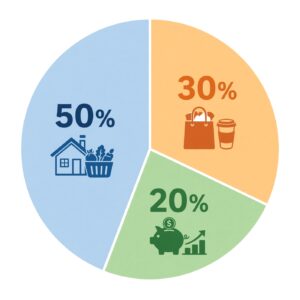
One of the most effective and popular methods for allocating income is the 50/30/20 budgeting rule. Popularized by financial experts, this simple framework divides your net (after-tax) income into three distinct categories: Needs, Wants, and Savings.
1. 50% for Needs (Essential Bills)
Half of your take-home pay goes directly toward mandatory living expenses. These are non-negotiable costs that you must pay to maintain basic shelter, health, and employment. Essential expenses include:
- Housing costs (rent or mortgage payments)
- Utilities (electricity, water, gas, and basic internet)
- Transportation (car payments, auto insurance, gas, or public transit)
- Groceries and basic food essentials
- Minimum required debt payments (student loans, minimum credit card payments)
- Healthcare premiums and required medications
2. 30% for Wants (Personal Spending)
Thirty percent of your income is allocated to personal lifestyle choices. These are expenses that enhance your life but are not strictly required for survival. Categorizing these items allows you to enjoy your money without compromising your financial security. Wants typically include:
- Dining out, takeout, and coffee shop visits
- Entertainment, movies, concert tickets, and events
- Streaming services and non-essential subscriptions
- Hobbies, fitness memberships, and recreational activities
- Vacations, travel, and weekend getaways
- Apparel and electronics beyond basic necessities
3. 20% for Savings and Financial Goals
The final twenty percent of your paycheck goes directly toward securing your financial future. This category builds wealth, protects you against emergencies, and helps you achieve long-term financial independence. Key allocations include:
- Emergency fund contributions
- Retirement accounts (401(k), Roth IRA, traditional IRA)
- Extra debt payments to pay down balances faster
- Investment accounts (index funds, stocks, real estate)
- Short-term savings goals (down payment fund, new vehicle fund)
Step-by-Step Strategy to Divide Your Paycheck Every Month
Implementing a new financial system is easy when broken down into manageable steps. Follow this action plan to structure your income every time you get paid.
Step 1: Calculate Your Net Income Accurate
Start by identifying your exact take-home pay. This is the actual amount deposited into your bank account after taxes, health insurance deductions, and employer-sponsored retirement contributions have been deducted. If your income varies due to hourly shifts, commissions, or freelancing, calculate your average earnings over the past three to six months to establish a reliable baseline figure.
Step 2: List and Categorize Your Monthly Expenses
Review your bank and credit card statements from the past two to three months. List every recurring cost and classify each item into one of the three primary buckets: Needs, Wants, or Savings. Be honest during this review—items like premium cable channels or daily premium coffees belong in the Wants category, even if they feel essential.
Step 3: Calculate Your Category Percentages
Multiply your net income by the target percentages to establish your spending limits:
- Needs Limit: Net Income × 0.50
- Wants Limit: Net Income × 0.30
- Savings Target: Net Income × 0.20
Compare these target amounts to your actual spending. If your essential bills currently exceed 50% of your income, do not panic. Adjustment strategies discussed later in this guide will help you rebalance your numbers over time.
Step 4: Automate Your Allocations Immediately
Automation eliminates temptation and ensures consistency. Set up automatic transfers through your bank account so that on payday, funds move immediately into designated savings and bill-pay accounts before you have the chance to spend them discretionary.
Alternative Paycheck Allocation Strategies for Different Financial Situations
While the 50/30/20 rule works exceptionally well for many people, financial management is not one-size-fits-all. Depending on your current debt level, income, and local cost of living, alternative methods may better suit your circumstances.
The 70/20/10 Rule for High Living Costs
If you live in an area with high housing costs or have temporary financial pressures, reaching a 50% limit on needs can be challenging. The 70/20/10 model adjusts allocations as follows:
- 70% for Living Expenses: Covers both essential needs and personal spending combined.
- 20% for Savings: Directed to emergency funds, investments, and long-term targets.
- 10% for Debt Payoff or Giving: Used to accelerate debt elimination or charitable donations.
The 80/20 Budget (Pay Yourself First)
If detailed tracking feels overwhelming, the 80/20 method offers extreme simplicity. You automatically transfer 20% of your paycheck into savings as soon as you are paid. The remaining 80% is left in your checking account to cover all expenses, bills, and personal spending without granular tracking.
Zero-Based Budgeting for Total Control
Under zero-based budgeting, every dollar of your income is assigned a specific function until your total income minus expenses equals zero. If you earn $4,000 per month, your bills, savings allocations, and spending categories must equal exactly $4,000. This system prevents unallocated money from leaking away on unplanned purchases.
How to Build an Emergency Fund That Protects Your Budget

An emergency fund is the foundation of any successful financial plan. Without a dedicated cash cushion, an unexpected car repair, medical expense, or sudden income reduction can force you into high-interest credit card debt, disrupting your entire budget.
Determining Your Target Emergency Fund Size
Financial planners generally recommend accumulating three to six months worth of essential living expenses in a liquid savings account:
- Starter Emergency Fund: $1,000 to cover minor unexpected costs while paying off high-interest debt.
- 3-Month Cushion: Ideal for individuals with stable jobs, dual-income households, or minimal fixed expenses.
- 6-Month Cushion: Recommended for single-income households, freelancers, gig workers, or industries prone to layoffs.
Where to Keep Your Emergency Savings
Store your emergency funds in a High-Yield Savings Account (HYSA). HYSAs keep your capital safe, liquid, and accessible while earning significantly higher interest rates than traditional traditional savings accounts, helping your cash keep pace with inflation.
Strategies for Managing High-Interest Debt While Saving
Balancing debt repayment alongside savings can feel like a tightrope walk. Prioritizing high-interest consumer debt (such as credit cards with APRs above 15%) yields the highest financial return, as interest charges compound rapidly over time.
The Debt Avalanche Method
The debt avalanche method focuses on mathematical efficiency. You make minimum payments on all debts, then direct every extra dollar toward the balance with the highest interest rate. Once the highest-rate debt is cleared, you roll that payment into the next highest rate. This minimizes total interest paid and shortens repayment time.
The Debt Snowball Method
The debt snowball method focuses on psychological momentum. You make minimum payments on all debts and focus extra payments on the smallest balance first, regardless of interest rates. Paying off small accounts quickly provides fast wins that build motivation to tackle larger debts.
Smart Tips to Cut Expenses and Boost Savings
If your essential expenses currently eat up more than 50% of your paycheck, small optimizations across your spending categories can free up substantial cash flow.
Optimizing Essential Costs (Needs)
- Audit Utility Bills: Lower your thermostat, switch to energy-efficient lighting, and shop around for competitive insurance rates annually.
- Refinance Loans: Explore lowering your mortgage or auto loan interest rates if market conditions permit.
- Plan Groceries Strategically: Create weekly meal plans, buy non-perishables in bulk, and stick to store brands over name brands.
Trimming Lifestyle Spending (Wants)
- Cancel Unused Subscriptions: Track recurring digital app charges, gym memberships, and streaming accounts, removing services you rarely use.
- Implement a 48-Hour Rule: For non-essential purchases over a set threshold (e.g., $50), wait 48 hours before buying to curb impulse spending.
- Cook at Home More Often: Limit dining out to special occasions and prepare coffee at home to retain more discretionary cash.
Common Paycheck Budgeting Mistakes to Avoid
Even well-designed budgets can stall if common pitfalls arise. Recognizing these errors helps maintain long-term consistency.
1. Underestimating Irregular Expenses
Annual insurance premiums, car registrations, property taxes, and holiday shopping often surprise spenders. Prevent budget disruptions by setting up separate “sinking funds”—saving a small monthly amount toward these known future costs throughout the year.
2. Setting Unrealistic Restrictive Limits
Budgeting too strictly by eliminating all personal spending leads to burnout and eventual overspending sprees. Allow room for enjoyable, guilt-free entertainment within your Wants category to maintain a sustainable lifestyle.
3. Forgetting to Adjust for Income Changes
Whenever you receive a raise, bonus, or new income stream, adjust your budget immediately. Avoid “lifestyle creep”—the tendency to increase spending proportionately with income—by directing at least half of any new earnings straight into savings and investments.
Take Control of Your Paycheck Today

Dividing your paycheck between bills, savings, and personal spending is not about restricting your freedom—it is about creating peace of mind. By adopting a structured model like the 50/30/20 rule, automating your transfers, and protecting your money with an emergency fund, you build a resilient foundation for long-term wealth.
Start small today: calculate your net take-home pay, audit your recent spending, and set up your first automated savings transfer. Consistency matters far more than perfection, and taking control of your very next paycheck puts you on the direct path to financial confidence.