How to Build a Cryptocurrency Portfolio?
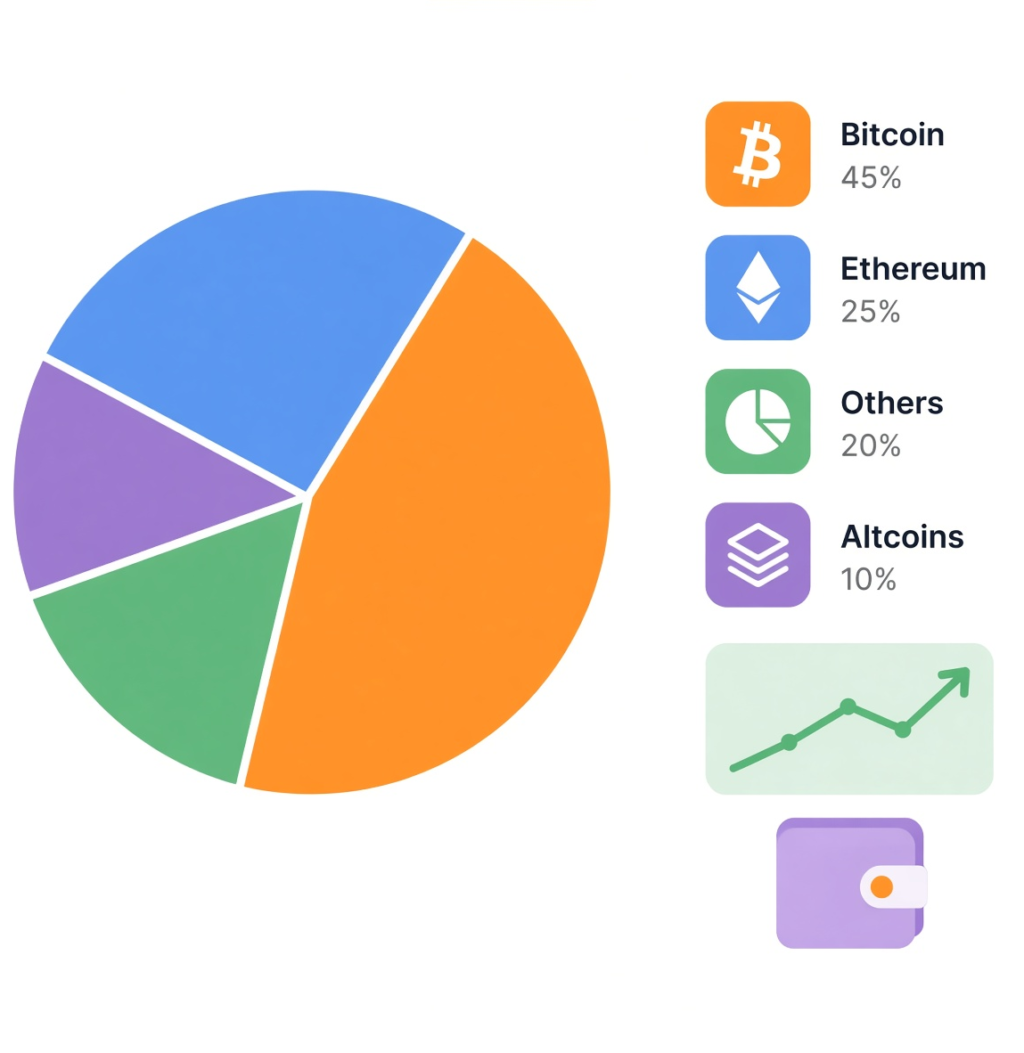
image for illustrative purposes only.
Navigating the digital asset landscape requires much more than simply buying a few trending coins and hoping for the best. As the financial ecosystem matures, building a resilient cryptocurrency portfolio has become an exercise in strategic asset allocation, risk management, and disciplined execution. Whether you are allocating a modest amount of capital or managing significant wealth, the architecture of your holdings dictates your long-term success. Randomly accumulating tokens often leads to overexposure, emotional decision-making, and catastrophic drawdowns during market corrections.
Creating a structured portfolio safeguards against the inherent volatility of digital assets while capturing the asymmetric upside that blockchain technology offers. This guide explores advanced frameworks, structural principles, and analytical methods required to construct, balance, and maintain an institutional-grade cryptocurrency portfolio tailored to modern market dynamics.
Understanding Core Asset Classes and Market Capitalization Tiers

The foundation of any robust portfolio begins with proper categorization. Lumping every digital asset into a single category ignores fundamental differences in utility, liquidity, and risk profile. Effective diversification requires segmenting assets by market capitalization and economic function, mirroring traditional multi-asset class investing adapted for decentralized networks.
Large-cap assets, anchored by established protocols like Bitcoin and Ethereum, generally serve as the macroeconomic bedrock of a digital portfolio. These assets command the majority of total market liquidity, boast deep historical data, and exhibit a higher degree of correlation with broader financial markets. They act as a store of value and foundational settlement layers, offering lower relative downside risk during severe liquidity crunches compared to nascent tokens.
Moving down the capitalization spectrum introduces mid-cap and small-cap assets, which encompass decentralized finance (DeFi) primitives, layer-1 alternatives, specialized utility tokens, and emerging network applications. While these assets carry substantially higher volatility and smart contract risks, they provide exponential growth potential that large-cap assets can no longer replicate due to their sheer market size. Balancing these tiers ensures that your capital is not entirely parked in mature assets, nor recklessly gambled on speculative micro-caps.
Furthermore, integrating stablecoins as a distinct asset class within your portfolio provides structural flexibility. Stablecoins act as dry powder, allowing investors to capitalize on sudden market sell-offs without needing to introduce external fiat currency rapidly. Maintaining a dedicated cash-equivalent allocation mitigates downside velocity and anchors the portfolio during periods of macro-uncertainty.
Applying Modern Portfolio Theory to Digital Assets
Modern Portfolio Theory (MPT), originally developed to optimize traditional stock and bond portfolios, offers valuable lessons when applied to digital assets. The core premise of MPT is that an investment’s risk and return should not be assessed in isolation, but by how it contributes to an overall portfolio’s risk and return profile.
Because different cryptographic sectors react differently to macroeconomic catalysts, regulatory updates, and technological upgrades, combining uncorrelated or low-correlation assets can smooth out equity curves. For instance, a protocol focused on decentralized storage may experience a completely different demand cycle than a decentralized exchange token or a layer-1 scaling solution. By analyzing historical variance and covariance among various token categories, investors can construct an efficient frontier that maximizes expected return for a targeted level of risk.
Correlation breakdown is a frequent phenomenon during systemic market panics, where nearly all digital assets temporarily trend toward a correlation of one. To combat this, advanced portfolio managers utilize asset weighting models that account for tail risk. Rather than relying solely on historical volatility, stress-testing the portfolio against simulated 50% to 80% drawdowns in primary assets reveals structural weaknesses before they manifest in real-time capital loss.
Strategic Allocation Frameworks and Weighting Models
Determining the precise percentage of capital assigned to each asset requires a clear alignment with your individual risk tolerance, investment horizon, and capital preservation goals. Several established allocation frameworks help remove the guesswork from asset distribution.
The Core-Satellite Approach
The core-satellite framework is widely regarded as one of the most effective structures for balancing stability and growth.
-
The Core: Comprises 60% to 80% of the portfolio, heavily weighted toward established pillars like Bitcoin and Ethereum. This segment prioritizes security, network longevity, and institutional adoption.
-
The Satellite: Comprises the remaining 20% to 40%, allocated to high-conviction altcoins, sector-specific plays, and emerging narratives. This section is actively managed to capture outsized market movements.
Risk-Parity Allocation
Unlike traditional market-cap weighting—which leaves portfolios vulnerable to whatever asset has pumped the hardest—risk-parity allocates capital based on the volatility contribution of each asset. Volatile small-cap tokens receive smaller percentage weights, while stable assets receive larger allocations, ensuring that no single volatile asset dominates the risk profile of the entire fund.
Milestone-Based Rebalancing Rules
A static portfolio quickly drifts out of balance as market prices fluctuate. Establishing strict rebalancing parameters is essential. Investors can choose between calendar-based rebalancing (e.g., reviewing and adjusting weights quarterly) or threshold-based rebalancing (e.g., rebalancing whenever an asset class deviates by more than 10% from its target weight). This forces a systematic behavior of taking profits on outperforming assets and buying under-accumulated dips.
Fundamental Research Metrics for Token Evaluation

Selecting assets for the satellite tier or expanding core holdings demands rigorous fundamental analysis. Unlike traditional equities, which rely on balance sheets and quarterly earnings reports, crypto assets require evaluating on-chain metrics, tokenomics, and developer ecosystem health.
Circulating supply versus fully diluted valuation (FDV) is a critical metric that many retail investors overlook. A token may look inexpensive based on its current market capitalization, but if a massive percentage of the total supply is locked and scheduled to unlock via vesting schedules for team members and venture capitalists, severe downward emission pressure awaits. Analyzing the emission schedule helps forecast future supply inflation.
On-chain data offers unprecedented transparency into real network usage. Key indicators to monitor include:
-
Active Addresses: Tracking the daily growth or decline of unique wallet interactions indicates genuine adoption rather than speculative hype.
-
Total Value Locked (TVL): Particularly relevant for DeFi protocols, measuring the capital securely deposited within smart contracts reflects user trust and utility.
-
Transaction Volume and Fees: Sustainable networks generate organic fee revenue, proving that users are willing to pay for block space.
Evaluating developer activity—measured through GitHub commits, active contributors, and code updates—helps filter out vaporware projects with great marketing from protocols experiencing continuous technological iteration.
Risk Management, Security Architecture, and Custody
The most sophisticated portfolio allocation strategy is entirely worthless if the underlying capital is compromised by poor security practices or exchange insolvencies. Protecting your digital assets requires treating custody with the same rigor as traditional institutional wealth management.
Self-custody using hardware wallets remains the gold standard for long-term holders. Keeping substantial sums on centralized trading venues exposes investors to counterparty risk, regulatory freezes, and platform exploits. When distributing assets across storage solutions, adopting a multi-tier security model is prudent:
-
Cold Storage: Offline hardware devices dedicated to holding core long-term assets that rarely move.
-
Hot Wallets: Software interfaces utilized strictly for interacting with decentralized applications, funded only with the exact capital required for immediate transactions.
Operational security (OpSec) protocols must be woven into daily habits. This includes utilizing hardware-based two-factor authentication (avoiding SMS-based 2FA due to SIM-swapping vulnerabilities), maintaining air-gapped seed phrase backups stored physically on durable metal plates rather than digital clouds, and verifying smart contract permissions regularly to revoke unnecessary token approvals.
Tax Efficiency, Record Keeping, and Portfolio Tracking
Navigating the financial obligations associated with digital asset transactions requires meticulous record-keeping. Every trade, staking reward, airdrop, and protocol interaction can trigger a taxable event depending on local jurisdictional laws. Failing to maintain clean records complicates accounting and invites compliance penalties.
Utilizing dedicated portfolio tracking software integrated via read-only API keys allows investors to monitor real-time performance, asset allocation drift, and historical cost bases across multiple wallets and exchanges. However, automation should always be cross-referenced with manual transaction logs to ensure accuracy.
Implementing a systematic approach to tracking realized versus unrealized gains helps optimize tax efficiency. For instance, understanding the tax implications of swapping one crypto asset for another—which is treated as a disposal in many major economies—prevents unexpected liabilities at the end of the fiscal year. Strategic tax-loss harvesting, where applicable, can also be utilized to offset capital gains against documented losses during market downturns.
Crafting Your Personal Execution Plan
Building a professional-grade cryptocurrency portfolio is not a single event, but an ongoing process of refinement, evaluation, and disciplined execution. By moving away from emotional decision-making and anchoring your strategy in Modern Portfolio Theory, rigorous fundamental research, strict risk-management rules, and ironclad security protocols, you position your capital to weather market cycles effectively.
Take the time to audit your current holdings against these structural principles. Define your asset tiers, establish clear rebalancing thresholds, and commit to continuous education as the digital asset landscape evolves. A disciplined strategy executed consistently over a multi-year horizon remains the most reliable path to achieving long-term financial objectives in the world of decentralized finance.