What is the Bitcoin Halving?
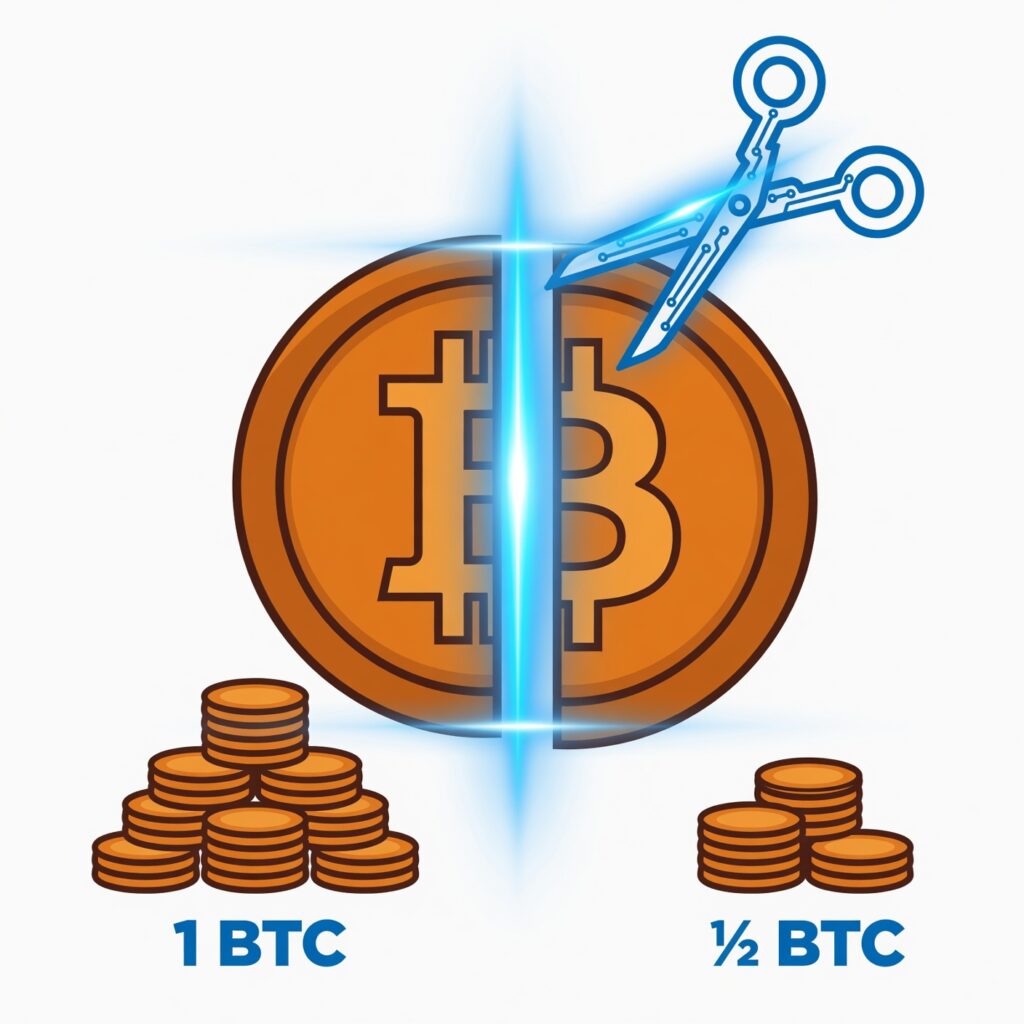
image for illustrative purposes only.
The digital asset landscape is shaped by unique economic rules that separate decentralized currencies from traditional fiat systems. Among these mechanics, few events carry as much weight or generate as much anticipation as the periodic reduction of new coin issuance. Whether you are a seasoned portfolio manager or a newcomer exploring decentralized finance, understanding this core protocol change is essential for navigating market cycles.
This comprehensive guide breaks down the mechanics behind the event, explores its historical performance, examines its direct influence on network security, and analyzes broader macroeconomic implications.
What Is the Bitcoin Halving and How Does It Work?
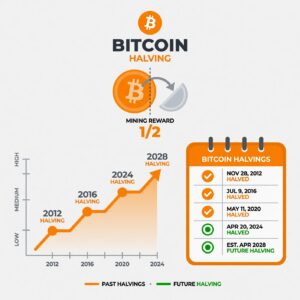
At its core, the reduction event is a pre-programmed mechanism hardcoded into the original software code. It is designed to cut the rate of new coin creation in half at regular intervals.
The network relies on a decentralized network of computers, known as nodes and miners, to process transactions and secure the blockchain through a cryptographic proof-of-work consensus model. When miners successfully validate a new block of transactions and add it to the ledger, they receive newly minted coins as compensation for their computational effort.
Rather than releasing the entire maximum supply of 21 million units all at once, the protocol dictates that this block reward drops by fifty percent after every 210,000 blocks are processed. Given that a new block is generated approximately every ten minutes, this milestone occurs roughly once every four years.
-
Fixed Supply Cap: The absolute maximum limit is permanently capped at 21 million units.
-
Predictable Issuance: The programmatic reduction schedule ensures that coin creation slows down predictably over time.
-
Decentralized Execution: No central authority, government, or developer can alter, delay, or cancel this scheduled event.
The Mathematical Foundation and Deflationary Design
To fully grasp why this mechanism matters, it helps to look at the contrast between decentralized digital assets and state-issued fiat money. Central banks and governments possess the authority to print traditional currency at will. This ability often leads to price inflation, where the purchasing power of money erodes steadily over long periods.
The protocol approaches economics from the opposite direction. By systematically lowering the daily issuance of new coins, the system transitions into a naturally disinflationary asset class.
When the network first launched, miners received 50 coins per validated block. Following the sequence of programmed reductions, that reward drops progressively across eras:
-
Inception Era: 50 coins per block
-
First Reduction: 25 coins per block
-
Second Reduction: 12.5 coins per block
-
Third Reduction: 6.25 coins per block
-
Fourth Reduction: 3.125 coins per block
This geometric progression guarantees that the issuance curve flattens closer to zero over decades. Current projections estimate that the final fraction of a coin will be mined around the year 2140. Once that threshold is reached, no new units will ever be created.
Historical Timeline and Market Cycles
Looking back at past milestones reveals clear patterns in how the market reacts to supply adjustments. While past performance does not guarantee future results, studying prior cycles offers valuable context for market participants.
The 2012 Milestone
The very first reduction occurred when the block reward dropped from 50 down to 25 coins. At that time, the asset traded at a modest double-digit value. Over the subsequent twelve to eighteen months, heightened attention and a developing exchange ecosystem propelled valuations significantly higher, introducing the concept of multi-year market cycles to the public.
The 2016 Milestone
Taking place at block height 420,000, the reward fell from 25 to 12.5 coins. This era coincided with wider retail awareness, the expansion of global trading platforms, and the initial wave of mainstream financial media coverage. The ensuing months established a prolonged upward trend that culminated in late 2017.
The 2020 Milestone
Dropping the reward from 12.5 to 6.25 coins, this occurrence unfolded during an unprecedented macroeconomic backdrop characterized by global monetary expansion and stimulus packages. As institutional investors began seeking alternative stores of value to hedge against rising inflation, the market experienced substantial capital inflows throughout 2020 and 2021.
The 2024 Milestone
Bringing the block reward down to 3.125 coins, this recent cycle arrived alongside major regulatory shifts, including the approval of spot exchange-traded funds in major global financial markets. This structural shift introduced a brand-new category of institutional demand right as the daily influx of newly minted coins shrank.
Impact on Mining Operations and Network Security

While investors often focus strictly on market price action, the supply reduction has an immediate, profound effect on the mining sector. Miners shoulder heavy operational expenses, including massive electricity consumption, cooling infrastructure, and expensive specialized hardware known as ASICs.
When block subsidies are cut overnight, top-line revenue for these operators drops by fifty percent. This creates a high-pressure environment where only the most efficient operations survive.
-
Efficiency Upgrades: Operators constantly upgrade to advanced, energy-efficient hardware to lower overhead costs.
-
Geographic Migration: Mining firms frequently relocate to regions offering low-cost, renewable, or surplus energy sources.
-
Consolidation: Smaller, less capitalized independent miners may get squeezed out or absorbed by larger corporate mining enterprises.
Despite these pressures, the protocol features a self-regulating mechanism called difficulty adjustment. If many miners turn off their machines due to reduced profitability, the network automatically lowers the cryptographic puzzle difficulty, making it easier for remaining operators to find blocks. This ensures the network remains secure, resilient, and operational regardless of external market conditions.
Long-Term Economic Implications and Store of Value Properties
As fiat currencies continue to face long-term inflationary pressures, the appeal of a finite digital commodity has grown steadily among global investors. The core principles of supply and demand dictate that if available supply decreases while demand remains stable or increases, upward price pressure often follows.
The reduction schedule formalizes this scarcity. Because the creation rate of new units slows down systematically, the asset behaves less like a speculative toy and more like digital gold. Institutional portfolios, corporate treasuries, and individual savers increasingly view this predictable monetary policy as an effective long-term hedge against systemic economic instability.
Furthermore, as the total circulating supply nears its ultimate limit of 21 million units, transaction fees paid by users will eventually replace block subsidies entirely as the primary incentive for network validators. This transition ensures that the economic security of the blockchain remains self-sustaining well into the future, long after the last new coin has been minted.