Bitcoin or Gold: which better protects your wealth?
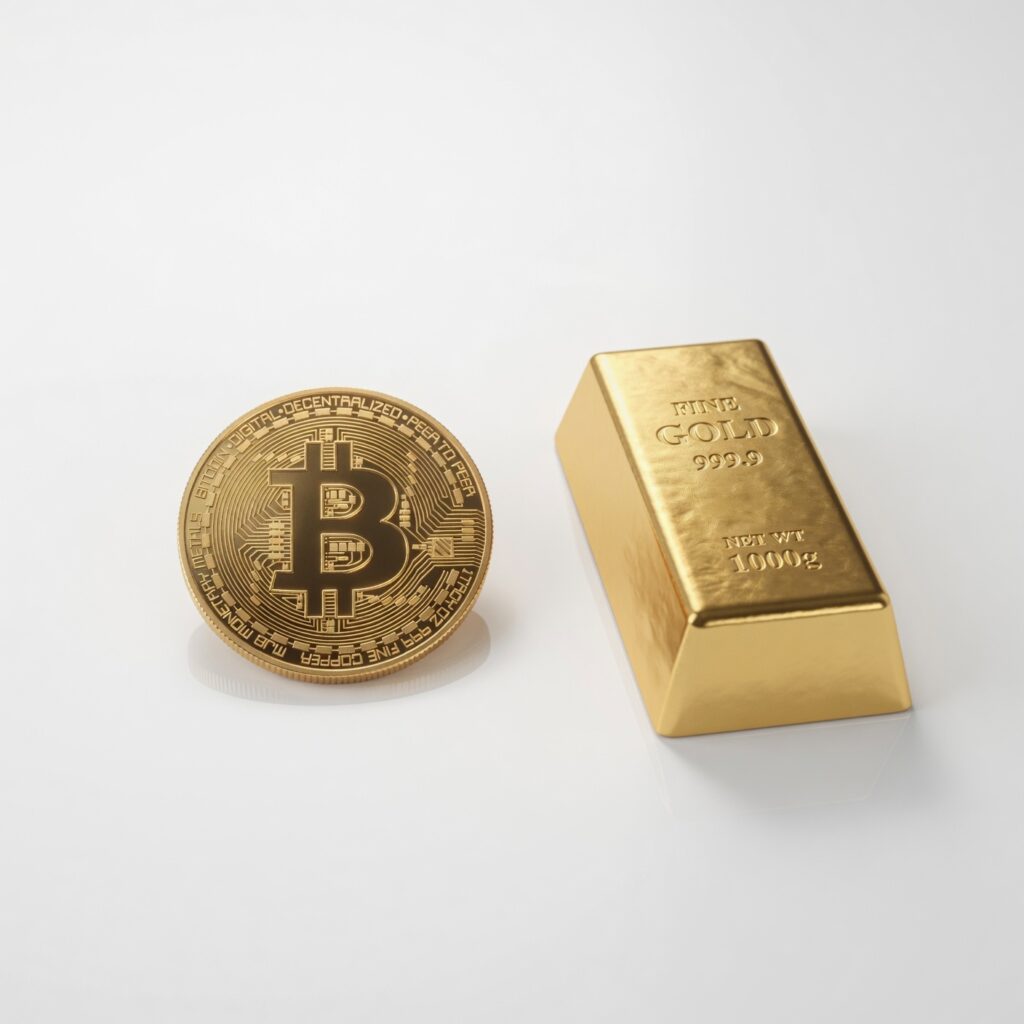
image for illustrative purposes only.
Throughout history, humans have searched for the ultimate store of value. When inflation rises, currencies devalue, and geopolitical tensions disrupt traditional markets, investors rush to safe-haven assets. For generations, physical gold has been the undisputed king of wealth preservation. However, a new contender has emerged over the last decade and a half: Bitcoin.
Often hailed as “digital gold,” Bitcoin challenges the very definition of money and value storage. But when push comes to shove, which asset actually does a better job of protecting your hard-earned purchasing power?
In this comprehensive guide, we will break down the fundamental differences, historical performance, risks, and long-term potential of both Bitcoin and gold. Whether you are building an aggressive growth portfolio or safeguarding generational wealth, understanding how these two assets stack up against macroeconomic pressures is essential.
Understanding the Role of Safe-Haven Assets in Modern Portfolios
Before comparing Bitcoin and gold directly, it is crucial to understand why safe-haven assets matter. In a healthy economy, fiat currencies—such as the US Dollar, Euro, or British Pound—serve as mediums of exchange and units of account. However, central banks can and do print more fiat currency. When the money supply expands faster than economic output, the result is inflation.
Inflation acts as a silent tax. It erodes your purchasing power year after year, meaning the cash sitting in your bank account buys you less over time. To combat this, investors allocate capital to scarce assets. A true safe-haven asset must possess specific characteristics:
-
Scarcity: It cannot be infinitely produced or manipulated by a governing authority.
-
Durability: It must withstand the test of time without degrading physically or digitally.
-
Liquidity: It must be easily tradable across global markets.
-
Portability: It should be relatively easy to move and store relative to its value.
Let us examine how both gold and Bitcoin measure up against these pillars of wealth preservation.
Gold: The Historical Heavyweight and Time-Tested Store of Value

Gold has been valued by civilizations for millennia. From ancient Egyptian pharaohs to modern central banks, the yellow metal has maintained its status as the ultimate monetary anchor.
Why Gold Protects Wealth
Gold’s primary strength lies in its physical tangible nature and its thousands of years of established trust. When stock markets crash or banking systems wobble, investors instinctively flock to gold.
-
Intrinsic Value: Gold is a physical commodity with industrial and decorative uses, though its monetary premium drives most of its valuation.
-
Independence from Counterparty Risk: Physical gold held in your possession or an allocated vault does not rely on the solvency of a bank, corporation, or government.
-
Low Correlation: During periods of high stock market volatility, gold often moves independently or inverse to equities, acting as a natural portfolio shock absorber.
Limitations of Physical Gold in the Digital Age
Despite its stellar track record, gold has significant drawbacks in the twenty-first century:
-
Logistical Challenges: Storing large amounts of physical gold securely is expensive and cumbersome. Transporting it across borders involves high friction, customs scrutiny, and physical security risks.
-
Lagging Technological Adaptability: Gold cannot be easily integrated into decentralized finance, smart contracts, or instant cross-border digital transactions.
-
Capped Upside Potential: Because of its massive multi-trillion-dollar market capitalization, gold functions primarily as a preservation tool rather than a high-growth asset. It protects you from losing ground, but it rarely generates life-changing capital appreciation in short timeframes.
Bitcoin: The Digital Revolution and Hard Money of the Internet

Launched in 2009 by the pseudonymous creator Satoshi Nakamoto, Bitcoin introduced a completely novel concept: decentralized digital scarcity. Operating on a transparent, immutable public ledger known as the blockchain, Bitcoin requires no central authority, government, or banking institution to function.
The Mathematics of Bitcoin Scarcity
One of Bitcoin’s most powerful features is its absolute supply cap of 21 million coins. Unlike fiat currency, which can be printed endlessly at the stroke of a pen, or gold, where rising prices inevitably incentivize miners to dig deeper and unearth more supply, Bitcoin’s supply schedule is hardcoded.
-
The Halving Event: Approximately every four years, the reward distributed to Bitcoin miners for securing the network is cut in half. This programmatic reduction in supply issuance creates a unique economic dynamic where inflation decreases over time, eventually reaching zero.
-
Verifiable Decentralization: Anyone can run a full node to verify the entire transaction history and ensure that no counterfeit coins are ever created. This removes the element of human corruption and monetary policy mismanagement.
Why Bitcoin Excels as a Modern Safe Haven
Bitcoin combines the scarcity of gold with the speed and flexibility of the internet, making it uniquely suited for the digital economy.
-
Superior Portability: You can memorize a 12-to-24-word seed phrase or store your Bitcoin on a small hardware wallet, allowing you to transport millions of dollars worth of value across international borders in your head or pocket.
-
Asymmetric Growth Potential: While gold is a mature asset, Bitcoin is still in its monetization phase. As global adoption increases, its market capitalization has room to expand significantly, offering protection not just against inflation, but also delivering massive long-term capital gains.
-
Accessibility and Divisibility: Each Bitcoin is divisible down to 100 million smaller units called satoshis. This allows individuals to purchase fractions of a coin for a few dollars, whereas buying physical gold bars requires substantial upfront capital.
Macroeconomic Headwinds: Inflation, National Debt, and Fiat Devaluation
To truly understand why both gold and Bitcoin are gaining traction, we must look at the broader macroeconomic landscape. Global debt levels have reached unprecedented heights. Central banks routinely use quantitative easing—printing money—to bail out financial institutions and stimulate flagging economies.
When fiat currencies lose their integrity, capital naturally seeks exit doors.
-
Gold as the Defensive Shield: When institutional investors, pension funds, and sovereign nations lose faith in currency stability, they buy gold. Central banks continue to hold massive gold reserves precisely because it acts as a neutral reserve asset unlinked to any single nation’s political system.
-
Bitcoin as the Offensive Hedge: Younger generations, tech-savvy investors, and individuals living in countries with hyperinflation (such as Argentina, Venezuela, or Lebanon) turn to Bitcoin. It serves as an escape hatch from authoritarian capital controls and failing local banking infrastructures. Bitcoin acts as both a hedge against inflation and a call option on the future of global digital money.
Volatility vs. Stability: The Risk Profiles Compared
No investment discussion is complete without a rigorous examination of risk. While both assets protect against long-term currency devaluation, their short-term risk profiles are starkly different.
Gold’s Stability
Gold is historically low-volatility compared to cryptocurrencies. Its price moves relatively slowly, driven by macroeconomic data releases, central bank interest rate decisions, and geopolitical flare-ups. This makes gold exceptionally reliable for short-to-medium-term capital preservation. If you need money next year and cannot stomach the idea of your portfolio swinging wildly, gold offers peace of mind.
Bitcoin’s Volatility
Bitcoin, by contrast, is notoriously volatile. It experiences aggressive bull markets followed by steep drawdowns of 50% to 80%. This volatility is a feature of an emerging asset class transitioning from a speculative micro-asset to a global macroeconomic reserve.
-
Time Horizon Matters: For short-term traders, Bitcoin can be a high-risk endeavor. However, historical data demonstrates that over any rolling four-to-five-year time horizon, Bitcoin has consistently outperformed almost every traditional asset class, smoothing out its short-term volatility through long-term adoption growth.
Custody and Security: How to Hold Your Wealth Safely
Protecting your patrimony is not just about what you buy; it is about how you store it.
Safeguarding Gold
Physical gold requires secure physical storage. You must choose between home storage (safes, hidden locations), bank safe deposit boxes, or professional private vaulting services. Each option has trade-offs:
-
Home storage carries physical security risks.
-
Bank safe deposit boxes can be subject to bank holidays, closures, or institutional policies.
-
Third-party vaulting incurs ongoing storage fees and introduces counterparty risk.
Safeguarding Bitcoin
Bitcoin offers absolute self-sovereignty through self-custody. By utilizing a hardware wallet (an offline cryptographic device), you become your own bank.
-
No Counterparty Risk: No government can freeze your Bitcoin, and no bank can deny you a withdrawal, provided you maintain secure control of your private keys.
-
Personal Responsibility: The ultimate benefit of self-custody—complete control—is also its greatest risk. If you lose your recovery phrase and backup materials, nobody can reset your password or recover your funds. Proper digital hygiene and education are mandatory.
Synergy, Not Rivalry: Building a Balanced Wealth Strategy

Many financial commentators frame the debate as a zero-sum game: Bitcoin maximalists dismiss gold as a relic of the past, while traditional gold bugs write off Bitcoin as a speculative bubble.
However, smart investors look at portfolio construction through a lens of complementarity rather than exclusivity. Both assets serve vital functions in a robust wealth protection strategy.
The Case for Holding Both
-
Gold provides the ballast. It has centuries of psychological backing, low volatility, and deep liquidity among institutional giants and central banks. It guards your baseline purchasing power against severe economic shocks with minimal stress.
-
Bitcoin provides the growth engine and digital insurance. It protects against the digitization of the global economy, outpaces traditional inflation metrics, and offers sovereign financial independence that physical gold simply cannot replicate online.
By combining both assets, you create a diversified barbell strategy. You harness the ancient, unchanging reliability of precious metals alongside the unstoppable, borderless innovation of decentralized digital currency.
Securing Your Financial Future
The debate between Bitcoin and gold ultimately boils down to your personal investment philosophy, time horizon, and view of the future.
If you prioritize predictability, lower volatility, and a multi-millennia track record, gold remains an irreplaceable cornerstone of wealth preservation. If you believe the future is increasingly digital, borderless, and technology-driven—and you want an asset capable of outperforming inflation while granting you absolute ownership over your capital—Bitcoin stands unmatched.
As global financial systems continue to evolve, the smartest approach may not be choosing one over the other, but recognizing that both gold and Bitcoin represent powerful defenses against the steady erosion of fiat currency. Protecting your patrimony in the modern era requires looking beyond traditional banking and embracing the assets that give you true sovereignty over your financial destiny.