How Much Prize Money Does the FIFA World Cup Distribute?
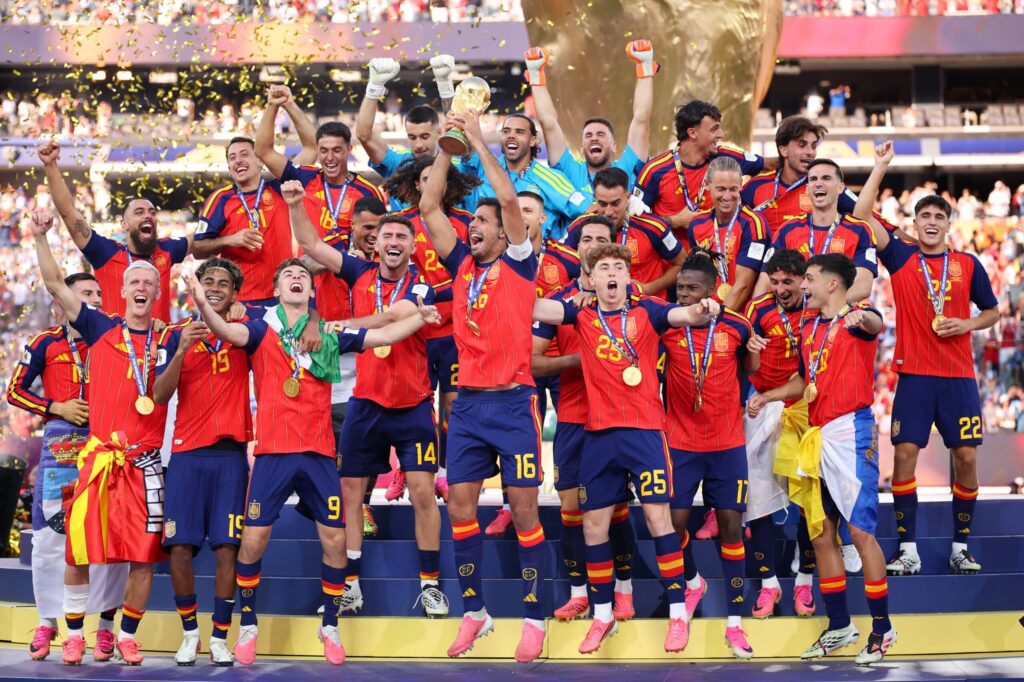
The FIFA World Cup stands as the pinnacle of international sports entertainment, capturing the attention of billions of viewers across the globe. Beyond the prestige of lifting the iconic gold trophy, the tournament represents an astronomical financial enterprise. Over the past few decades, the financial stakes involved in world football have exploded, transforming the prize money pool from modest compensation into hundreds of millions of dollars distributed among competing national federations.
Understanding how much money FIFA distributes, how those funds are broken down by stage, and where that wealth flows provides critical insight into the modern sports economy. From basic participation guarantees to the massive payout reserved for the champion, the evolution of World Cup prize money illustrates the immense commercial power of modern international soccer.
The Historical Growth of World Cup Prize Money Pools
To grasp the current scale of FIFA payouts, one must examine how quickly the financial numbers have escalated over recent decades. In the early days of the tournament, team compensation was virtually non-existent or handled primarily through local exhibition revenues and minimal logistical support. FIFA did not formally institute a standardized, global performance-based prize fund until the 1982 tournament in Spain.
When Italy won the World Cup in 1982, the total prize pool across all participating nations was approximately $2.2 million. By 1990, that figure grew gradually, but the real exponential boom began in the late 1990s and early 2000s, driven by global broadcasting rights and corporate sponsorships.
- 1982 (Spain): ~$2.2 million total fund
- 1994 (United States): ~$48 million total fund
- 2002 (South Korea / Japan): $40 million performance pool
- 2006 (Germany): $214 million total pool
- 2010 (South Africa): $420 million total fund
- 2014 (Brazil): $576 million total fund
- 2018 (Russia): $400 million performance pool (excluding operational contributions)
- 2022 (Qatar): $440 million performance pool ($42 million to champion Argentina)
- 2026 (United States / Canada / Mexico): $871 million total package ($655 million direct performance pool + $216 million preparation & team allowances)
This trajectory highlights a growth rate exceeding 1,500% over a 24-year span. Football has shifted from a regional athletic showcase into an unstoppable global media machine capable of generating billions in commercial revenue per cycle.
Complete Breakdown of FIFA Prize Money by Stage
FIFA’s total financial package for a World Cup tournament is structured around two distinct layers: guaranteed preparation allocations paid to every qualified nation prior to kickoff, and performance-based prize money awarded based on how far a team advances.
In the expanded 48-team tournament structure, FIFA allocated a record-shattering $871 million total package. This ensures that even nations eliminated in the earliest stage receive significant financial resources to support their domestic sports infrastructure.
Guaranteed Universal Payouts
Every single country that qualifies for the World Cup receives base funding regardless of performance on the pitch:
- Preparation Allowance: ~$2.5 million per nation to cover pre-tournament training camps, hotel bookings, and travel arrangements.
- Qualification Payment: ~$10.0 million base payout for securing a spot in the final tournament.
Consequently, every qualifying federation enters the competition with a guaranteed minimum payout of $12.5 million before a single minute of action is played.
Performance Prize Distribution Structure
| Tournament Stage Reached | Performance Prize Money (Per Team) | Guaranteed Minimum Payout (Including Prep) |
|---|---|---|
| Group Stage Exit (33rd–48th Place) | $9.0 Million | $21.5 Million |
| Round of 32 (17th–32nd Place) | $11.0 Million | $23.5 Million |
| Round of 16 (9th–16th Place) | $15.0 Million | $27.5 Million |
| Quarterfinalists (5th–8th Place) | $19.0 Million | $31.5 Million |
| Fourth Place Finish | $27.0 Million | $39.5 Million |
| Third Place Finish | $29.0 Million | $41.5 Million |
| Runner-Up (Second Place) | $33.0 Million | $45.5 Million |
| Champion (World Cup Winner) | $50.0 Million | $62.5 Million+ |
The ultimate winner takes home $50 million in pure performance prize money, pushing their total FIFA earnings beyond $62.5 million when accounting for preparation grants and delegation subsidies.
Where Does the World Cup Prize Money Actually Go?
A common misconception among casual fans is that World Cup prize money is paid directly into the personal bank accounts of individual players. In reality, FIFA disburses all prize funds directly to the national football governing body of each participating country (such as U.S. Soccer, the English FA, or the Brazilian Football Confederation).
Once the national federation receives the funds, the capital is typically distributed across three major operational areas:
1. Player and Staff Bonuses
Before the tournament begins, player unions and national federations negotiate formal bonus structures. A pre-agreed percentage of the final FIFA payout—often ranging between 20% and 40%—is distributed among players, head coaches, and tactical staff based on squad selection and minutes played.
2. Domestic Grassroots Infrastructure
For smaller or emerging soccer nations, a successful World Cup run provides transformative capital. Federations invest millions of prize dollars into building national training centers, funding youth academies, training certified coaches, and establishing grassroots leagues to nurture future talent.
3. Logistical and Administrative Costs
Operating an international squad requires immense capital. Federations use tournament earnings to offset the costs of charter flights, medical teams, security detail, tactical equipment, and analytical software required to compete at the elite level.
How FIFA Generates Billions to Fund the Tournament
To understand how FIFA can easily afford nearly a billion dollars in team payouts, one must examine the revenue model of the World Cup itself. The tournament generates revenue across four massive pillars:
- Broadcasting Rights: Media companies worldwide pay premium prices to broadcast World Cup matches live. TV and streaming rights account for over 50% of FIFA’s total tournament income, regularly generating upwards of $4 billion per four-year cycle.
- Corporate Sponsorships: Global brands pay top tier partnerships to align their products with the World Cup, bringing in over $2.5 billion in commercial revenue.
- Ticketing and Hospitality: Venue sales, VIP suites, and stadium concessions contribute massively to overall earnings, especially in large-capacity host markets where matchday income can exceed $2 billion.
- Licensing and Merchandising: Video games, apparel, official match balls, and memorabilia yield hundreds of millions in global licensing fees.
Because total tournament revenues regularly clear $10 billion, the $871 million distributed in prize money and federation subsidies represents a manageable operational expense for FIFA, leaving billions in net reserves to fund global football development initiatives between cycles.
The Club Benefit Programme: Compensating Domestic Clubs
Prize money paid to national teams is only part of the global financial picture. FIFA also operates the Club Benefit Programme, a financial pool established to compensate professional club teams (such as Real Madrid, Manchester City, or MLS franchises) for releasing their players to participate in the tournament.
Clubs receive a daily fee per player for every day that athlete is away on international duty, starting from official pre-tournament training through the player’s elimination.
- Daily Allocation: Approximately $10,000 per player, per day.
- Total Club Benefit Pool: Expands beyond $350 million across global domestic leagues.
This system addresses a long-standing point of friction between international federations and club owners, ensuring domestic teams are compensated for injury risks and player absence during peak season periods.
The Financial Impact of World Cup Earnings on Emerging Nations
While $50 million is a welcome bonus for wealthy European or South American powerhouses, the financial impact of World Cup payouts is far more profound for smaller or developing nations.
When a lower-ranked nation qualifies for the tournament and guarantees itself a minimum of $12.5 million, that single tournament appearance can exceed the federation’s entire four-year operating budget.
These injections of hard capital alter national sports trajectories by:
- Construction of modern, synthetic and natural grass training pitches.
- Funding women’s national team programs and youth development leagues.
- Reducing financial reliance on government grants or restrictive private debt.
- Upgrading local stadium technology and medical rehabilitation facilities.
For many emerging football nations, simply qualifying for the group stage represents an economic windfall that sustains domestic operations for years to come.
Comparing World Cup Payouts to Other Global Sports Competitions
To evaluate whether World Cup prize money is competitive on the global sports stage, it helps to contrast FIFA’s flagship event against other major sporting tournaments.
[UEFA Champions League] -------------- $2.3 Billion Pool
[FIFA World Cup] --------------------- $871 Million Package
[UEFA European Championship] --------- $360 Million Pool
[NFL Super Bowl Pool] ---------------- $35 Million Total
While domestic club competitions like the UEFA Champions League offer higher total combined payouts due to running annually over 125+ matches, the FIFA World Cup remains the single most lucrative quadrennial international tournament in the world, comfortably outpacing continental tournaments like the Euro Championship and North American league playoff pools.
The Future of World Cup Financials and Prize Growth
As FIFA continues to expand tournament formats, introduce multi-country host bids, and explore new digital broadcasting avenues, the overall financial footprint of the World Cup will continue to expand.
With 48 teams competing across more matches in state-of-the-art stadiums, total revenues will set new benchmarks with every edition. Fans can expect performance prize money to keep pace, with future champions likely eyeing single-team payouts approaching $70 million to $80 million in upcoming tournament cycles.
Ultimately, the World Cup is far more than a sporting contest. It is a mega-scale financial engine that redistributes hundreds of millions of dollars across the globe, driving the growth of soccer from local municipal parks to giant international arenas.