What Is Credit Card Tokenization?

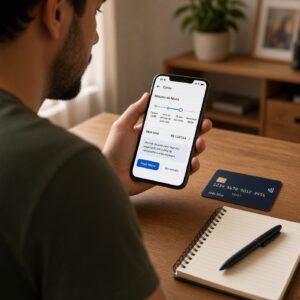
image for illustrative purposes only.
In the rapidly evolving landscape of digital finance, security has become the cornerstone of trust. As online shopping, mobile wallets, and contactless payments become the norm, the methods used to protect sensitive financial data have had to become increasingly sophisticated. One of the most critical technologies powering this digital revolution is credit card tokenization.
Whether you are a merchant, a developer, or simply a consumer looking to understand how your information is handled behind the scenes, understanding tokenization is essential. This guide explores the mechanics, benefits, and implementation of tokenization, shedding light on how it keeps the global financial ecosystem secure.
Defining Credit Card Tokenization: The Basics
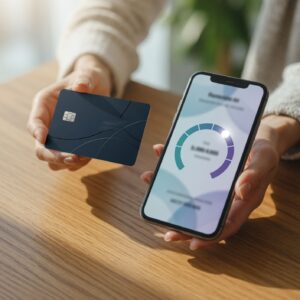
At its core, credit card tokenization is the process of replacing sensitive data—specifically the Primary Account Number (PAN) of a credit card—with a unique, non-sensitive equivalent known as a “token.”
This token acts as a placeholder. It maintains the format of the original card number, allowing it to pass through existing payment systems and legacy hardware, but it holds no value on its own. Even if a cybercriminal were to intercept these tokens during a transaction, they would find them entirely useless because the token cannot be reversed or “detokenized” to reveal the original card number outside of a highly secure environment.
How the Process Works
The transition from a raw credit card number to a tokenized format happens in milliseconds:
-
Data Capture: The customer enters their card details into a merchant’s checkout page or a digital wallet.
-
Request for Tokenization: The merchant’s system securely transmits this data to a tokenization service provider or a payment processor.
-
Token Generation: The processor replaces the actual PAN with a randomly generated string of characters (the token).
-
Vault Storage: The original card number is stored in a secure, encrypted “vault,” which is isolated from the merchant’s primary systems.
-
Authorization: The merchant uses the token to complete the transaction, communicating with the card network and issuing bank to verify funds.
Why Tokenization Is Revolutionizing Data Security
Before tokenization became a standard, businesses were forced to store vast amounts of raw credit card information on their own servers to facilitate recurring payments, subscriptions, and one-click checkouts. This made them prime targets for data breaches. Tokenization shifts this risk entirely.
Reducing the Scope of Compliance
For businesses, the most significant advantage is the drastic reduction in the scope of compliance requirements. In the United States and globally, merchants must adhere to the Payment Card Industry Data Security Standard (PCI DSS).
When a company stores raw card data, the burden of security is immense. If they adopt tokenization, the data being processed is no longer “raw.” By keeping the original PANs out of the merchant’s environment, companies can significantly simplify their security audits and lower the operational costs associated with maintaining high-level data protection infrastructure.
Protection Against Data Breaches
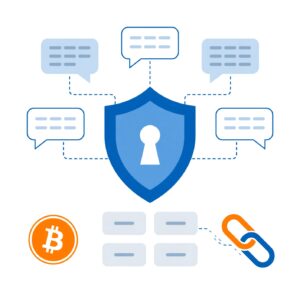
If a database containing tokens is hacked, the attacker gains nothing. Because tokens are generated randomly and have no mathematical relationship to the original card data, they cannot be “decrypted.” This renders the stolen data worthless, effectively neutralizing the primary goal of most cyberattacks on payment systems.
Tokenization vs. Encryption: Understanding the Difference
It is common to confuse tokenization with encryption, but they are fundamentally different technologies. Understanding this distinction is vital for anyone managing financial data.
-
Encryption is a mathematical process that transforms data into a coded format using an algorithm and a key. To access the data, you need the corresponding decryption key. If an attacker gains access to the key, the entire vault of data is compromised. It is reversible.
-
Tokenization is the substitution of data. There is no mathematical formula that can turn a token back into a credit card number. The relationship between the token and the original data is stored in a secure database. If you don’t have access to the vault, you cannot reverse the token. It is non-mathematical and non-reversible.
In high-security environments, companies often use both: encryption for data in transit and tokenization for data at rest.
Types of Tokenization in Modern Payments
Not all tokenization is the same. Depending on the industry and the specific use case, different methods are employed to ensure the right balance between security and performance.
Vault-Based Tokenization
This is the most traditional form. A secure database (the vault) acts as the bridge between the token and the original data. When the token is sent to the processor, the system looks up the vault to find the corresponding card number, completes the transaction, and returns the result. This is highly reliable but requires constant interaction with the database.
Vaultless Tokenization
Vaultless tokenization uses algorithms to generate tokens that are reversible via a secure, hardware-based key management system. This is often faster than vault-based methods because it does not require a large database lookup for every single transaction. It is increasingly popular in high-frequency trading and rapid mobile payment environments.
Format-Preserving Tokenization
This method ensures the token looks exactly like a credit card number (e.g., a 16-digit number). This is essential for companies that use legacy software designed to read only specific data structures. By mimicking the PAN format, businesses can integrate tokenization into their operations without having to rewrite their entire backend code.
The Role of Tokenization in Mobile Wallets and Contactless Payments
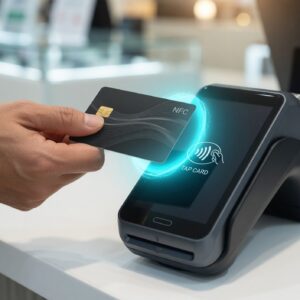
When you use services like Apple Pay, Google Pay, or Samsung Pay, you are using a specialized form of tokenization called Device-Specific Tokenization.
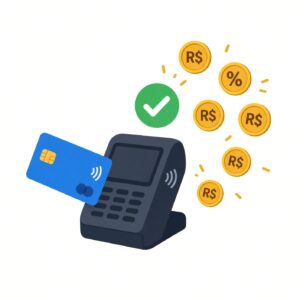
When you add your credit card to your smartphone, the card network issues a “Device Account Number” (a token). This token is stored in the secure element of your phone’s hardware. When you pay at a terminal, your phone sends this token—not your credit card number—to the merchant. This means even if the merchant’s payment terminal is compromised, they never received your actual financial data, only a one-time or device-specific token that is useless for any other transaction.
The Future of Tokenization and Digital Identity
As we look toward the future of digital finance, tokenization is moving beyond just credit card numbers. We are seeing a shift toward Identity Tokenization.
In the future, the goal is to tokenize not just payment instruments, but other sensitive personal identifiers like social security numbers, medical records, and government IDs. By treating personal identity information with the same security principles as credit card numbers, the digital world can become a safer place for all users.
Moreover, as the Internet of Things (IoT) expands, everything from your refrigerator to your car might eventually handle payments. Tokenization will be the invisible glue that makes these transactions possible without exposing your personal financial information to insecure internet-connected devices.
Implementation Challenges and Best Practices
While tokenization is highly effective, implementation requires careful planning. Businesses looking to adopt this technology should consider the following best practices:
-
Partner with Established Providers: Always work with PCI-compliant payment service providers who have a proven track record. Attempting to build a proprietary tokenization vault is rarely a good idea for anyone other than the largest financial institutions.
-
Data Lifecycle Management: Understand how long tokens are stored and when they should be rotated. Token expiration policies are a key part of maintaining a robust security posture.
-
Unified Security Strategy: Tokenization should be one part of a multi-layered security strategy that includes multi-factor authentication, regular security updates, and employee training.
Credit card tokenization represents a fundamental shift in how we handle data. By turning sensitive information into meaningless characters, we have created a world where online commerce can flourish without the looming threat of mass data theft.
For the average consumer, this means greater peace of mind when tapping a phone or clicking “buy” on a website. For businesses, it means a streamlined path to compliance and a significant reduction in risk. As technology continues to evolve, tokenization will undoubtedly remain at the center of the financial security conversation, quietly protecting the global economy one transaction at a time.