What Happens Behind the Scenes When You Buy a Stock
For most modern investors, buying a stock feels as simple as ordering a pizza. You open an app, tap a green button labeled “Buy,” and within seconds, your screen updates to show that you are the proud owner of shares in a global giant like Apple, Tesla, or Amazon.
However, beneath that sleek user interface lies one of the most complex, high-speed, and tightly regulated systems in the world. Between the moment you tap that button and the moment the stock officially belongs to you, your order travels through a digital labyrinth of brokers, market makers, exchanges, and clearinghouses.
Understanding this process isn’t just a matter of curiosity; it makes you a more informed investor. It helps you understand why “free” trading exists, why prices fluctuate the way they do, and how your money is protected. Here is the step-by-step breakdown of what happens behind the scenes when you buy a stock.
The Moment of Entry: Your Broker’s Internal Validation

The journey begins at your Broker-Dealer. Whether you use a traditional firm or a mobile-first fintech app, your broker acts as the gatekeeper to the financial markets.
When you submit a “Market Order” or a “Limit Order,” the broker’s system performs several instantaneous checks:
-
Fund Verification: Does your account have enough “Buying Power” (cash or margin) to cover the cost of the trade plus any potential fees?
-
Order Compliance: Does the trade violate any regulations? For example, are you trying to buy a stock that has been “halted” by the exchange?
-
Risk Management: If you are using margin (borrowed money), the broker ensures the trade doesn’t push you past your safe leverage limits.
Once these boxes are checked—usually in a few milliseconds—your order is “batched” and sent out into the world.
Order Routing: Where Does Your Trade Actually Go?
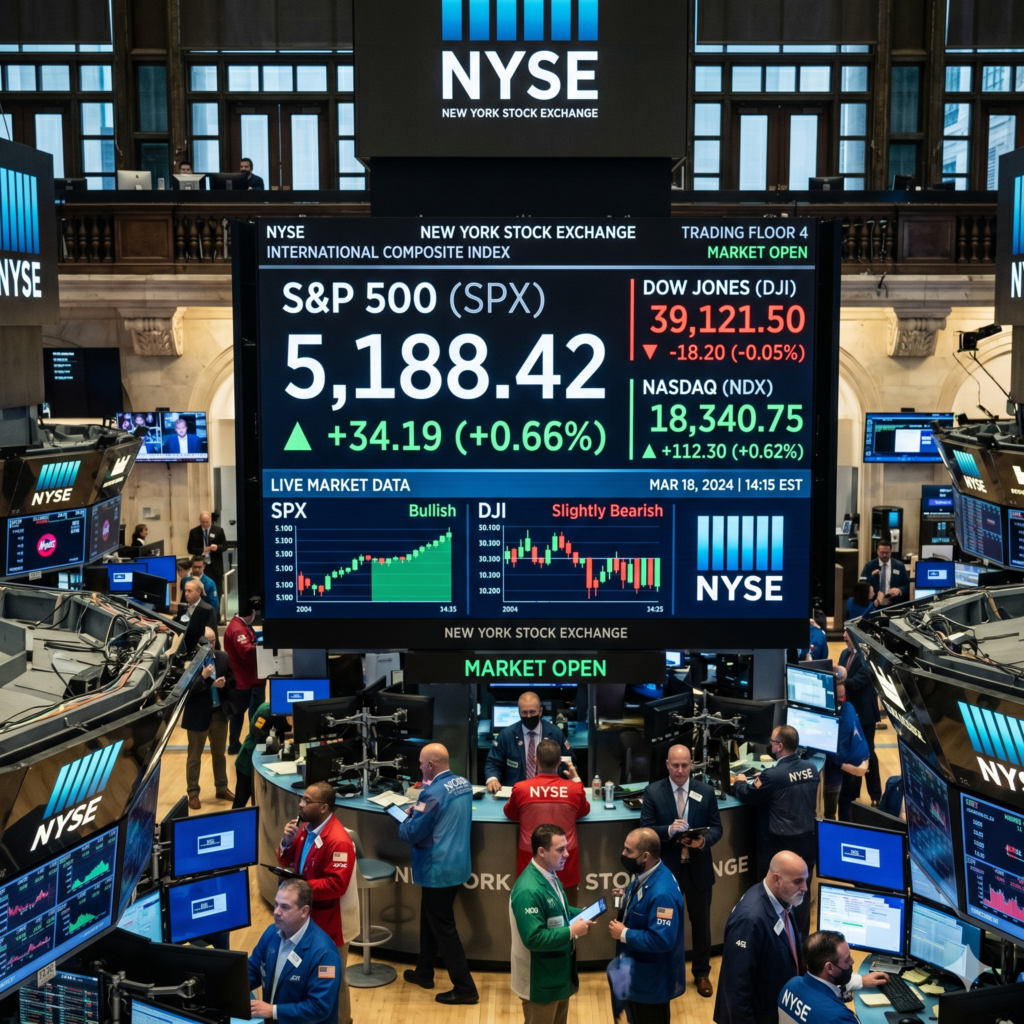
Contrary to popular belief, your order doesn’t always go straight to the floor of the New York Stock Exchange (NYSE). In the modern era, the U.S. stock market is fragmented into dozens of different “venues.” Your broker must decide where to send your order to get you the “Best Execution.”
The Three Main Destinations for Your Order:
-
National Exchanges: These are the big names like the NYSE or Nasdaq. These are highly regulated, public lit markets where everyone can see the orders.
-
Market Makers (Wholesalers): Large financial firms like Citadel Securities or Virtu Financial. Many retail brokers send orders here because market makers often offer “price improvement” (getting you a price slightly better than the public quote).
-
Dark Pools: These are private exchanges run by large banks. They are called “dark” because the public cannot see the orders until after the trade is executed. They are mostly used by institutional investors to move millions of shares without causing a massive price swing.
The Role of Market Makers and Payment for Order Flow (PFOF)
If you use a “zero-commission” broker, you might wonder how they stay in business. The answer often lies in Payment for Order Flow (PFOF).
When you want to buy, a Market Maker is usually the one standing on the other side of the trade. They act as the “middleman” who is always ready to buy or sell. They make money on the Bid-Ask Spread—the tiny difference between the price to buy and the price to sell.
To ensure they have a steady stream of “retail” orders (which are generally considered less “toxic” than professional high-frequency trading orders), market makers pay your broker a small fee to send the trades to them. This is why you don’t pay a commission, but it also means your order is being “sold” to a wholesaler who expects to profit from the transaction.
The Matching Engine: Finding the Seller
At the heart of every exchange or market maker is a Matching Engine. This is a super-powerful computer that maintains an “Order Book.”
Imagine a digital ledger with two columns:
-
The Bids: People who want to buy and how much they are willing to pay.
-
The Asks: People who want to sell and their minimum price.
When your order arrives, the matching engine looks for a corresponding “Ask” that meets your criteria. If you placed a Market Order, the engine simply grabs the lowest available price currently on the book. If you placed a Limit Order, your order sits in the “book” until a seller is willing to meet your specific price.
Execution: The Digital Handshake
Once a match is found, the Execution occurs. This is the moment the price is locked in.
You receive a notification: “Order Filled.” At this precise moment, you have a legal contract to buy the stock at that price. However, while the price is settled, the ownership hasn’t actually changed hands yet. In the eyes of the law, the “Trade Date” (T) has occurred, but the “Settlement” is still in the future.
Clearing and Settlement: The Plumbing of Wall Street
This is where the process moves from the “fast” digital world to the “slower” institutional world. After the trade is executed, it moves to the Clearinghouse. In the United States, this is usually the National Securities Clearing Corporation (NSCC).
What is Clearing?
Clearing is the process of updating the records to ensure that the buyer has the money and the seller has the shares. The clearinghouse acts as a central guarantor. If the seller suddenly disappears or the buyer’s bank fails, the clearinghouse ensures the trade is still completed, reducing “systemic risk” in the market.
The T+1 Settlement Cycle
As of 2024, the U.S. market moved to a T+1 Settlement cycle. This means that if you buy a stock on Monday, the official transfer of money and ownership must be finalized by Tuesday.
-
Before T+1: The money is moved from your broker’s account to the seller’s broker’s account.
-
After T+1: The shares are officially registered.
Custody: Who Actually “Holds” Your Stock?
Back in the day, when you bought a stock, you received a physical paper certificate. Today, stocks are “dematerialized.” They exist only as digital entries.
Most retail investors hold their stocks in “Street Name.” This means the stock is technically registered in the name of your brokerage firm (e.g., “Fidelity” or “Charles Schwab”) on the company’s books, but the broker keeps a secondary ledger showing that you are the “beneficial owner.”
The Role of the DTC
The actual “master list” of who owns what is maintained by the Depository Trust Company (DTC). The DTC holds the “Global Certificates” for almost every public company. When you buy a stock, the DTC simply moves a digital entry from one broker’s “folder” to another’s. This system is what allows billions of shares to change hands every day without the need for physical paperwork.
Why This Process Matters for Your Portfolio
You might ask: “If the app says I own it, why do I care about clearinghouses or the DTC?” There are three critical reasons:
1. Dividends and Voting Rights
Because the settlement takes one business day (T+1), you must be the owner of record on a specific date to receive a dividend. If you buy a stock the day before the “Ex-Dividend” date, the backend settlement process ensures you get your payment.
2. Brokerage Failure
Because of the Segregation of Assets rules (handled during the clearing and custody phase), your stocks are kept separate from your broker’s corporate money. If your broker goes bankrupt, the records at the clearinghouse and the DTC prove that those shares belong to you, not the broker’s creditors.
3. Market Volatility and “GME” Style Halts
During the “Meme Stock” craze of 2021, many brokers stopped people from buying certain stocks. This happened because the Clearinghouse (NSCC) required the brokers to put up massive amounts of collateral to cover the risk of the “T+2” (at the time) settlement. Understanding the “plumbing” helps you understand why these seemingly unfair market events occur.
The Bid-Ask Spread: The Hidden Cost of Trading
Even with $0 commissions, every trade has a cost. This is the Bid-Ask Spread.
If a stock is quoted at $10.00 – $10.05, the “Bid” is $10.00 and the “Ask” is $10.05.
-
If you want to buy right now, you pay the Ask ($10.05).
-
If you want to sell right now, you receive the Bid ($10.00).
The $0.05 difference goes to the Market Maker as payment for providing the liquidity that allows you to trade instantly. For highly liquid stocks like Apple, this spread is often just a penny. For obscure, low-volume stocks, the spread can be much wider, representing a significant “hidden” cost.
The calculation for the spread is simple:
Advanced Technology: High-Frequency Trading (HFT)
While your order is moving through this chain, it is being watched by High-Frequency Trading algorithms. These are computers located physically close to the exchanges (a practice called “co-location”) that can execute trades in microseconds (millionths of a second).
HFTs provide liquidity to the market, but they also try to “front-run” or predict where prices are going based on the order flow they see. This is why the “behind the scenes” of a trade is often described as a digital arms race.
The Miracle of the Modern Market
The next time you tap that “Buy” button, take a second to appreciate the incredible feat of engineering taking place. Within the blink of an eye, your request is validated, routed across the country, matched with a seller, insured by a clearinghouse, and registered in a global vault.
The move toward T+1 Settlement and the rise of Fractional Shares are just the latest steps in making this invisible machine even faster and more accessible. By understanding the journey of a trade, you move beyond being a mere “user” of an app and become a true participant in the global financial system.
Ready to start your journey? Now that you know how the engine works, you can focus on picking the right vehicle for your financial goals. Happy investing!
Quick Summary: The Trade Timeline
-
Millisecond 0: You tap “Buy.”
-
Millisecond 10-100: Broker validates your cash and routes the order.
-
Millisecond 100-500: Order is matched with a seller or market maker.
-
Second 1: You receive the “Filled” notification.
-
End of Next Business Day (T+1): Cash is transferred, and the DTC updates the official record of ownership.