Can You Get a Loan With Bad Credit?

Finding yourself in a financial pinch is stressful enough, but when you check your credit score and see a number that makes you wince, the stress can turn into a full-blown panic. Whether it’s due to past medical bills, a period of unemployment, or simply a few youthful mistakes, a “bad” credit score often feels like a locked door standing between you and the capital you need.
But here is the reality: Yes, you can get a loan with bad credit.
The lending landscape has evolved significantly over the last decade. While traditional big-box banks might still turn you away, a new generation of online lenders, credit unions, and alternative financial products have emerged to serve those who fall outside the “perfect credit” bubble.
In this exhaustive guide, we will explore the types of loans available for poor credit, the costs you should expect, and how to navigate the process without falling into a debt trap.
Understanding the Reality of Borrowing with a Low Credit Score

To understand your options, you first need to know where you stand. In the financial world, “bad credit” typically refers to a FICO score below 580.
The FICO Spectrum:
-
300–579 (Poor): Many traditional lenders will reject applications in this range. Specialized “bad credit lenders” become your primary option.
-
580–669 (Fair): You are in the “middle ground.” You’ll likely get approved, but you won’t get the best rates.
-
670+ (Good to Excellent): The world is your oyster; you can shop for the lowest possible APRs.
If you are in that 300–579 range, you aren’t invisible to lenders; you are just viewed as “high risk.” To compensate for that risk, lenders will charge higher interest rates. Understanding this trade-off is the first step toward making a smart borrowing decision.
Types of Loans Available for People with Poor Credit History
If you have a low score, you won’t be looking at the same products as someone with an 800 score. Here are the specific categories of loans designed for your situation:
1. Unsecured Personal Loans for Bad Credit
These are the most common. You borrow a fixed amount of money and pay it back in monthly installments. Because they are “unsecured,” the lender doesn’t have collateral (like a car or house) to seize if you stop paying. As a result, the interest rates can be high—sometimes ranging from 18% to 35.99%.
2. Secured Personal Loans
If you have an asset, you can use it to “back” the loan. This could be a savings account, a vehicle, or even jewelry. Because the lender’s risk is lowered, they are much more likely to approve someone with a poor credit score, and they may even offer a slightly lower interest rate.
3. Credit Union “Payday Alternative Loans” (PALs)
If you are a member of a credit union, ask about PALs. These are small-dollar loans ($200 to $1,000) specifically designed to help people avoid predatory payday lenders. They have capped interest rates (usually around 28%) and much more favorable repayment terms.
4. Co-signer Loans
This is a powerful “cheat code” for bad credit. If you have a friend or family member with excellent credit, they can co-sign your loan. The lender bases the approval and the interest rate on their score, not yours. However, if you miss a payment, the co-signer is 100% legally responsible for the debt, which can ruin relationships.
The Real Cost of Borrowing: High Interest Rates and the “Bad Credit Premium”
When you have bad credit, you pay a “premium” for the privilege of borrowing. It is vital to look past the monthly payment and calculate the Total Cost of the Loan.
The APR Impact
Compare two people borrowing $5,000 over 3 years:
-
Borrower A (Good Credit): 7% APR. Monthly payment: $154. Total interest paid: $558.
-
Borrower B (Bad Credit): 28% APR. Monthly payment: $207. Total interest paid: $2,445.
As you can see, Borrower B pays nearly $2,000 more for the exact same loan. When applying, always ask for the Annual Percentage Rate (APR), which includes both the interest and the fees.
How to Increase Your Approval Odds Without Improving Your Score
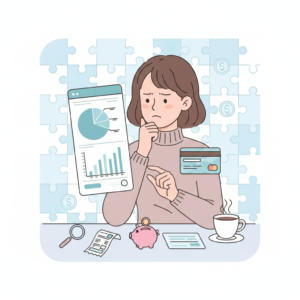
If you don’t have time to wait six months for your score to rise, you can improve your “borrower profile” in other ways that lenders find attractive.
1. Show a Stable Income
Lenders care about your ability to repay. If you can provide two years of consistent tax returns or pay stubs showing a steady income, it offsets a lot of the “risk” associated with your credit score.
2. Lower Your Debt-to-Income (DTI) Ratio
If you have other debts, try to pay them down slightly before applying. Lenders want to see that your total monthly debt payments (including the new loan) won’t consume more than 35% to 43% of your gross monthly income.
3. Apply for the Right Amount
Don’t ask for $20,000 if you only need $5,000. Applying for a smaller, more realistic amount increases the likelihood that a lender’s automated system will give you a “Green Light.”
Avoiding Predatory Lenders and Common Loan Scams
The “bad credit” market is unfortunately filled with predatory actors. When you are desperate for cash, it is easy to overlook red flags. To stay safe and keep your AdSense-compliant experience clean, avoid these traps:
-
“No Credit Check” Loans: If a lender says they don’t care about your credit at all, they are likely charging 400%+ APR (typical of payday loans). This is a recipe for a debt spiral.
-
Upfront Fee Scams: Legitimate lenders never ask you to pay a fee via wire transfer, prepaid debit card, or gift card before you get your money. Fees are always deducted from the loan proceeds or added to the balance.
-
Guaranteed Approval: No legitimate lender can guarantee approval before seeing your financial details. If it sounds too good to be true, it is.
Alternatives to Traditional Bad Credit Loans
Sometimes, the best loan is not a loan at all. Before committing to high-interest debt, consider these alternatives:
1. 0% Interest “Buy Now, Pay Later” (BNPL)
If you need money for a specific purchase (like a laptop or furniture), BNPL services like Klarna or Affirm often have very soft credit requirements and may offer 0% interest if paid back in four installments.
2. Employer Salary Advances
Many companies now use apps like Even or DailyPay that allow employees to access a portion of their earned wages before payday for a tiny fee or no fee at all.
3. Peer-to-Peer (P2P) Lending
Platforms like Prosper or LendingClub allow individual investors to fund your loan. These platforms often look at “alternative data” beyond just your FICO score, which can be beneficial for those with a “thin” credit file.
Preparing Your Application: A Step-by-Step Guide for Bad Credit Borrowers

To get the best possible outcome, follow this process:
-
Check for Errors: Even with bad credit, you don’t want it to be worse because of a mistake. Ensure no one has opened accounts in your name.
-
Pre-Qualify Online: Use sites that offer “Soft Pull” pre-qualifications. This lets you see your odds and rates without hurting your score further.
-
Read the Fine Print: Look specifically for Prepayment Penalties. If your credit improves in six months, you’ll want to refinance that high-interest loan into a cheaper one. You don’t want to be charged a fee for doing so.
-
Have Your “Story” Ready: Some online lenders allow you to include a note or talk to an agent. Be ready to briefly explain why your credit dropped (e.g., “I had a medical emergency, but I have been back at my job for 12 months now”).
Frequently Asked Questions (FAQ)
Can I get a loan with a 500 credit score?
Yes, but it will likely be a secured loan or a high-interest unsecured loan from a specialized lender. You may also need to show significant monthly income to offset the low score.
Will a bad credit loan help my credit score?
Yes—if the lender reports to the credit bureaus. By making on-time payments, you prove you are now responsible, which will gradually pull your score up.
How long does it take to get the money?
Many online lenders specializing in bad credit can fund your account within 24 to 48 hours once your income is verified.
Borrowing Responsibly
Getting a loan with bad credit is entirely possible, but it requires a higher level of scrutiny and caution. Your goal should be to use this loan not just as a financial band-aid, but as a bridge to a better financial future.
If you take out a high-interest loan today, make it your mission to pay it off as quickly as possible and use the opportunity to rebuild your credit. Within a year or two of consistent payments, that “locked door” of perfect credit will start to swing open, giving you access to the financial freedom you deserve.