What Are Digital Assets?
We live in an era where value is no longer confined to physical vaults, paper certificates, or tangible real estate. Instead, a rapidly growing portion of global wealth exists purely in binary code. From cryptocurrencies and digital art to intellectual property rights and tokenized real estate, digital assets have fundamentally transformed how individuals, corporations, and institutions store, transfer, and conceptualize value.
Understanding what digital assets are, how they function, and why they represent the future of finance is no longer optional for forward-thinking investors and modern consumers. This comprehensive guide explores the core definition of digital assets, their underlying technologies, major categories, security protocols, and what the future holds for this booming sector.
Defining Digital Assets: What Makes Something a Digital Asset?

At its core, a digital asset is any item of economic value that is stored, transmitted, and recognized in a digital format. For an item to qualify as a digital asset, it must satisfy two primary criteria: it must exist in digital form, and it must possess or represent actionable value.
Unlike physical assets—such as gold bars, paper cash, or printed property deeds—digital assets rely entirely on computer systems, networks, and software to exist and operate. However, simply having a file on your computer does not automatically make it an asset. A random text document holds no inherent market value unless it represents something unique, scarce, or legally protected.
The defining breakthrough of modern digital assets is the concept of digital scarcity. Historically, digital files could be copied infinitely without degradation, making it impossible to establish true ownership of a digital file. Technologies like cryptographic hashing and distributed ledger networks solved this problem, allowing individuals to prove exclusive ownership of a unique piece of digital property just as they would hold the title to a physical car or house.
The Underlying Architecture: How Cryptography and Ledgers Power Ownership
To truly grasp the mechanics of digital assets, one must understand the foundational technology that supports them: cryptography and decentralized ledgers. Traditional digital files, such as a PDF or an MP3, rely on centralized servers maintained by a single authority—like a bank, a tech corporation, or a cloud provider. If that server goes down, or if the administrator decides to revoke access, the file or account vanishes.
Digital assets, particularly those built on blockchain infrastructure, operate differently:
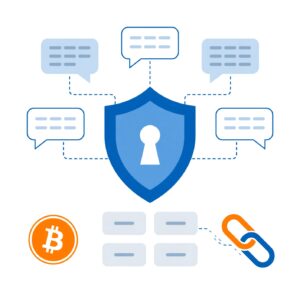
- Decentralized Verification: Ownership records are maintained across thousands of independent computers (nodes) simultaneously, eliminating single points of failure.
- Cryptographic Keys: Security is enforced through public and private key cryptography. Your private key acts as an uncrackable digital signature that grants you absolute control over your assets.
- Immutability: Once a transaction or ownership record is validated and added to a ledger, it cannot be altered, deleted, or reversed by any central authority.
This architecture removes the need for traditional intermediaries like clearinghouses, escrow agents, and traditional banks, paving the way for peer-to-peer economic activity on a global scale.
Major Categories of Digital Assets in the Modern Financial Ecosystem
The digital asset universe is vast and continues to expand into new industries. To navigate this space effectively, it helps to categorize digital assets into distinct classes based on their utility, structure, and market behavior.
Cryptocurrencies and Native Blockchain Tokens
The most widely recognized form of digital assets is cryptocurrency. Built as native tokens on decentralized networks, these assets serve as mediums of exchange, stores of value, or units of account. Bitcoin, often referred to as digital gold, pioneered the concept of a decentralized, scarce monetary asset with a hard supply cap. Other tokens serve specific utility functions within specialized ecosystems, powering everything from decentralized financial applications to global cloud computing networks.
Non-Fungible Tokens (NFTs) and Unique Digital Property
While cryptocurrencies are fungible—meaning every single unit is identical and interchangeable (one bitcoin is always equal to another bitcoin)—Non-Fungible Tokens represent unique, indivisible items. An NFT is a cryptographic certificate of authenticity stored on a blockchain, linking ownership to a specific digital or physical item. This technology has revolutionized digital art, virtual real estate, gaming items, and event ticketing by finally giving creators and collectors verifiable proof of scarcity and ownership.
Tokenized Real-World Assets (RWAs)
One of the fastest-growing sectors in the digital asset economy is the tokenization of real-world assets. This process involves converting traditional, illiquid assets—such as commercial real estate, fine art, corporate bonds, or commodities—into digital tokens on a blockchain. Tokenization lowers the barrier to entry for everyday investors, allowing fractional ownership of high-value assets that were previously out of reach, while dramatically increasing market liquidity and settlement speed.
Digital Intellectual Property and Enterprise Data
Beyond financial instruments, digital assets include enterprise-grade intellectual property. This encompasses patented algorithms, proprietary software code, digital media libraries, brand trademarks, and confidential corporate databases. Managing these assets through secure, blockchain-backed digital rights management systems prevents unauthorized duplication and streamlines licensing agreements across international borders.
The Economic Impact and Benefits of Adopting Digital Assets

The migration from physical and analog systems to digital asset frameworks brings profound advantages to the global economy. By eliminating operational inefficiencies, digital assets unlock entirely new economic models.
Global Accessibility and Financial Inclusion
Traditional financial systems are plagued by geographic boundaries, high transaction fees, and stringent onboarding requirements that leave billions of people unbanked or underbanked. Digital assets require nothing more than an internet connection and a digital wallet. A farmer in a remote rural region can send value, access loans, or protect their savings against hyperinflation just as easily as someone living in a major financial capital.
Instantaneous Settlement and Lower Costs
Traditional international wire transfers can take days to clear, involve multiple intermediary correspondent banks, and incur exorbitant fees. Transactions involving digital assets settle in a matter of seconds or minutes, operating 24 hours a day, 365 days a year, with transparent and often negligible network fees.
Programmable Money and Smart Contracts
One of the most revolutionary aspects of digital assets is programmability. Through the use of smart contracts—self-executing code stored on a blockchain—assets can be programmed to behave according to strict, predefined conditions. For example, a digital insurance policy can automatically payout claims the moment a flight is canceled, without requiring human intervention, paperwork, or lengthy investigation processes.
Security, Self-Custody, and Risk Management
With absolute financial autonomy comes absolute personal responsibility. In the traditional banking system, forgetting a password results in a simple customer service call and a temporary account freeze. In the digital asset ecosystem, security is entirely in the hands of the owner.
Understanding security best practices is essential for anyone entering this space:
- Self-Custody vs. Custodial Platforms: Keeping assets on centralized exchanges is convenient, but exposes users to counterparty risk if the platform experiences regulatory issues or insolvency. Using hardware wallets (cold storage) ensures that your private keys never touch the internet, offering maximum protection.
- Seed Phrase Protection: Your recovery seed phrase—a sequence of 12 to 24 random words—is the master backup to your digital wealth. Losing this phrase means losing access to your assets permanently, while sharing it compromises your funds instantly.
- Scam and Phishing Awareness: Because digital asset transactions are irreversible, malicious actors frequently target unsuspecting users through phishing links, fake wallet apps, and social engineering. Vigilance and continuous education are your strongest defenses.
Regulatory Landscapes and Institutional Adoption
As the digital asset market matures from a niche technological experiment into a multi-trillion-dollar global industry, governments and regulatory bodies worldwide are working to establish clear legal frameworks. While early regulation was characterized by uncertainty and skepticism, the current trend points firmly toward mainstream integration.
Major global financial institutions, asset managers, and sovereign corporations are actively developing digital asset custody solutions, launching tokenized investment funds, and experimenting with central bank digital currencies (CBDCs). This institutional influx brings heightened liquidity, greater market stability, and clearer consumer protections, cementing digital assets as a permanent pillar of the modern financial architecture.
The Future Horizon: What Lies Ahead for the Digital Economy

We are still in the early chapters of the digital asset revolution. As underlying infrastructure scales to handle billions of users simultaneously through Layer-2 scaling solutions and high-speed blockchain networks, the friction of interacting with digital assets will continue to fade into the background.
In the near future, interacting with digital assets will become as seamless as sending an email or browsing the web. Whether you are managing your retirement portfolio through tokenized index funds, owning a verified digital identity across decentralized applications, or transferring value instantly across continents, digital assets will form the invisible bedrock of human commerce.
Embracing this shift requires continuous learning, robust security habits, and an open mind toward technological evolution. Those who take the time to understand digital assets today are positioning themselves at the forefront of the most significant economic transformation of our lifetime.