Personal Loans vs. Credit Cards: Which Is Better for Borrowing Money?
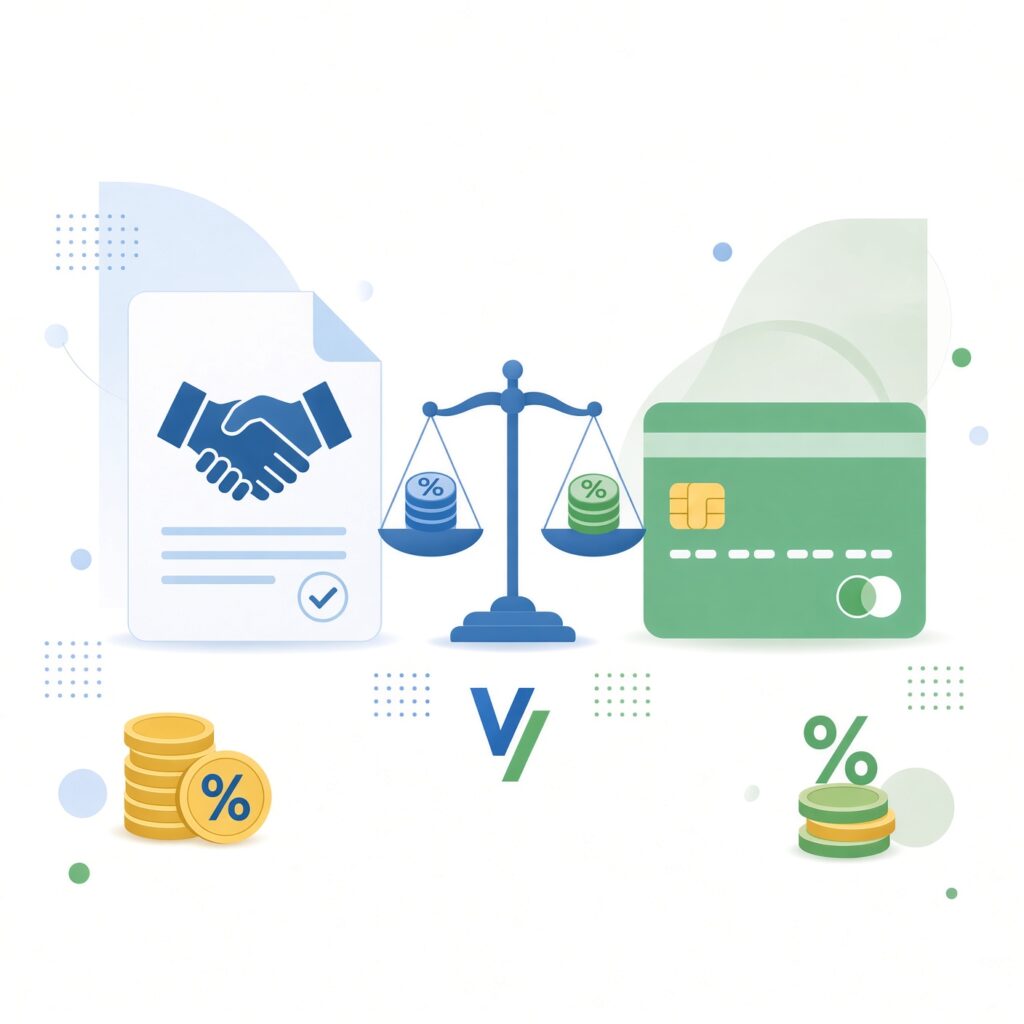
image for illustrative purposes only.
Navigating the world of personal finance often brings you to a fundamental crossroads when you need extra funds: should you apply for a personal loan or swipe a credit card? Both are powerful financial tools designed to bridge gaps in your budget, consolidate high-interest debt, or fund major life expenses. However, they operate on entirely different mechanisms, structures, and repayment terms. Choosing the wrong one can cost you hundreds—or even thousands—of dollars in unnecessary interest and fees.
Understanding the distinct mechanics of each option allows you to make an informed decision aligned with your financial health, spending habits, and long-term goals.
Understanding Personal Loans: Structure, Terms, and Predictability
A personal loan is a type of installment credit. When approved, a lender disburses a lump sum of money directly to your bank account, which you then repay in fixed monthly installments over a predetermined term—typically ranging from two to seven years. Most personal loans are unsecured, meaning you do not need to put up collateral like your home or car to qualify. Instead, approval and interest rates depend heavily on your credit score, income, and debt-to-income (DTI) ratio.
Key Characteristics of Personal Loans
-
Fixed Interest Rates: The vast majority of personal loans feature fixed annual percentage rates (APRs). Your interest rate remains locked from the day you sign until the final payment, protecting you from economic fluctuations.
-
Predictable Repayment Schedule: Because your monthly payment is fixed, budgeting becomes straightforward. You know the exact date your loan will be fully paid off.
-
Lump-Sum Funding: You receive the total borrowed amount all at once, making them ideal for large, one-time expenses.
When a Personal Loan Makes Sense
Personal loans shine when you are facing a significant, finite expense. Common use cases include debt consolidation (rolling multiple high-interest credit card balances into a single monthly payment with a lower interest rate), home renovations, medical emergencies, or major life events like weddings and moving expenses. Because they feature lower average interest rates than credit cards—especially for borrowers with good-to-excellent credit—they are cost-effective for large purchases that require structured repayment over several years.
Understanding Credit Cards: Flexibility, Revolving Credit, and Revolving Debt
Unlike personal loans, credit cards are a form of revolving credit. Instead of receiving a lump sum, you are granted a maximum credit limit that you can borrow against repeatedly. As you make purchases, your available credit decreases; as you make payments, your available credit is restored. This makes credit cards exceptionally versatile for daily transactions, recurring bills, and unexpected minor expenses.
Key Characteristics of Credit Cards
-
Revolving Lines of Credit: You can borrow, repay, and borrow again without needing to reapply for a new account, provided your account remains in good standing.
-
Variable Interest Rates: Most credit cards feature variable APRs, meaning your interest rate can fluctuate alongside the prime rate.
-
Grace Periods: Credit cards typically offer a grace period of 21 to 25 days between the end of a billing cycle and the payment due date. If you pay your balance in full every month, you can borrow money completely interest-free.
When a Credit Card Makes Sense
Credit cards are unmatched for everyday convenience, online shopping safety, and short-term cash flow management. They are also superior for earning rewards, such as cash back, travel miles, or hotel points. If you use a credit card to buy groceries, gas, or airline tickets and pay off the entire balance before the grace period expires, you essentially get a short-term, interest-free loan while banking valuable perks.
Direct Comparison: Personal Loans vs. Credit Cards at a Glance
To evaluate which financial product fits your immediate needs, compare their core attributes side by side:
| Feature | Personal Loan | Credit Card |
| Credit Type | Installment credit | Revolving credit |
| Funding Method | Lump sum deposited into your bank account | Credit limit accessed via physical card or digital wallet |
| Repayment Term | Fixed period (e.g., 2 to 7 years) | Ongoing, monthly minimums or full balance |
| Interest Rates | Generally lower, typically fixed | Generally higher, typically variable |
| Fees | Potential origination fees, prepayment penalties | Annual fees, late fees, foreign transaction fees |
| Best For | Large, planned expenses and debt consolidation | Everyday purchases and short-term borrowing |
Cost Analysis: Interest Rates, Fees, and Total Expense
The true cost of borrowing money extends far beyond the initial amount you receive. Interest rates and associated fees dictate how expensive your loan or credit card usage will ultimately be over time.
The Interest Rate Divide
Historically, personal loans offer significantly lower average interest rates than credit cards. According to market data, average personal loan rates range widely based on creditworthiness, whereas average credit card rates sit notably higher. If you need to carry a balance over several months or years, a personal loan will save you a substantial amount of money in interest charges compared to a credit card.
Hidden Fees to Watch Out For
Both financial products come with potential fees that can catch borrowers off guard:
-
Personal Loan Fees: Some lenders charge an origination fee (ranging from 1% to 8% of the loan amount), which is deducted upfront from your lump sum. Always check if a lender charges prepayment penalties for paying off your loan early.
-
Credit Card Fees: Many cards carry annual fees, steep late payment fees, and high cash advance fees. Furthermore, using a credit card for a cash advance incurs an immediate, high interest rate with no grace period.
Impact on Credit Scores: How Borrowing Affects Your Financial Profile
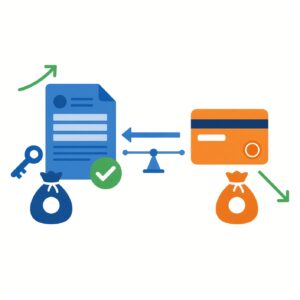
Your credit score is your financial passport, influencing your ability to rent an apartment, buy a home, or secure future loans with favorable terms. Both personal loans and credit cards interact with your credit score in distinct ways, governed primarily by the major scoring models.
Credit Utilization Ratio
Credit utilization—the amount of revolving credit you are currently using compared to your total available limit—accounts for approximately 30% of your FICO score.
-
Credit Cards: High balances on credit cards drive up your utilization ratio, potentially damaging your credit score even if you make your minimum payments on time.
-
Personal Loans: Because installment loans do not factor into revolving credit utilization in the same way, taking out a personal loan to pay off credit card debt can instantly lower your overall credit utilization, frequently resulting in a score boost.
Credit Mix
Credit scoring models reward you for managing different types of credit successfully. Having a healthy mix of revolving credit (credit cards) and installment credit (personal loans, auto loans, mortgages) demonstrates to lenders that you can handle diverse financial responsibilities. Opening a personal loan when you only have credit cards can diversify your profile positively over the long term.
Strategic Debt Consolidation: Using Personal Loans to Conquer Credit Card Debt
One of the most powerful applications of a personal loan is debt consolidation. If you have accumulated balances across multiple credit cards—each carrying high double-digit interest rates—managing separate monthly payments can become overwhelming, and interest charges can trap you in a perpetual cycle of minimum payments.
How Consolidation Works
By taking out a single personal loan large enough to pay off all your credit card balances, you transform multiple fractured debts into one fixed monthly payment.
-
Lower Interest: Securing a personal loan with a lower APR drastically reduces the amount of money wasted on interest.
-
Simplified Budgeting: Instead of tracking three or four different due dates, you track one single payment.
-
Defined End Date: Credit cards have open-ended revolving balances that encourage minimum payments, whereas a personal loan forces an amortization schedule that guarantees debt elimination by a specific date.
However, debt consolidation is only effective if you address the root cause of the debt. If you consolidate your credit card balances with a personal loan but continue racking up new charges on those same plastic cards, you risk doubling your debt burden and landing in a worse financial predicament.
Emergency Funding: Which Option Responds Faster in a Crisis?
When an unexpected crisis strikes—such as urgent car repairs, emergency veterinary bills, or sudden medical expenses—time is of the essence. The speed at which you can access funds dictates your choice between a personal loan and a credit card.
The Immediate Access of Credit Cards
In an acute emergency, credit cards are virtually unbeatable for speed. You can swipe your card or enter your numbers online instantly. If you need to pay a tow truck driver at midnight or book an emergency flight, a credit card provides immediate purchasing power without requiring application approvals or bank transfers.
The Approval Process of Personal Loans
While many online lenders now offer expedited underwriting and can fund personal loans within 24 to 48 hours, the process still requires an application, document verification, credit checks, and bank transfer times. For expenses that require immediate, on-the-spot payment, waiting for a personal loan disbursement may not be feasible.
A smart strategy for emergencies is maintaining a credit card with an available limit for immediate triage, followed by evaluating whether transferring that balance to a lower-interest personal loan makes sense once the immediate crisis has passed.
Psychological Factors and Spending Discipline
Financial decisions are rarely purely mathematical; human psychology plays a massive role in how we manage debt. Understanding your own spending habits and behavioral tendencies is crucial when deciding between these two borrowing instruments.
The Danger of Plastic
Credit cards offer frictionless spending. Swapping a piece of plastic or tapping a smartphone feels psychologically disconnected from parting with hard-earned cash. This frictionless nature can lead to lifestyle inflation and impulse purchases. If you struggle with self-control or tend to view a high credit limit as extra income rather than borrowed money, revolving credit can quickly become a financial trap.
The Discipline of Installment Loans
Personal loans enforce psychological friction. Securing a loan requires intentional paperwork, formal approval, and a conscious commitment to a fixed monthly bill. Once the loan funds are spent, you cannot simply borrow more from that same account. For individuals who prefer structured boundaries and clear psychological milestones toward debt freedom, the rigidity of an installment loan provides a helpful guardrail.
Evaluating Your Personal Financial Situation

Before deciding which path to take, ask yourself a series of diagnostic questions to evaluate your readiness and financial landscape:
-
What is the exact purpose of the funds? If it is a single, large, planned expense, a personal loan is generally superior. If it is a series of ongoing, smaller everyday expenses, a credit card is more practical.
-
How long will it take to repay the balance? If you can comfortably pay off the balance within a month or take advantage of a 0% introductory APR credit card offer, use the card. If repayment will take six months to several years, a personal loan will save you money on interest.
-
What does your credit score look like? Borrowers with excellent credit scores qualify for the lowest personal loan rates and the best rewards credit cards. Those with fair or recovering credit might face higher interest rates on both, but a personal loan can provide a more structured safety net than a high-rate credit card.
-
Can you handle temptation? Be honest about your spending discipline. If having available credit tempts you into unnecessary purchases, avoid carrying high limits on multiple credit cards.
Making the Final Decision: Personal Loan vs. Credit Card
Neither personal loans nor credit cards are universally “better” than the other; they are simply engineered for entirely different financial scenarios.
Opt for a personal loan when you need to finance a large, well-defined purchase, consolidate high-interest revolving debt into a predictable monthly payment, or commit to a structured repayment timeline that keeps your spending disciplined.
Opt for a credit card when you need maximum flexibility for everyday purchases, want to earn valuable rewards on money you were already planning to spend, require immediate funds for an emergency, or are confident in your ability to pay your balance in full every single month to avoid interest charges.
By carefully evaluating the costs, structure, and your own behavioral habits, you can leverage the right tool for the job and keep your personal finances moving steadily in the right direction.