What Happens When You Only Pay the Minimum Balance?
Credit cards are one of the most powerful financial tools available. When used strategically, they offer rewards, build your credit score, and provide a safety net for unexpected expenses. However, they can also become a financial trap if you don’t understand how the repayment system works.
If you are staring at your monthly statement and wondering, “What happens if I only pay the minimum amount on my credit card?” you are not alone. It is a question millions of cardholders ask every month. While paying the minimum keeps your account in good standing and prevents late fees, relying on this strategy long-term can trigger a dangerous cycle of compounding debt.
Here is a deep dive into exactly what happens behind the scenes when you only pay the minimum balance, how interest multiplies, and how you can break free from the cycle.
Understanding Credit Card Statements: What Does “Minimum Payment Due” Actually Mean?

To understand the consequences of paying the minimum, we first need to demystify what that number on your statement actually represents.
The minimum payment is the lowest amount of money you must pay by the due date to keep your credit card account active, avoid late fees, and prevent your account from falling into delinquency.
How Credit Card Companies Calculate Your Minimum Payment
Card issuers do not just pull this number out of thin air. It is usually calculated in one of two ways:
-
A Flat Percentage: Typically between 1% and 3% of your total outstanding balance.
-
Percentage Plus Interest/Fees: A lower percentage (around 1%) of your principal balance plus any interest charges and late fees incurred during the billing cycle.
Example: If you owe $5,000 and your issuer utilizes a 2% minimum payment structure, your minimum payment for that month would be $100.
While paying that $100 feels manageable, it covers very little of what you actually owe. The vast majority of that payment goes toward the interest charges, leaving only a fraction to reduce your actual balance.
The Compounding Interest Trap: How Your Debt Multiplies Daily
When you carry a balance from month to month, you lose your grace period. The grace period is the window of time (usually 21 to 25 days) between the end of your billing cycle and your payment due date where you can pay your balance in full without accruing interest.
The moment you choose to pay only the minimum, interest begins to accrue immediately on your remaining balance, and it does so through a process called compounding interest.
The Mechanism of Daily Periodic Rates
Credit card companies don’t just calculate interest once a month; they calculate it daily. They take your Annual Percentage Rate (APR) and divide it by 365 to get your Daily Periodic Rate (DPR).
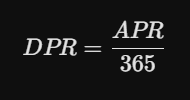
Every day, this DPR is multiplied by your average daily balance. At the end of the billing cycle, these daily charges are added together to form your monthly interest fee. The next month, you are charged interest not just on the principal money you spent, but also on the interest that accumulated the month before. This is literally paying interest on top of interest.
How Long to Pay Off Credit Card Debt? The Math Behind the Minimum Payment
To truly understand the impact of this financial decision, let’s look at a realistic scenario.
Imagine you have a credit card balance of $10,000 with an APR of 22% (which is close to the national average). Your issuer calculates the minimum payment as 2.5% of the balance.
If you stop using the card completely and only pay the minimum amount every month, here is what your financial trajectory looks like:
The $\$10,000$ Minimum Payment Timeline
| Metric | The Reality of Minimum Payments |
| Initial Debt | $10,000 |
| Interest Rate (APR) | 22% |
| Time Needed to Pay Off | Over 30 Years (Approx. 363 months) |
| Total Interest Paid | Over $19,500 |
| Total Amount Paid Back | Over $29,500 |
By paying only the minimum, you end up paying back nearly triple what you originally borrowed, and you will be carrying that debt for three decades. This turns a temporary expense into a lifelong financial burden.
Does Only Paying the Minimum Hurt Credit Scores? The Credit Utilization Impact
A common misconception is that as long as you pay on time, your credit score will remain perfect. While it is true that your payment history (which accounts for 35% of your FICO® Score) stays protected when you pay the minimum, another critical factor suffers: your credit utilization ratio.
What is Credit Utilization?
Credit utilization measures how much of your available credit you are using at any given time. It accounts for 30% of your total credit score.

Financial experts recommend keeping your credit utilization below 30%, and ideally below 10% for the best credit scores.
When you only pay the minimum, your balances remain high while your credit limits stay the same. If your $10,000 debt is on a card with a $12,000 limit, your utilization rate is 83%.
The Consequences of High Utilization
-
Credit Score Drops: The algorithms view high utilization as a sign of financial distress, causing your score to steadily decline.
-
Risk of “Triggers”: Other lenders may see your rising utilization and view you as a higher risk, which can prevent you from qualifying for mortgages, auto loans, or apartment rentals.
What is Credit Card Offsetting and Adverse Action? The Hidden Risks
When you carry a high balance and only make minimum payments, you trigger internal risk flags within your credit card issuer’s system. Even if you have never missed a payment, banks have mechanisms to protect themselves from potential defaults.
1. Credit Limit Decreases (Balance Chasing)
As you slowly pay down a small portion of your principal, the credit card issuer may automatically lower your credit limit to match your new, lower balance. This practice is known as “balance chasing.” The issuer does this to minimize their exposure to your debt, but it keeps your credit utilization ratio dangerously high, trapping your credit score in a low state.
2. Adverse Action and Account Closure
If the bank determines that your debt-to-income ratio or utilization poses too high of a risk, they may take adverse action. This can include:
-
Freezing your account so you cannot make new purchases.
-
Revoking promotional 0% APR offers early.
-
Closing the account entirely, which can cause an immediate drop in your credit score due to the loss of available credit.
The Psychology of Minimum Payments: Why Banks Design It This Way
It is no accident that the minimum payment option is prominently displayed on your digital dashboard and paper statements, often highlighted in bold or bright colors.
The Anchoring Effect
In behavioral psychology, “anchoring” occurs when an individual relies too heavily on the first piece of information offered when making decisions. By showcasing the minimum payment (e.g., $45) next to a large total balance (e.g., $2,500), your brain naturally anchors to the smaller, more comfortable number. It makes the debt feel managed and under control, even when it is actively growing.
Credit card companies are businesses, and interest is their primary revenue driver. The minimum payment is designed to keep you in debt for as long as safely possible, maximizing the profit the issuer generates from your account over your lifetime.
How to Get Out of Credit Card Debt: Proven Repayment Strategies

If you find yourself stuck in the minimum payment cycle, the most important step is to pivot your strategy. You need a structured plan to tackle the principal balance and eliminate compounding interest. Here are the most effective, battle-tested methods to get out of debt:
1. The Debt Avalanche Method (Mathematical Efficiency)
The Debt Avalanche method focuses on minimizing the amount of interest you pay over time.
-
How it works: List all of your debts from the highest interest rate to the lowest interest rate. Continue making the minimum payments on all accounts except the one with the highest APR. Throw every extra dollar of your budget into that highest-interest card.
-
Why it works: By eliminating the most expensive debt first, you save the maximum amount of money on interest charges and accelerate your path to freedom.
2. The Debt Snowball Method (Psychological Momentum)
The Debt Snowball method prioritizes psychological wins over interest savings.
-
How it works: List all of your debts from the smallest balance to the largest balance, regardless of the interest rate. Pay the minimums on everything except the smallest balance. Dedicate all your extra funds to wiping out that smallest balance completely.
-
Why it works: Completely eliminating an entire account quickly gives you a powerful psychological boost, creating momentum that helps you tackle the larger balances down the line.
3. Credit Card Debt Consolidation Loans
If your credit score is still decent, you might qualify for a personal debt consolidation loan.
-
How it works: You take out a fixed-rate personal loan to pay off all your revolving credit card balances at once.
-
The Benefit: Personal loans typically offer significantly lower interest rates than credit cards, and they have a fixed payoff date (usually 2 to 5 years), meaning you cannot get stuck in an endless cycle of minimum payments.
4. 0% APR Balance Transfer Credit Cards
For those with good-to-excellent credit scores, a balance transfer card can be a powerful tool.
-
How it works: You transfer your existing high-interest balance to a new card that offers a introductory 0% APR period, often lasting between 12 and 21 months.
-
The Benefit: During this introductory window, 100% of your monthly payment goes directly toward reducing the principal balance. However, you must be disciplined enough to pay off the balance before the promotional period ends and the standard high APR kicks in.
Smart Credit Card Management: Best Practices for Long-Term Financial Health
To ensure you never fall into the minimum payment trap again, establish healthy financial habits around your credit usage.
-
Treat Your Credit Card Like a Debit Card: Never charge something to your card that you do not already have the cash in your bank account to pay for today.
-
Automate Full Statement Payments: Set up your accounts to automatically deduct the Full Statement Balance every month from your checking account. This guarantees you will never pay a dime in interest or late fees.
-
Build a Basic Emergency Fund: Many people rely on credit cards for emergencies because they lack liquidity. Aim to save at least 3 to 6 months’ worth of living expenses in a High-Yield Savings Account (HYSA) to act as a buffer against unexpected costs.
-
Monitor Your Accounts Weekly: Don’t wait for your monthly statement to see how much you’ve spent. Check your mobile banking apps weekly to track your spending and make mid-cycle payments to keep your credit utilization low.
What to Do If You Can Only Afford the Minimum This Month

Life happens, and there may be months where a financial emergency arises, leaving you with only enough cash to cover the minimum payment. If you find yourself in this situation, do not panic, but act intentionally:
-
Make the Minimum Payment Instantly: Do not skip the payment. Paying the minimum protects your payment history, avoids late fees, and keeps your account out of collections.
-
Stop Spending on the Card: Freeze the physical card in a block of ice or delete it from your digital wallets (Apple Pay, Google Wallet, Amazon). Continuing to use the card while carrying a balance accelerates the interest compounding process.
-
Adjust Your Budget Immediately: Look for temporary cuts you can make in your discretionary spending (dining out, streaming subscriptions, entertainment) for the next 30 days to free up cash to pay down the remaining principal as soon as possible.
-
Contact Your Credit Card Issuer: If your financial hardship is long-term (such as a job loss or medical emergency), call your bank’s customer service line. Many issuers have internal hardship programs where they can temporarily lower your interest rate or waive fees to help you get back on your feet.
By understanding the mechanics of how credit card interest works, you can transform credit from a costly trap into an asset that works for your financial future. Always aim to pay your statement balance in full, protect your credit score, and take control of your financial journey.