Different Types of Brokerages Explained
In the modern financial landscape, the barrier to entry for investing has never been lower. Just a few decades ago, placing a stock trade required a phone call to a suit-and-tie professional and a hefty commission fee. Today, you can buy a fractional share of a global tech giant while waiting for your coffee, often for zero dollars in commission.
However, this “democratization of finance” has created a new problem: choice overload. With hundreds of platforms shouting for your attention, how do you know which one actually fits your goals? Choosing the wrong type of brokerage isn’t just a minor inconvenience—it can lead to thousands of dollars in lost returns through hidden fees, poor execution, or a lack of necessary tools.
In this deep dive, we will peel back the curtain on the different types of brokerage firms, how they operate, and which one aligns with your financial journey.
Full-Service Brokerages: The Traditional “White Glove” Experience

If you envision a personal advisor who knows your children’s names and manages your entire estate, you are thinking of a Full-Service Brokerage. Firms like Morgan Stanley, Merrill Lynch, and UBS fall into this category.
Full-service brokers do much more than just execute trades. They offer a holistic approach to wealth management, including:
-
Estate Planning: Helping you navigate inheritance and trusts.
-
Tax Advice: Strategies to minimize what you owe the IRS.
-
Retirement Planning: Calculating exactly how much you need to stop working.
-
Research Reports: Access to exclusive, institutional-grade analysis on companies and sectors.
Who is this for?
These firms are generally best for High-Net-Worth Individuals (HNWIs) or people with complex financial lives who prefer to outsource their decision-making to a professional.
The Cost Factor
The “human touch” comes at a price. Historically, full-service brokers charged high commissions per trade. Today, most have shifted to an Assets Under Management (AUM) fee, typically around 1% to 1.5% annually. While this sounds small, it can significantly impact a large portfolio over several decades.
Discount Brokerages: The DIY Revolution
The rise of the “self-directed investor” was fueled by the Discount Brokerage. Companies like Charles Schwab, Fidelity, and E*TRADE disrupted the industry by stripping away the personal advice and focusing on low-cost execution.
In a discount brokerage, you are the pilot. The firm provides the platform, the charts, and the access to the markets, but you decide what to buy and when to sell.
The “$0 Commission” Era
In 2019, the industry shifted when major players moved to a $0 commission model for stocks and ETFs. You might wonder: If they aren’t charging me, how do they make money?
-
Payment for Order Flow (PFOF): Routing your orders through specific market makers who pay the broker a small fee.
-
Net Interest Margin: Earning interest on the uninvested cash sitting in your account.
-
Premium Services: Charging for advanced tools, margin lending, or wealth management tiers.
Robo-Advisors: The Rise of Automated Investing
For the investor who wants professional management but doesn’t have a million dollars (or the desire to pay 1.5% in fees), Robo-Advisors are the middle ground. Platforms like Betterment and Wealthfront use sophisticated algorithms to manage your money.
How Robo-Advisors Work
When you sign up, you answer a series of questions about your age, income, and risk tolerance. The algorithm then builds a diversified portfolio, usually consisting of low-cost ETFs.
-
Automatic Rebalancing: If your stocks grow too fast and your portfolio becomes “tilted,” the robo-advisor automatically sells some stocks and buys bonds to bring you back to your target risk level.
-
Tax-Loss Harvesting: A complex strategy where the software sells “losing” investments to offset capital gains taxes, potentially saving you thousands.
Who is this for?
Passive investors and beginners who want a “set it and forget it” strategy.
Direct-Access Brokerages: Built for Speed

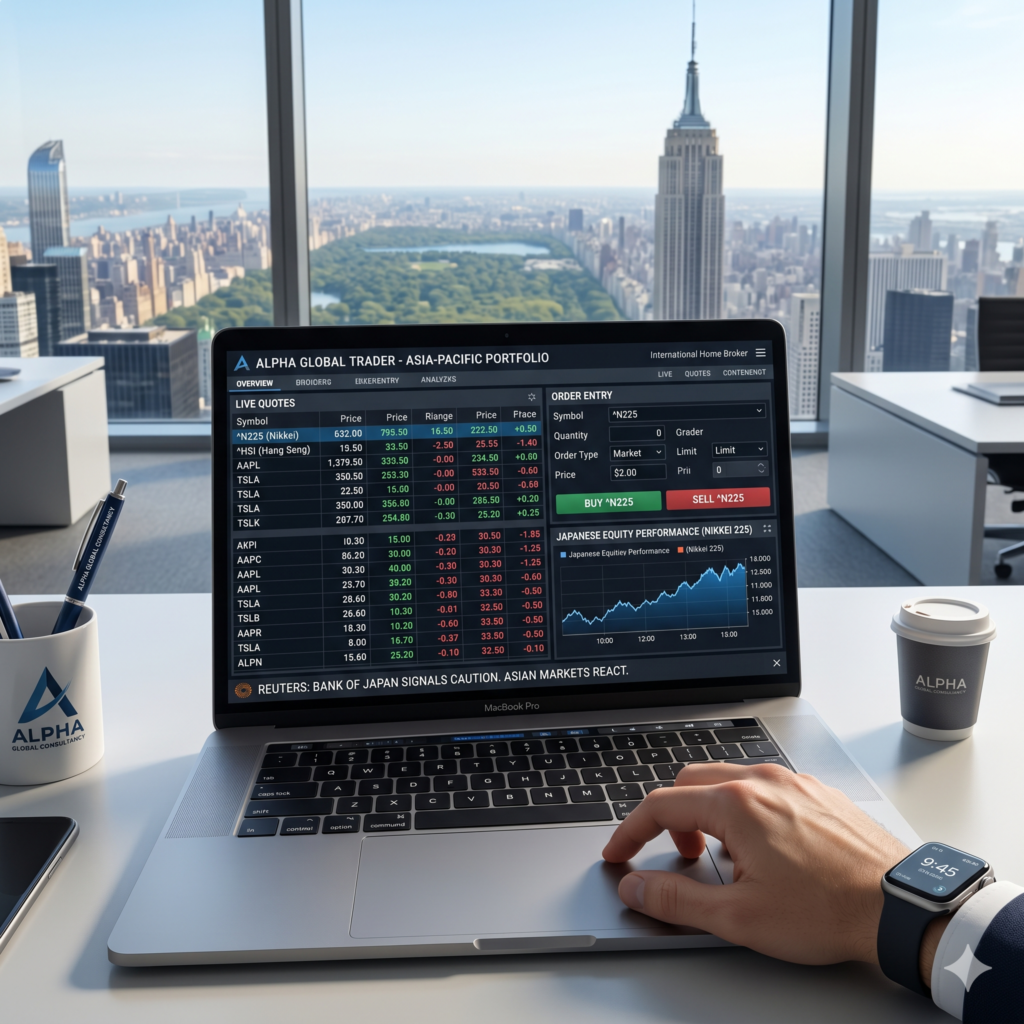
If you are a day trader who moves in and out of positions within seconds, a standard discount broker won’t cut it. You need a Direct-Access Broker (DAB).
Unlike retail brokers that route your orders through a “middleman” (market maker), direct-access brokers allow you to route your trades directly to specific exchanges like the NYSE or Nasdaq, or to Electronic Communication Networks (ECNs).
Key Features of Direct Access:
-
Speed: Millisecond execution.
-
Level 2 Market Data: Seeing the “depth” of the market (who is buying/selling at every price level).
-
Complex Order Types: Using “iceberg” orders or “fill-or-kill” instructions.
Note: These platforms often have steep monthly software fees and require a high level of technical knowledge. They are the “Formula 1 cars” of the brokerage world—not recommended for your daily commute.
Online-Only and “Fintech” Brokers: Mobile-First Investing
The newest kids on the block are the Fintech Brokers like Robinhood, Webull, and SoFi. These platforms were built from the ground up for the smartphone generation.
They prioritize User Experience (UX) above all else. The interfaces are clean, colorful, and often “gamified.”
The Pros and Cons:
-
Pros: Extreme ease of use, instant deposits, and social features.
-
Cons: Customer support is often digital-only (no one to call), and the simplified interface might hide the risks of advanced products like options.
Clearing vs. Introducing Brokers: What Happens Behind the Scenes?
To truly understand how your money moves, you should know the difference between an Introducing Broker and a Clearing Broker.
-
Introducing Broker (IB): They handle the customer relationship, the marketing, and the app interface. However, they don’t actually “hold” your money or stocks.
-
Clearing Broker: The “back office” powerhouse. They handle the actual execution, settlement, and custody of the assets.
Why it matters: If you use a small, niche app, your money is likely actually being held by a massive clearing firm like Apex Clearing or Pershing. This provides an extra layer of security because even if the “app” goes out of business, your assets are safe with the clearing house.
Specialized and Niche Brokerages: Beyond Stocks and Bonds
Sometimes, a general brokerage isn’t enough. Depending on your interests, you might look for a specialized firm:
-
Futures/Forex Brokers: Dedicated to commodities (oil, gold, wheat) or currency trading.
-
Crypto-Native Brokers: Platforms like Coinbase or Kraken that focus strictly on digital assets (though many traditional brokers now offer Bitcoin ETFs).
-
Real Estate Brokerages: Platforms that allow you to buy “fractions” of physical rental properties.
How to Choose: The Ultimate Brokerage Checklist
Before you deposit a single cent, ask yourself these five questions:
1. What is my “Investment Style”?
Are you a Buy-and-Hold investor? A discount broker or robo-advisor is perfect. Are you a Day Trader? Look for direct access.
2. What are the “Invisible” Fees?
Don’t just look at the commission. Check for:
-
Inactivity Fees: Do they charge you for not trading?
-
Transfer Fees (ACATS): How much does it cost to leave if you’re unhappy?
-
Wire Fees: What is the cost to get your cash out?
3. Is the Research Quality Sufficient?
If you like to do your own homework, ensure the broker provides free access to Morningstar, CFRA, or Reuters reports. Some discount brokers provide $1,000+ worth of research for free just for having an account.
4. How Good is the Mobile App vs. Desktop?
If you work from a home office, a robust desktop platform (like Thinkorswim) is vital. If you travel constantly, a high-rated mobile app is your priority.
5. What is the “Security Stack”?
Does the broker offer SIPC insurance? Do they have Two-Factor Authentication (2FA)? Never compromise on security for the sake of a “slicker” interface.
The Future of Brokerages: AI and Hyper-Personalization

The industry is currently entering its “Fourth Wave.” After the eras of Full-Service, Discount, and Robos, we are now entering the AI Era.
We are beginning to see “Hybrid” brokerages where AI monitors your spending, your risk profile, and the global news in real-time. Imagine a broker that sends you a notification saying: “Based on the news in the semiconductor industry today, your portfolio is now 5% riskier than you prefer. Would you like me to adjust it?”
Your Platform Defines Your Performance
There is no “best” brokerage—only the best brokerage for you.
A professional trader would feel suffocated by a robo-advisor, while a busy parent trying to save for college would be overwhelmed by a direct-access platform. By understanding where you fall on the spectrum of “Passive” to “Active” and “Assisted” to “Independent,” you can choose a partner that doesn’t just hold your money, but helps it grow.
Take the time to compare at least three platforms within your chosen category. The right choice today could be the difference between a comfortable retirement and one spent worrying about the fine print.