Why Taking a Loan Can Ruin Your Finances (If You’re Not Careful)

Borrowing money is often presented as a solution. Need a car to get to work? Take a loan. Want to consolidate high-interest credit cards? Take a loan. Need to bridge the gap during a slow month? Take a loan. In the modern financial ecosystem of 2026, debt has become so accessible that it’s almost treated as a supplementary income.
However, debt is a tool, much like a chainsaw. In the hands of a professional, it can clear a path toward wealth and stability. In the hands of someone who doesn’t respect its power, it can lead to a financial catastrophe that takes decades to repair. If you are not careful, a “simple” loan can become the anchor that keeps you from ever reaching financial freedom.
In this guide, we will explore the mechanics of how loans can ruin your finances, the psychological traps of borrowing, and the hidden costs that most lenders hope you never calculate.
The Illusion of Affordability: The Monthly Payment Trap
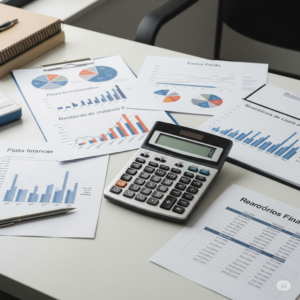
The most common way people ruin their finances is by focusing on the monthly payment rather than the total cost of the loan. Lenders love to ask, “How much can you afford to pay each month?” This question is designed to shift your focus away from the high interest rates and long repayment terms.
When you focus only on the monthly payment, you might be tempted to extend a 3-year auto loan to a 7-year loan just to save $100 a month. While your monthly budget might feel “lighter,” you end up paying thousands of dollars more in interest. Furthermore, you increase the risk of being “underwater” on the loan—meaning you owe more on the car than it is actually worth.
The Math of the Trap:
Imagine borrowing $10,000 at a 10% interest rate:
-
3-Year Term: Monthly payment is roughly $323. Total interest paid: $1,616.
-
6-Year Term: Monthly payment is roughly $185. Total interest paid: $3,334.
By “lowering” your payment, you doubled your interest cost. Over time, stacking multiple “low monthly payments” for furniture, electronics, and vehicles consumes your entire paycheck, leaving zero room for savings or emergencies.
How Interest Rates and Compounding Work Against You
We often hear about the “magic of compounding” when it comes to investing. When you borrow, that magic turns into a financial curse. Interest is the price you pay for using someone else’s money today. When you take a loan, you are essentially “buying” cash, and if the interest rate is high, that cash is incredibly expensive.
The APR Reality Check
Many people ignore the Annual Percentage Rate (APR). While a 15% APR might not sound like a lot in a world of 25% credit cards, it is significantly higher than the average return of the stock market. This means that every dollar of debt you hold at 15% is effectively “killing” the potential of a dollar you might have invested elsewhere.
If you carry high-interest debt, you are running on a financial treadmill that is moving faster than you can keep up. If you only make minimum payments, the interest can accrue faster than you pay down the principal, leading to a situation where your balance barely moves despite years of payments.
The Devastating Impact of Opportunity Cost
This is the most “hidden” cost of all. Every dollar you send to a lender for interest is a dollar that cannot be used to build your own wealth. This is known as Opportunity Cost.
Let’s say you have a $500 monthly payment for a personal loan you took to fund a luxury vacation or high-end gadgets. If, instead of taking that loan, you had invested that $500 a month into a diversified index fund with an average 7% annual return, you would have over $35,000 in five years.
When you take a loan for a non-essential item, you aren’t just paying for the item; you are sacrificing the future version of yourself who could have been wealthy. Debt steals from your future self to provide a temporary “high” for your current self.
Debt-to-Income (DTI) Ratios and Future Borrowing Power
Your current loan doesn’t just affect your wallet today; it affects your ability to achieve major milestones in the future. Lenders use the Debt-to-Income (DTI) Ratio to determine your creditworthiness.

If you take out a large personal loan today to buy a boat or renovate a kitchen, that monthly payment increases your DTI. Two years from now, when you apply for a mortgage for your dream home, the bank might deny you because your “debt load” is too high. Even if you have a great salary, your existing loans act as a ceiling on your future financial potential.
The Psychological Burden: Debt Stress and Decision-Making
Finances are not just about spreadsheets; they are about mental health. Study after study has shown a direct link between high debt levels and increased rates of anxiety, depression, and even physical health issues.
The “Scarcity Mindset”
When you are heavily in debt, you operate from a scarcity mindset. You are constantly worried about how to make the next payment. This stress leads to “cognitive tunneling,” where you focus so much on immediate survival that you lose the ability to make long-term, strategic decisions.
People in deep debt often make more poor financial choices—like taking out “easy approval” payday loans to pay off other debts—because the stress has compromised their ability to think clearly. This creates a downward spiral that is incredibly difficult to break.
Why “Lifestyle Creep” Makes Debt Dangerous
One of the most dangerous side effects of taking a loan is that it enables lifestyle creep. When you can “finance” your lifestyle, you stop living within your means.
If you can only afford a $30,000 life but you use loans to live a $50,000 life, you are creating a structural deficit in your finances. Eventually, the “credit limit” is reached, and the lifestyle you’ve built comes crashing down. Loans allow us to pretend we are wealthier than we are, which prevents us from doing the hard work of increasing our actual income or lowering our expenses.
Predatory Terms: Prepayment Penalties and Variable Rates

Not all loan contracts are written in your favor. If you aren’t careful, you might sign a document that includes “gotcha” clauses designed to keep you in debt longer.
1. Prepayment Penalties
Some loans include a fee if you pay the balance off early. This is the lender’s way of ensuring they get their full projected interest profit even if you become responsible and try to get out of debt sooner. Always ask: “Can I pay this off tomorrow without a penalty?”
2. Variable Interest Rates
In 2026, the economy can be volatile. If you take a loan with a Variable APR, your interest rate is tied to an index (like the Prime Rate). If the central bank raises rates to fight inflation, your “affordable” $300 payment could suddenly jump to $450. Taking a variable-rate loan is essentially gambling that the economy will stay stable—a gamble that many people lose.
The Danger of Using “Good Debt” for “Bad Reasons”
Financial experts often talk about “Good Debt” (mortgages, education) vs. “Bad Debt” (credit cards, vacations). However, even “good debt” can ruin you if the timing or scale is wrong.
-
Student Loans: If you borrow $100,000 for a degree in a field that pays $40,000, that “investment” will never pay off. The debt will linger for decades, preventing you from buying a home or saving for retirement.
-
Home Equity: Borrowing against your home (HELOC) to invest in the stock market or buy a car is extremely risky. You are essentially putting your shelter—the most important asset you own—on the line for a gamble.
How to Protect Yourself: A Safe Borrowing Checklist
If you must take a loan, you need a defense strategy. Before you sign any agreement, ensure you can answer “Yes” to these points:
-
Is it for a necessity or an asset? Does this loan help me earn more money or secure a home? If it’s for a “want,” save up the cash instead.
-
What is the Total Cost of Credit? Look at the final number on the disclosure statement—the one that shows how much you will have paid after 3, 5, or 10 years. Does that number make you uncomfortable?
-
Is my DTI below 30%? Ensure your total debts aren’t consuming more than a third of your gross income.
-
Is there an Emergency Fund? Never take a loan if you don’t have at least $1,000 in a savings account. If you lose your job and have no savings, that loan will be the first thing to default.
-
Fixed Rate Only: In most cases, the peace of mind of a fixed monthly payment is worth the slightly higher initial rate.
Debt is a Contract with Your Future Self

Every time you sign for a loan, you are making a promise that your “future self” will work for free to pay for your “current self’s” desires. If you do this too often, your future self will have no money left for their own dreams, their own family, or their own retirement.
Loans can ruin your finances not because they are inherently “evil,” but because they provide a shortcut that bypasses the discipline of saving. By respecting the cost of interest, understanding the weight of monthly payments, and recognizing the psychological toll of debt, you can ensure that you use loans to build your life rather than destroy it.
Stay disciplined, read the fine print, and always remember: The best interest rate in the world is 0% on a purchase you paid for with cash.