What to check before purchasing insurance

Buying insurance is one of the few times in life where you are paying for something you hope you never actually use. Because it feels like a “grudge purchase,” many people rush through the process, clicking “Agree” on the first quote that looks affordable.
However, an insurance policy is a legally binding contract. If you haven’t verified the specifics before a disaster strikes, you might find that your “safety net” is full of holes. Whether you are looking for auto, home, or life insurance, there are universal truths and hidden traps you must navigate.
In this comprehensive guide, we will walk through the essential verifications you must perform to ensure your coverage is as solid as the premiums you’re paying.
Financial Strength Ratings: Is the Company Actually Solvent?
Before you look at the price, look at the provider. If a major hurricane or a massive multi-car pileup occurs, does the insurance company have the liquid capital to pay out thousands of claims simultaneously?
How to Check Reliability
You shouldn’t rely on the company’s own advertisements. Instead, look at third-party rating agencies:
-
A.M. Best: The gold standard for insurance company financial health. Look for ratings of “A” or better.
-
Moody’s and Standard & Poor’s (S&P): These agencies provide credit ratings that indicate the company’s long-term financial stability.
-
J.D. Power: This tells you about customer satisfaction and claims handling rather than just finances.
A company might offer the lowest price in the state, but if they have a “C” rating from A.M. Best, you are taking a massive gamble on their ability to fulfill their promise.
The Declarations Page: Your Policy at a Glance
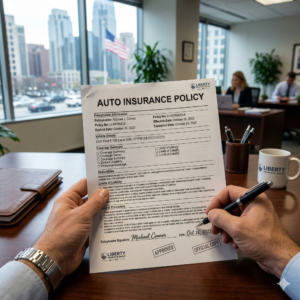
The most important part of any insurance document is the Declarations Page (or “Dec Page”). This is usually the first or second page of your policy, and it summarizes exactly what you are buying.
What to Verify on the Dec Page:
-
Effective Dates: Ensure there is no gap between your old policy and the new one.
-
Named Insureds: Are all drivers in your house listed? Is your spouse included?
-
Correct Address: For homeowners insurance, a simple typo in the zip code or street number can cause massive legal headaches during a claim.
-
Lienholders/Mortgagees: If you have a car loan or a mortgage, your bank must be listed correctly, or you may be in violation of your loan agreement.
The Deductible vs. Premium Trade-off: Finding Your “Sweet Spot”
The relationship between your premium (the monthly cost) and your deductible (the out-of-pocket cost during a claim) is a mathematical balance.
The Logic of the Trade-off
The higher the risk you take, the lower the premium the company charges.
-
Low Deductible ($250): High monthly premium. Best for those with low savings but stable income.
-
High Deductible ($1,000+): Low monthly premium. Best for those with an emergency fund who want to save money over the long term.
Pro Tip: Calculate your “Break-Even” point. If raising your deductible from $500 to $1,000 saves you $200 a year in premiums, it will take you 2.5 years without a claim to “break even” on that decision. If you go five years without a claim, you’ve saved $1,000.
Specific Coverage Limits: Are You “Under-Insured”?
Most people choose the “State Minimum” for car insurance or a “Standard” package for home insurance. This is often a mistake. You need to verify that your Limits of Liability actually protect your net worth.
The “Assets at Risk” Calculation
If you own a home worth $400,000 and have $100,000 in savings, but you only carry $50,000 in bodily injury liability on your car insurance, you are dangerously exposed. If you cause a major accident, the victim’s lawyers won’t stop at the $50,000 the insurance pays—they will come after your house and your savings.
Always verify that your liability limits meet or exceed your total net worth. If your assets outgrow standard limits, verify the cost of adding an Umbrella Policy.
Exclusions: The “What Is NOT Covered” Section

This is the most critical part of the fine print. No insurance policy covers everything. You must verify what is explicitly excluded so you can decide if you need a “rider” or “endorsement” to fill the gap.
Common Exclusions to Look For:
-
Homeowners: Floods, earthquakes, sewer backups, and “acts of war” are almost always excluded from standard policies.
-
Auto: Using your personal car for “ridesharing” (Uber/Lyft) or delivery (DoorDash) is usually excluded unless you buy a specific business-use endorsement.
-
Life: Deaths resulting from “high-risk hobbies” (like skydiving) or certain pre-existing conditions during the “contestability period” may be excluded.
Replacement Cost Value (RCV) vs. Actual Cash Value (ACV)
When a total loss happens, the way the company calculates your check will determine if you can actually move on with your life.
| Coverage Type | Calculation | Result |
| Replacement Cost (RCV) | Cost to buy the item new today | You get a brand new version of what you lost. |
| Actual Cash Value (ACV) | New price minus depreciation | You get what a “used” version was worth (often very little). |
Verification Task: Ensure your homeowners policy and your personal property coverage are set to Replacement Cost. If your 10-year-old roof is destroyed, an ACV policy will only give you a fraction of the cost to replace it, leaving you with a $10,000+ bill.
The Claims Process: How Digital is the Provider?
In 2026, you shouldn’t have to wait for a paper check in the mail. Before you sign, verify the company’s claims infrastructure.
-
Mobile App: Does the company have a highly-rated app where you can upload photos of an accident immediately?
-
Direct Repair Network: Does the company have a list of “preferred” shops that guarantee their work? This can save you from a “he-said, she-said” battle between the mechanic and the adjuster.
-
24/7 Support: Accidents don’t happen during business hours. Verify that they have a 24-hour claims hotline.
Waiting Periods and “Contestability” Clauses
For life and health insurance, you must verify the Waiting Period. * Life Insurance: Most policies have a two-year “Contestability Period.” If you die within the first two years, the company has the right to investigate your medical history to ensure you didn’t lie on the application.
-
Dental/Vision: These often have 6-month or 12-month waiting periods for “Major” work (like crowns or braces). If you need a root canal tomorrow, verify that the policy doesn’t have a waiting period that will deny the claim.
Stated Value vs. Agreed Value (For Specialty Items)
If you are insuring a classic car, high-end jewelry, or expensive art, “Standard” insurance is usually insufficient.
-
Stated Value: The company takes your word for what it’s worth, but they can still argue about the price during a claim.
-
Agreed Value: You and the insurer agree on a fixed price (usually backed by an appraisal) before the policy starts. If the item is lost, they pay that exact amount, no questions asked.
If you have items that don’t “depreciate” normally, verify that you have an Agreed Value endorsement.
The Bundle Discount: Is it a Trap?
Everyone loves a discount, and bundling home and auto is the easiest way to get one. However, you must verify that the “Bundled Price” is actually lower than “Unbundled” prices from two different companies.
Sometimes, a company is great at auto insurance but terrible (and expensive) at home insurance. They use the auto discount to “lure” you into a high-priced home policy. Always ask for the “stand-alone” quotes for both before agreeing to the bundle.
Customer Reviews: Look for “Claim Denial” Patterns

Go to sites like Trustpilot, the Better Business Bureau (BBB), or the NAIC (National Association of Insurance Commissioners) Consumer Information Source.
What to look for:
Don’t just look at the star rating. Read the complaints. Are people complaining about “long hold times” (minor) or “unjustified claim denials” and “slow payouts” (major)? If you see a recurring theme of the company fighting its own customers during claims, keep shopping.
Don’t Let the Premium Be Your Only Guide
The price of an insurance policy is important, but it is the least important factor when you are standing on the side of the road after an accident or looking at a flooded basement.
By verifying the financial strength of the company, ensuring you have Replacement Cost coverage, and double-checking your Exclusions, you move from being a victim of “the fine print” to being a protected, savvy policyholder.
Take an extra 30 minutes today to read your Declarations Page. It is the cheapest “insurance” you will ever find.