Understand how credit card interest works
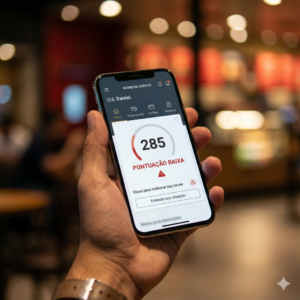
Credit card interest is often viewed as a “hidden” fee, a mysterious number that appears on your statement and makes your balance grow even when you haven’t bought anything new. In reality, interest is simply the price of borrowing money. If you understand the mechanics behind it, you can transform your credit card from a potential debt trap into a powerful financial tool that costs you absolutely nothing to use.
This deep-dive guide explores the inner workings of credit card interest in 2026, breaking down the complex math into simple, actionable steps so you can stay ahead of the banks.
Understanding How Credit Card Interest Works: The Complete 2026 Guide to Beating the Debt Cycle
For many, opening a credit card statement feels like reading a foreign language. You see terms like APR, Daily Periodic Rate, and Average Daily Balance, all while wondering why your $1,000 purchase has suddenly turned into a $1,050 debt.
As we navigate the financial landscape of 2026, interest rates remain a primary concern for consumers. Whether you are looking to pay off existing debt or simply want to ensure you never pay a cent in interest again, understanding the “how” and “why” of these charges is your first line of defense.
Decoding APR: Why Your Annual Percentage Rate is the Key to Your Costs

The most prominent number on any credit card offer is the APR (Annual Percentage Rate). This is the yearly cost of borrowing money, expressed as a percentage. However, the term “Annual” is slightly misleading because credit card interest isn’t calculated once a year—it’s calculated every single day.
In 2026, most credit cards come with Variable APRs. This means your interest rate isn’t set in stone; it is tied to an index called the Prime Rate. When the central bank adjusts interest rates to manage the economy, your credit card’s APR likely moves in tandem. This is why you might notice your interest charges creeping up even if your spending habits haven’t changed.
The Different Flavors of APR
Not all interest is created equal. Most cards actually have several different APRs depending on how you use the card:
-
Purchase APR: The rate applied to standard things you buy (groceries, clothes, gas).
-
Cash Advance APR: A significantly higher rate applied when you use your card to get cash from an ATM. This usually has no “grace period” and starts accruing interest immediately.
-
Balance Transfer APR: The rate for moving debt from an old card to a new one. In 2026, many “introductory” offers provide 0% APR here for 12–21 months.
-
Penalty APR: The “nuclear option.” If you miss a payment or go over your limit, the bank may hike your rate to 29.99% or higher.
The Math Behind the Magic: How Banks Calculate Your Interest Charge
If you want to know exactly what you’ll be charged, you have to look at your Daily Periodic Rate (DPR). Banks don’t wait until the end of the year to see what you owe; they check in every day.
The formula the bank uses is generally the Average Daily Balance Method. Here is how the math breaks down:
-
Find your Daily Periodic Rate: Take your APR and divide it by 365. For example, if your APR is 24%, your DPR is $0.24 / 365 = 0.000657$.
-
Calculate the Average Daily Balance: The bank adds up your balance for every single day of the billing cycle and divides it by the number of days in that cycle (usually 30).
-
The Final Charge: Multiply the Average Daily Balance by the DPR, then multiply that by the number of days in the billing cycle.
Example: If you carry an average balance of $2,000 at a 24% APR for a 30-day month, your interest charge would be approximately $39.42. This might not seem like much, but over a year, that adds up to nearly $480—money that could have been in your savings account instead.
The “Grace Period” Secret: How to Pay 0% Interest Every Month
The most important thing to know about credit cards is that interest is optional. Most credit cards offer what is known as a Grace Period.
A grace period is the gap between the end of your billing cycle and your payment due date (usually 21 to 25 days). If you pay your Statement Balance in full by the due date every single month, the bank waives all interest on your purchases.
However, there is a catch: if you “carry over” even $1 of debt from the previous month, you lose your grace period for the next month. This is called Trailing Interest. You will start being charged interest on new purchases the moment you make them until you have paid your balance to zero for two consecutive billing cycles.
Why the “Minimum Payment” is a Dangerous Financial Anchor
Banks love it when you pay the minimum amount. They make it very easy—it’s usually the most prominent button on their mobile apps. But paying only the minimum is the fastest way to stay in debt for decades.
The minimum payment is typically only 1% to 2% of your total balance plus any interest and fees. Because interest is added to your balance every month, a small payment barely touches the “principal” (the original money you spent).
In 2026, credit card statements are required to include a “Minimum Payment Warning” table. This table shows you exactly how many years it will take to pay off your balance if you only pay the minimum. It is often a shocking realization: a $5,000 debt can take over 20 years to pay off if you only follow the bank’s minimum suggestion.
The Power of Compounding: How Interest Grows on Top of Interest
Credit card interest is compound interest, but in a way that works against you. When the bank calculates your interest for the day, they add that interest to your balance. The next day, they calculate interest based on that new, higher balance.
This is why credit card debt feels like it’s “snowballing.” Even if you stop spending entirely, your debt will continue to grow because you are paying interest on the interest the bank charged you last month. To break this cycle, you must pay more than the interest charge every single month.
Strategies to Lower Your Credit Card Interest Rates in 2026

If you are already carrying a balance, you aren’t stuck with a high APR forever. Here are four advanced strategies to lower your costs:
1. The “Ask and Receive” Method
Believe it or not, you can often lower your interest rate just by calling your bank. If you have a history of on-time payments and your credit score has improved since you opened the card, call the customer service number on the back of your card. Simply say: “I’ve been a loyal customer for three years and I’ve noticed other cards are offering lower rates. Can you lower my APR to remain competitive?” It works more often than you’d think.
2. The 0% APR Balance Transfer
If you have a large amount of debt, you can move it to a new card with a 0% introductory APR. This pauses the interest clock for 12 to 21 months, allowing 100% of your payments to go toward the principal. Just be sure to pay the “Transfer Fee” (usually 3%–5%) and have a plan to pay it off before the intro period ends.
3. Credit Score Optimization
Your APR is directly tied to your credit score. By lowering your “Credit Utilization” (the percentage of your total credit limit you are using), you can boost your score. A higher score qualifies you for “Premium” cards with much lower base interest rates.
4. Debt Consolidation Loans
Sometimes, a personal loan is a better option. Personal loans in 2026 often have interest rates in the 8%–12% range, compared to the 25%–30% found on many credit cards. Using a loan to “wipe out” your credit card debt simplifies your payments and saves you thousands in interest.
Deferred Interest: The “No Interest if Paid in Full” Trap
You will often see offers from electronics stores or furniture retailers promising “0% Interest for 12 Months.” While this sounds great, you must read the fine print for the words “Deferred Interest.”
With deferred interest, if you still owe even $1 at the end of the 12-month period, the bank will retroactively charge you interest on the entire original purchase price from day one. Standard credit cards don’t usually do this, but “Store Cards” are famous for it. Always aim to pay these off one month before the deadline.
Using AI and Digital Tools to Manage Interest in 2026
We live in the age of automation. In 2026, there is no reason to be surprised by an interest charge. Most major banking apps now offer:
-
Interest Estimators: Tools that show you exactly how much interest you will save if you pay an extra $50 this month.
-
Smart Alerts: Notifications that tell you when your “Grace Period” is about to expire.
-
Automatic Pay-Down Plans: Settings that automatically adjust your payments to ensure you are debt-free by a specific date.
Utilizing these tools takes the guesswork out of the math and puts the power back in your hands.
The Golden Rules of Credit Card Interest
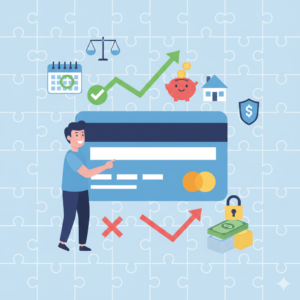
To summarize everything we’ve covered, follow these four rules to ensure you never lose money to a bank again:
-
Pay the Full Statement Balance: This is the only way to keep your interest at 0%.
-
Ignore the Minimum Payment: Treat it as a “disaster only” option, not a standard bill.
-
Avoid Cash Advances: The interest starts the second the money leaves the ATM, and there is no grace period.
-
Monitor Your APR: Check your statements quarterly to see if your rate has changed, and don’t be afraid to negotiate.