What insurance companies don’t tell you about insurance
Insurance is often described as a safety net—a financial shield that protects you from life’s most unpredictable moments. While that is true, insurance is also a multi-billion dollar industry driven by complex algorithms, risk assessment models, and, ultimately, profit margins.
When you sign a policy, you are entering into a legal contract. However, there are nuances in that contract and the industry at large that aren’t exactly “secrets,” but they certainly aren’t highlighted in the colorful television commercials or the glossy brochures.
In this deep dive, we are pulling back the curtain on the insurance industry. From the “loyalty tax” to the secret reports that follow you for years, here is what your insurance company probably hasn’t told you.
The “Loyalty Tax”: Why Staying Put Might Be Costing You Thousands
Most consumers believe that being a “loyal customer” leads to better rates. In many industries, this is true. In insurance, however, the opposite often happens. This is known in the industry as Price Optimization.
Insurance companies use sophisticated data analytics to determine which customers are “price sensitive” and which are “inert.” If you have been with the same carrier for ten years without shopping around, their algorithms may flag you as a customer who is unlikely to leave, even if rates increase. Consequently, your “loyalty” might be rewarded with a steady creep in premiums that a new customer wouldn’t be asked to pay.
Your CLUE Report: The “Permanent Record” of Your Property
Most people know about credit reports, but few have heard of the CLUE Report (Comprehensive Loss Underwriting Exchange).
The CLUE report is a massive database shared among insurance companies that tracks every claim filed on a property or a vehicle over the last seven years.
-
It follows you: If you had an accident three years ago with Company A, Company B will see it the second you ask for a quote.
-
It follows the house: If you are buying a home, the CLUE report for that address might show three previous water damage claims. Even if you didn’t live there when they happened, those claims could make the house more expensive—or even impossible—to insure.
Before buying a home, you should always ask the seller for a copy of the home’s CLUE report to ensure there aren’t hidden “red flags” in its history.
The “Inquiry” Trap: Why Calling Your Agent Can Raise Your Rates
This is one of the most frustrating aspects of the industry for laypeople. Did you know that simply calling your agent to ask, “Hey, would my policy cover a fallen tree branch?” can sometimes be logged as an “inquiry”?
In the eyes of some insurers, an inquiry is a signal of potential future risk. Even if you never file a formal claim and the company never pays out a cent, that phone call can end up on your record. If you have several inquiries followed by a small claim, the company may view you as a “high-frequency” risk and choose to non-renew your policy at the end of the term.
The Insider Rule: Never call your insurance company to “ask” if something is covered until you have checked your policy documents yourself or consulted with an independent professional.
Actual Cash Value vs. Replacement Cost: The Subtle Word That Changes Everything
When you buy homeowners insurance, you’ll see two terms: Actual Cash Value (ACV) and Replacement Cost Value (RCV). The difference between these two can be the difference between a full recovery and a financial disaster.
-
Replacement Cost: If your 10-year-old laptop is stolen, the insurance company gives you enough money to buy a brand-new, modern equivalent.
-
Actual Cash Value: The insurance company determines what your 10-year-old laptop was worth today (which might be $50) and gives you that.
Insurers love to sell ACV policies because the premiums are lower, but they often “forget” to explain that they will apply depreciation to everything you own. If your roof is destroyed, an ACV policy might only pay for 40% of the cost because the roof was “old,” leaving you to come up with the remaining thousands out of pocket.
Your Credit Score Is Often More Important Than Your Driving Record
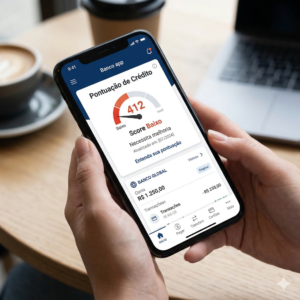
In the majority of U.S. states, your Credit-Based Insurance Score is one of the most powerful predictors of your premium.
Insurance companies have found a nearly perfect statistical correlation between how a person manages their money and how they manage risk. A driver with a clean record but a “Poor” credit score will often pay significantly more for car insurance than a driver with one speeding ticket but an “Excellent” credit score.
They don’t tell you this because it feels “unfair” to many consumers, but from an actuarial standpoint, your financial stability is the “secret sauce” in their pricing model.
The 80% Rule: Why You Might Only Get a Partial Payout
Most homeowners insurance policies contain a “coinsurance” clause, often called the 80% Rule. This rule states that you must insure your home for at least 80% of its total replacement cost. If you under-insure your home—perhaps because you wanted to save on premiums—the insurance company can “penalize” you on every claim you file, even small ones.
For example, if it would cost $500,000 to rebuild your house but you only insured it for $300,000 (60%), and you have a $10,000 kitchen fire, the company may only pay 60% of that $10,000 claim. They expect you to carry your fair share of the risk.
Bundling Is a Great Tool—But It’s Also a “Hook”
“Bundle and save!” is the battle cry of the insurance industry. While bundling your home and auto policies can save you 15% to 25%, it also serves a secondary purpose for the insurance company: Retention.
It is much harder for a customer to leave if they have to move their home, auto, life, and umbrella policies all at once. It creates “friction.” Often, a company will give you a massive discount on the auto policy but slowly raise the price of the homeowners policy, knowing that you are less likely to “un-bundle” and leave.
The “Small Claim” Mistake: When Not to Use Your Insurance
Insurance is meant for catastrophes, not for maintenance. One of the biggest mistakes consumers make is filing small claims.
If you have a $1,000 deductible and you have $1,200 worth of damage, do not file a claim. You are essentially “using” your insurance for a $200 benefit. However, that claim will stay on your CLUE report for seven years. When it comes time to renew, your premium might increase by $300 a year because of that claim. Over seven years, you will have paid $2,100 to the insurance company in exchange for that $200 payout.
Telematics: The “Big Brother” Discount

Many companies offer “Safe Driver” apps that track your driving (telematics). They tell you that you can save up to 30% by proving you are a safe driver.
What they don’t emphasize is the data they are collecting. These apps track:
-
Hard braking.
-
High-speed cornering.
-
Phone usage while driving.
-
Time of day: If you work a night shift and drive at 2:00 AM, you are statistically at higher risk for an accident, and your “discount” may vanish—or your rates could even go up in some states.
Before signing up for a tracking app, make sure you understand if the company can use the data to increase your rates, or if it only provides a discount.
Exclusions: What “All-Risk” Doesn’t Actually Mean
In the insurance world, “All-Risk” (or “Open Perils”) sounds like you are covered for everything. It is a brilliant marketing term, but it is technically defined by what it excludes.
Standard “All-Risk” homeowners policies almost always exclude:
-
Floods: You need a separate policy for this.
-
Earthquakes: You need an endorsement or a separate policy.
-
Mold: Often limited to a very small amount (e.g., $5,000).
-
Sewer Backup: Unless you buy a specific “rider.”
-
Wear and Tear: If your 30-year-old pipe bursts because it was old, they might pay for the water damage, but they won’t pay for the pipe.
Reading the “Exclusions” section of your policy is more important than reading the “Coverages” section.
The Power of the Independent Agent

Most of the “secrets” above are common knowledge to Independent Agents. There are two types of agents:
-
Captive Agents: They work for one company (like State Farm or Allstate). They can only sell you that company’s products.
-
Independent Agents: They represent dozens of different companies.
Independent agents are the “kryptonite” to insurance company secrets because they can see the whole market. They know which companies have the best “New Business” rates and which ones have a history of aggressive price optimization on renewals.
Knowledge Is Your Best Policy
The insurance industry isn’t a “scam,” but it is a business designed around the mathematics of risk. The more you know about how they calculate that risk, the better you can position yourself to get the best rates.
By monitoring your CLUE report, maintaining your credit score, choosing Replacement Cost coverage, and avoiding the “small claim” trap, you can stop being a passive consumer and start being a strategic one. Insurance is there to protect your future—make sure you aren’t overpaying for that protection today.