How Much Should You Invest for Retirement at 25?

image for illustrative purposes only.
Starting your financial journey at 25 is one of the most powerful moves you can make. At this stage in life, time is your absolute greatest asset. While retirement might feel like a distant milestone that you can worry about later, the financial decisions you make today will fundamentally shape your future freedom, career choices, and lifestyle. Understanding how much to invest, where to put your money, and how to harness the magic of compound interest sets the foundation for lasting financial security.
The Power of Compounding: Why Starting at 25 Changes Everything

To understand retirement investing at age 25, you must first understand the mechanics of compound interest. Compounding happens when the returns you earn on your investments begin to generate their own earnings. Over decades, this snowball effect becomes exponential.
Consider two investors:
-
Investor A starts investing $200 per month at age 25 and stops completely at age 35, contributing for just 10 years (total contributions: $24,000).
-
Investor B waits until age 35 to start, investing $200 per month every single month until age 65, contributing for 30 years (total contributions: $72,000).
Assuming an average annual return of 8%, by the time both reach age 65, Investor A—despite investing three times less money over a much shorter window—will often end up with a significantly larger portfolio than Investor B. This staggering mathematical reality occurs because Investor A’s money had an extra decade to compound. Starting at 25 means time does the heavy lifting for you, allowing you to build substantial wealth with smaller, manageable monthly contributions.
Determining Your Magic Number: The Rule of Thumb for Your Mid-20s
A common question among young adults is whether there is a specific dollar amount or percentage they should target. Financial experts generally recommend a foundational baseline for retirement savings based on your annual income.
By the time you reach age 25, your retirement account balance should ideally be equal to roughly 0.5x to 1x your annual salary, or at the very least, you should be establishing a habit of aggressive accumulation. If you earn $50,000 per year, having saved $25,000 by 25 is fantastic, but do not panic if you are starting from zero today. The most important metric is your ongoing savings rate rather than just your current lump sum.
The 15% to 20% Savings Benchmark
As a general rule of thumb, financial planners suggest saving 15% to 20% of your pre-tax income for retirement if you begin your journey in your mid-20s. This percentage includes any employer matches you receive. If that percentage feels daunting on an entry-level salary, do not let it discourage you. Start with a smaller figure—such as 5% or 10%—and increase your savings rate by 1% every time you get a raise or bonus until you reach your target zone.
Core Retirement Accounts Every 25-Year-Old Should Know
Navigating the landscape of retirement vehicles can feel overwhelming, but mastering a few primary accounts will streamline your strategy. In the United States, several accounts offer incredible tax advantages designed to supercharge your savings.
Employer-Sponsored Plans
If your employer offers a retirement savings plan such as a 401(k) or 403(b), this is usually the best place to begin, especially if an employer match is attached. An employer match is essentially free money—if your company matches contributions up to 3% or 5% of your salary, you should always contribute at least enough to capture the full match. Leaving that match on the table is turning down a guaranteed 100% immediate return on your investment.
Individual Retirement Accounts (IRAs)
For individuals looking for greater control over their investment choices and lower fee structures, Individual Retirement Accounts are exceptional tools.
-
Traditional Accounts: Allow you to contribute pre-tax or tax-deductible dollars, lowering your current tax bill, while withdrawals in retirement are taxed as ordinary income.
-
Roth Accounts: Involve contributing after-tax dollars, meaning you get no immediate tax break today, but all your future growth and withdrawals in retirement are completely tax-free. For a 25-year-old with decades of growth ahead, the tax-free compounding power of a Roth account is often an exceptionally attractive option.
Crafting a Balanced Investment Strategy for Long-Term Growth
Once your money is inside a retirement account, you must decide how to invest it. Leaving your long-term savings in cash or a low-yielding savings account will cause inflation to steadily erode your purchasing power over a 40-year horizon. Instead, your capital needs to be put to work in growth-oriented assets.
Embracing Equity Exposure
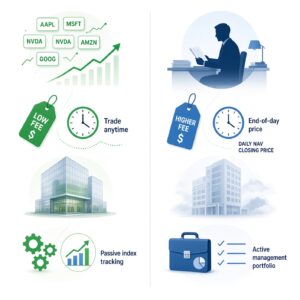
Because you have a multi-decade time horizon at age 25, you have a high risk tolerance simply by virtue of time. Market downturns and corrections are normal occurrences, but historical data shows that broad stock market indices recover and trend upward over long periods. Allocating a significant portion of your portfolio to equities—such as low-cost index funds or exchange-traded funds that track the entire stock market—provides instant diversification and exposure to top-performing global companies.
The Simplicity of Target-Date Funds
If picking individual stocks or managing multiple asset classes feels too complex, target-date retirement funds offer a seamless “set-it-and-forget-it” approach. You simply select a fund with a target year matching your expected retirement date (for instance, a fund targeting the year 2065). The fund automatically manages your asset allocation, starting out aggressive with high stock exposure when you are 25 and gradually shifting toward a more conservative mix of bonds as you approach retirement age.
Balancing Short-Term Life Goals with Long-Term Savings

A common pitfall for individuals in their mid-20s is swinging to extremes: either spending every paycheck on lifestyle inflation or living so frugally that they sacrifice their quality of life. Sustainable wealth-building requires a healthy balance.
Building an Emergency Fund First
Before locking away large sums of money in retirement accounts that carry penalties for early withdrawal, ensure you have a separate emergency fund containing three to six months’ worth of essential living expenses. Keeping this money in a high-yield savings vehicle protects you from unexpected events—such as medical bills, car repairs, or sudden job transitions—ensuring you never have to prematurely liquidate your retirement investments or rack up high-interest consumer debt.
Avoiding Lifestyle Inflation
As you progress in your career, your income will likely increase. A major trap for young professionals is “lifestyle inflation,” where every pay raise immediately triggers upgraded apartments, luxury vehicles, or expensive dining habits. By consciously keeping your living expenses stable while directing a large portion of your raises straight into your investment accounts, you can rapidly accelerate your journey toward financial independence without feeling deprived.
Overcoming Common Psychological Barriers in Your 20s
Investing isn’t just about math; it is deeply behavioral. Recognizing mental traps early can save you from costly financial mistakes.
Overcoming Analysis Paralysis
Many 25-year-olds delay investing because they feel they do not know enough about the stock market, economic indicators, or asset allocation. They wait for the “perfect” time to start or until they feel like financial experts. In reality, starting imperfectly with a simple index fund beats waiting years for the ideal strategy. Time in the market almost always beats timing the market.
Ignoring Short-Term Market Noise
Financial media thrives on sensationalism, frequently shouting about crashes, recessions, and volatility. When you are 25, daily or monthly market fluctuations are completely irrelevant to your long-end game. View market drops not as losses, but as a seasonal discount sale on the shares you are accumulating. Consistency and automation—such as setting up automatic transfers every payday—help remove emotion from the equation entirely.
Tracking Progress and Adjusting Your Roadmap Over Time
Your financial plan at 25 should not remain carved in stone for the next forty years. Life changes, income shifts, and personal goals evolve.
Annual Financial Checkups
Once a year, review your overall financial picture. Check your savings rate, evaluate your portfolio diversification, and assess whether your career growth warrants an increase in your monthly contributions. Treat this review like a routine health checkup for your net worth.
Increasing Contributions Gradually
As debt is paid off, salaries rise, and fixed living expenses stabilize, look for opportunities to bump up your retirement contributions by 1% or 2% each year. Pushing your savings rate upward during your peak earning years will compound your advantages, potentially allowing you the flexibility to achieve financial independence well ahead of traditional retirement age.
Taking Your First Step Today

Deciding how much to invest for retirement at 25 comes down to a commitment to consistency, a willingness to leverage compound interest, and the discipline to balance today’s lifestyle with tomorrow’s security. By aiming for a strong savings baseline, utilizing tax-advantaged accounts, and investing in diversified portfolios, you build an unshakeable foundation for the future. The absolute best time to plant a financial tree was ten years ago; the second best time is right now. Open that account, automate your contributions, and let time work its magic.