What Drives Cryptocurrency Prices Up and Down
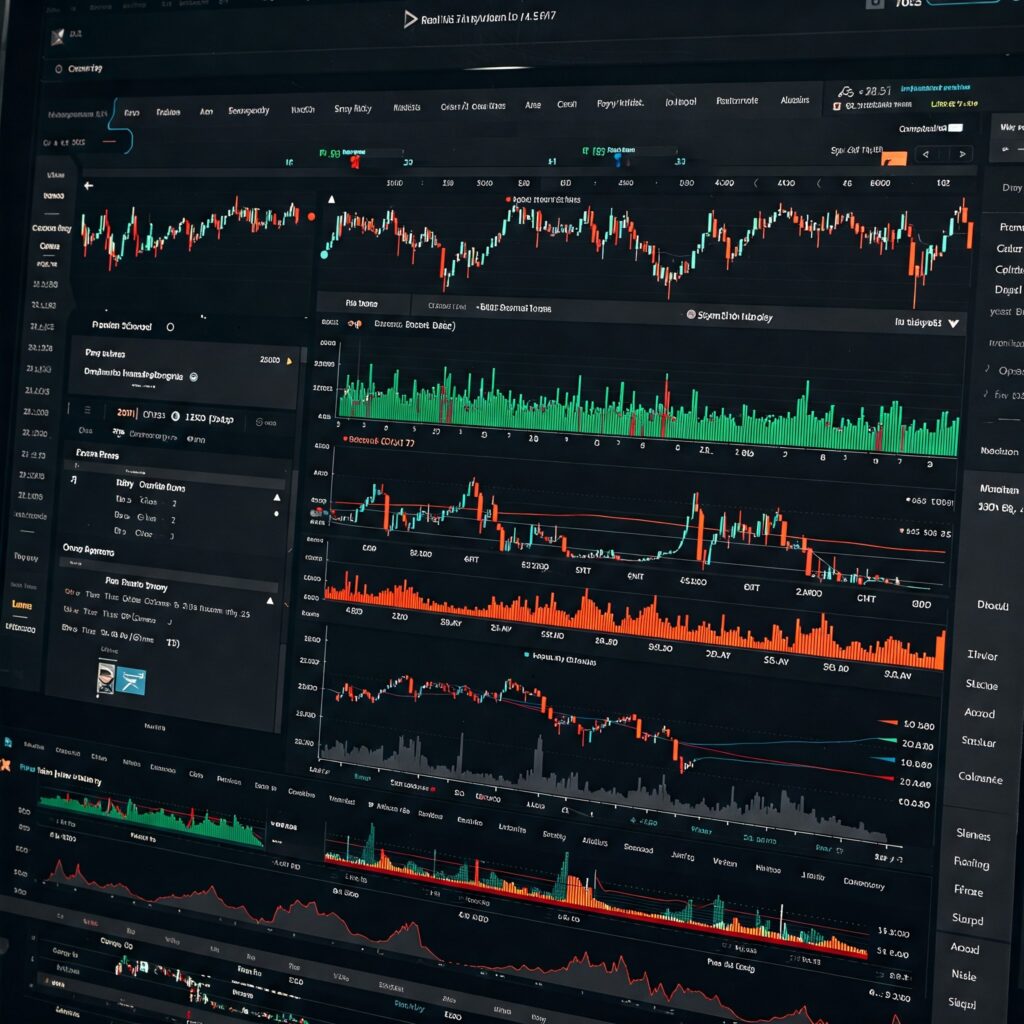
image for illustrative purposes only.
The digital asset landscape has transformed from a niche hobby for computer scientists into a multi-trillion-dollar global financial ecosystem. Yet, for both seasoned market participants and newcomers alike, one central question remains endlessly fascinating: What actually makes cryptocurrency prices go up or cair?
Unlike traditional fiat currencies backed by powerful central banks, or corporate stocks tied to quarterly earnings reports and tangible balance sheets, digital currencies operate in a decentralized, borderless environment. Understanding the complex web of economic, psychological, and technological forces behind these sudden market movements is essential for anyone navigating modern financial markets.
Fundamental Economic Forces: The Core Dynamics of Supply and Demand

At the very heart of every market transaction lies the timeless economic principle of supply and demand. When more buyers want to acquire a digital asset than there are sellers willing to part with it, the price inevitably moves upward. Conversely, when selling pressure outpaces buying interest, values drop.
However, unlike physical commodities or traditional corporate shares, digital currency supply mechanics are written directly into immutable code:
-
Capped Maximum Supplies: Many prominent digital assets feature strict mathematical limits on how many units will ever exist. For instance, Bitcoin has a hard-coded maximum limit of 21 million coins. As time progresses and more coins are mined, the rate of new issuance periodically slows down through automated scheduling events like halvings, creating structural scarcity.
-
Token Burning Mechanisms: Certain projects utilize a deflationary strategy known as token burning, where a specific portion of active coins is intentionally sent to irretrievable addresses to permanently reduce overall circulating supply.
-
Inflationary Pressures: Networks without strict caps may experience continuous token creation to reward network validators. If demand fails to keep pace with this ongoing supply expansion, individual unit values tend to decrease over time.
The Role of Market Sentiment and Global Psychology
Because digital assets lack traditional physical utility for everyday retail transactions in most regions, their valuation is heavily influenced by collective market perception, human psychology, and prevailing narratives.
Market sentiment can shift dramatically within minutes, turning bullish or bearish based on intangible psychological triggers:
-
Fear and Greed Cycles: Financial markets are deeply emotional. Euphoric phases often trigger rampant FOMO (Fear Of Missing Out), driving retail capital into speculative projects and pushing prices to unsustainable heights. Conversely, sudden market corrections can trigger panic selling, exacerbating downward spirals.
-
Media and Social Influence: Public commentary from influential business figures, venture capitalists, and mainstream media coverage can alter retail participation overnight. A single viral thread or breaking news headline can inject sudden optimism or unwarranted panic into the ecosystem.
-
Institutional Confidence: The entry of massive financial institutions, corporate treasuries, and specialized investment funds heavily impacts market psychology. When major corporations announce treasury allocations or wealth management firms introduce regulated investment products, it signals long-term legitimacy to risk-averse participants, boosting overall confidence.
Regulatory Landscapes and Legal Clarity Around the World
Government oversight and legislative policies wield a profound influence over the trajectory of digital asset valuation. Because these technologies operate globally, regulatory announcements from major economic superpowers create immediate ripples across every trading platform.
-
Favorable Legal Frameworks: When regulatory bodies introduce clear, supportive tax guidelines, approve exchange-traded funds, or establish transparent compliance frameworks, institutional capital flows smoothly into the sector. Clear legal definitions reduce operational friction and ease anxiety for conservative investors.
-
Crackdowns and Restrictions: Conversely, sudden threats of outright trading bans, aggressive enforcement actions against major exchanges, or stringent compliance burdens can instantly drain liquidity and crush market confidence. Uncertainty regarding legal classifications often forces risk-conscious participants to liquidate positions, precipitating sharp price drops.
Technological Innovation, Utility, and Network Growth
Underneath every digital asset lies an underlying software network or blockchain protocol. The ongoing evolution, security, and real-world utility of this underlying technology serve as a foundational pillar for long-term valuation.
-
Scalability and Performance Upgrades: Blockchains that successfully resolve network congestion, lower transaction fees, and improve processing speeds tend to attract higher developer activity and user adoption.
-
Real-World Integration: The integration of smart contracts, decentralized finance (DeFi) protocols, and tokenized real-world assets transforms networks from speculative playgrounds into functional economic engines. As applications multiply, the underlying native utility tokens experience organic demand growth driven by actual network usage rather than mere speculation.
-
Security Vulnerabilities and Exploits: Trust is the ultimate currency in a decentralized ecosystem. High-profile security breaches, smart contract exploits, or network consensus failures instantly erode user trust, triggering immediate capital flight and sharp valuation declines.
Macroeconomic Shifts, Liquidity, and Alternative Safe Havens
Digital asset markets do not exist in a vacuum. They interact heavily with broader macroeconomic trends, central bank monetary policies, and traditional global financial indicators.
-
Interest Rates and Monetary Policy: In low-interest-rate environments, traditional savings vehicles yield minimal returns, pushing investors toward riskier alternative asset classes in search of higher growth. Conversely, when central banks raise interest rates to combat inflation, borrowing becomes expensive, and capital tends to flow away from high-volatility sectors back into stable, yield-bearing cash equivalents.
-
Inflation and Currency Devaluation: During periods of severe currency devaluation or fiscal instability within developing or developed nations, populations frequently turn to decentralized alternatives as a hedge against local purchasing power erosion, driving regional demand surges.
-
Global Liquidity Cycles: The overall volume of fiat money circulating through global financial systems dictates how much speculative capital is available to spill over into alternative asset classes. Expansionary macroeconomic policies historically correlate with robust market expansions across the entire digital economy.
Market Competition and Ecosystem Evolution
The digital asset space is characterized by relentless innovation and low barriers to entry for new projects. With thousands of alternative coins and tokens competing for user attention and capital, market dominance shifts continuously.
-
The Battle for Market Dominance: While legacy assets like Bitcoin maintain a commanding share of total market capitalization, emerging layer-1 networks and specialized utility tokens constantly challenge established hierarchies by offering novel features or superior efficiency.
-
Capital Rotation: When capital flows out of mature assets, it frequently rotates into smaller alternative coins, triggering localized parabolic rallies. Conversely, during periods of market stress, capital typically flees riskier altcoins back toward larger, more established assets or stablecoins, causing smaller projects to experience severe contractions.
Liquidity Depth and Exchange Infrastructure

The structural mechanics of how and where digital assets are traded play a surprisingly powerful role in daily price stability.
-
Market Depth and Order Books: High liquidity across multiple reputable trading venues ensures that large buy or sell orders can execute smoothly without triggering massive, erratic price swings. In contrast, thin order books on minor exchanges make assets highly susceptible to manipulation and extreme volatility from relatively modest trade volumes.
-
Derivatives and Leverage Trading: The availability of margin trading, futures contracts, and options allows traders to amplify their positions significantly. This leverage can create cascading market events; if a wave of price movement triggers a series of automated liquidations, it can instantly accelerate an ongoing rally or deepen a sudden crash.
Navigating the Future of Digital Asset Markets
Understanding why cryptocurrency prices fluctuate requires a holistic view that combines economic fundamentals, human behavior, regulatory shifts, and technological progress. While volatility remains an inherent characteristic of this evolving asset class, recognizing these underlying drivers empowers participants to interpret market noise objectively, separate long-term value from short-term speculation, and approach the digital financial landscape with informed clarity.