Is blockchain secure? Understand how it protects transactions
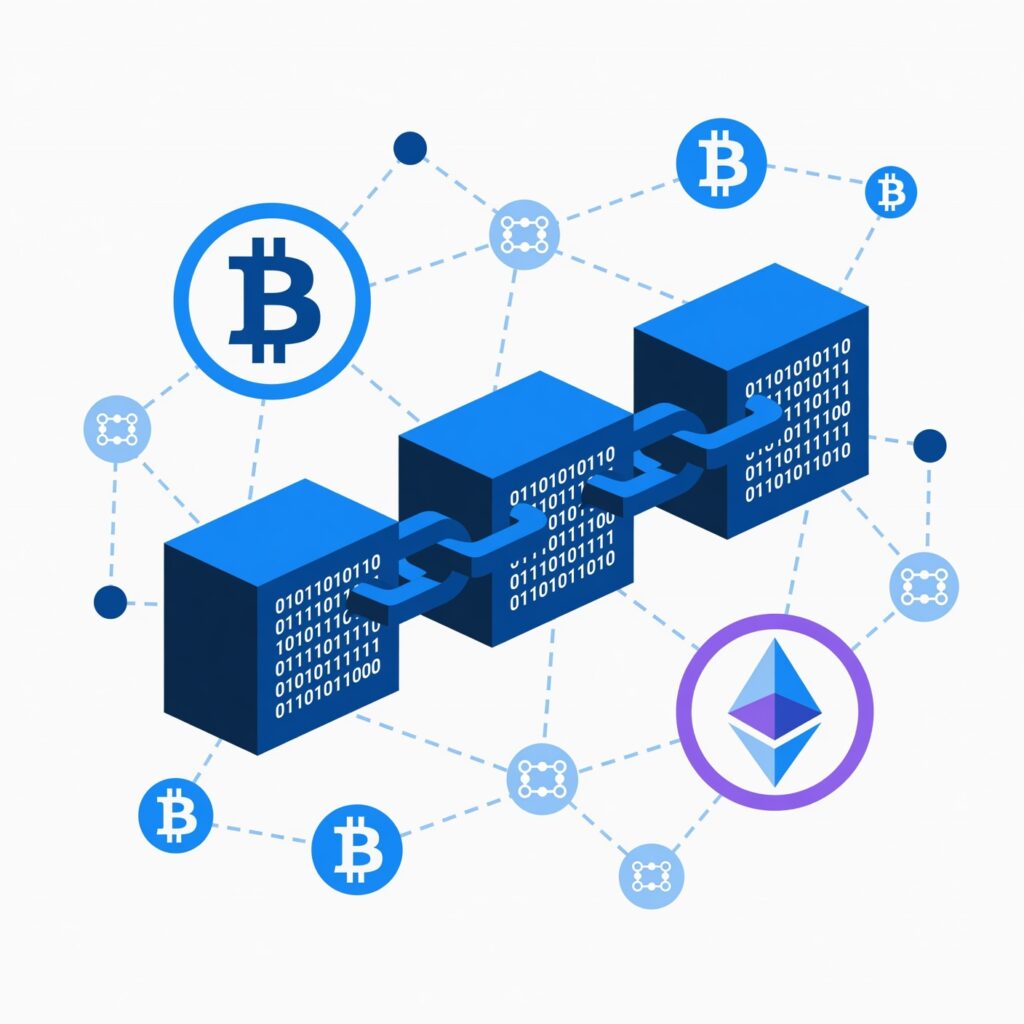
image for illustrative purposes only.
The rapid evolution of digital finance, decentralized applications, and digital assets has fundamentally transformed how humanity thinks about value exchange. At the absolute core of this technological revolution lies blockchain technology. While terms like cryptocurrency, Bitcoin, and decentralized finance frequently dominate mainstream headlines, the foundational architecture supporting them often remains shrouded in technical complexity.
One of the most frequent questions asked by newcomers, institutional investors, and technology enthusiasts alike is simple yet profound: Is blockchain actually secure?
To answer this comprehensively, one must look far beyond surface-level marketing and examine the cryptographic foundations, consensus mechanisms, and structural engineering that make decentralized ledgers exceptionally resilient against tampering, fraud, and cyberattacks. This exhaustive guide explores the inner workings of blockchain security, demystifying how trust is established and maintained in a trustless digital world.
Fundamentals of Distributed Ledger Technology

To understand why blockchain is secure, it is essential to first understand what a blockchain actually is at its structural level. Traditional financial systems rely heavily on centralized databases managed by single entities—such as commercial banks, central banks, or corporate servers. If a malicious actor breaches that single central server, or if the internal administrators decide to alter records, the entire system is inherently vulnerable.
A blockchain, by contrast, is a distributed digital ledger. This means that instead of residing on a single server, an identical copy of the entire transaction history is replicated across a vast, decentralized network of computers known as nodes.
-
Decentralization: There is no single point of failure. If one node goes offline or is compromised, thousands of other nodes continue operating normally, verifying the integrity of the network.
-
Transparency and Immutability: Once data is recorded onto a blockchain, it becomes virtually impossible to alter retroactively without the network detecting and rejecting the change.
-
Peer-to-Peer Architecture: Transactions occur directly between users without requiring an intermediary authority to validate the exchange.
By removing the middleman and distributing the ledger globally, blockchain architecture inherently eliminates many of the structural risks plaguing legacy financial systems.
The Role of Cryptography in Data Protection
At the heart of blockchain’s security model is advanced cryptography. Mathematics, rather than human trust or institutional authority, serves as the ultimate guardian of digital assets and transaction records. Two primary cryptographic pillars keep the network secure: cryptographic hash functions and public-key cryptography.
Cryptographic Hashing and Block Linking
Every single block of data within a blockchain contains a unique digital signature known as a hash. Generated using sophisticated mathematical algorithms (such as SHA-256 in the case of Bitcoin), a hash takes an input of any length and converts it into a fixed-size string of characters.
-
Uniqueness: Even modifying a single character, space, or comma within a data block completely alters the resulting hash value through what is known as the avalanche effect.
-
Chain Reaction: Each new block contains the hash of the block that came immediately before it. This creates an unbroken, cryptographically secure chain. If someone attempts to tamper with data inside an older block, its hash changes, which in turn invalidates every single block that follows it.
Public-Key Cryptography and Digital Signatures
When users interact with a blockchain, they utilize a pair of cryptographic keys: a public key (comparable to an account number or email address) and a private key (comparable to a highly secure, unrecoverable password).
-
Signatures: To send funds or execute a smart contract, a user must sign the transaction using their private key. This generates a unique digital signature that proves ownership without ever exposing the private key to the network.
-
Verification: Anyone on the network can use the sender’s public key to verify that the signature is authentic and authorized, ensuring that funds cannot be stolen or spent by unauthorized parties.
Consensus Mechanisms: How Networks Agree on Truth
In a decentralized system where no central authority exists to approve transactions, how do all participating nodes reach an agreement regarding the true state of the ledger? This challenge is solved through consensus mechanisms—algorithmic protocols that compel network participants to agree on valid transactions.
Different blockchains employ distinct consensus models, each designed with specific trade-offs regarding security, scalability, and decentralization.
Proof of Work (PoW)
Pioneered by Bitcoin, Proof of Work requires participating nodes (miners) to solve complex mathematical puzzles using substantial computational power.
-
Economic Security: Because solving these puzzles requires immense amounts of electricity and specialized hardware, malicious attacks become economically prohibitive. To rewrite history, an attacker would need to control more than half of the network’s total computing power—a feat requiring billions of dollars in infrastructure.
-
Energy Intensity: While exceptionally secure, Proof of Work has faced criticism due to its high energy consumption, driving innovation toward alternative models.
Proof of Stake (PoS)
Adopted by major networks like Ethereum, Proof of Stake replaces computational miners with validators. Instead of burning electricity, validators lock up (stake) a specific amount of native cryptocurrency as collateral.
-
Slashing Conditions: If a validator attempts to approve fraudulent transactions or double-spend, the protocol automatically penalizes them by confiscating (slashing) a portion of their staked tokens.
-
Cost of Attack: An attacker attempting a 51% attack under a Proof of Stake system must acquire a majority of all circulating tokens, which rapidly drives up market prices and makes the attack financially ruinous for the perpetrator.
Other Notable Consensus Models
-
Delegated Proof of Stake (DPoS): Token holders vote for delegates to validate transactions on their behalf, increasing transaction speed while maintaining decentralized oversight.
-
Proof of Authority (PoA): Used primarily in private or enterprise blockchains, where transactions are validated by pre-approved, trusted identities.
Immutability: Why Blockchain Data Cannot Be Altered

The term immutability is frequently tossed around in technology discussions, but its practical implementation in blockchain architecture is nothing short of revolutionary. Immutability means that once a transaction is verified, recorded, and buried under subsequent blocks, it is permanent.
The Anatomy of a 51% Attack
The theoretical vulnerability most frequently cited regarding blockchain security is the 51% attack. If a single entity or cooperative mining pool manages to acquire 51% or more of a network’s hashing power (in PoW) or staked capital (in PoS), they theoretically gain the ability to:
-
Reverse transactions they recently made (enabling double-spending).
-
Prevent new transactions from being confirmed.
Why 51% Attacks Are Impractical on Major Networks
While mathematically possible, executing a 51% attack on established, high-value blockchains is virtually impossible in practice due to economic and logistical constraints:
-
Astronomical Costs: Renting or purchasing the necessary computing hardware or purchasing a majority stake in global tokens would cost billions of dollars.
-
Self-Destructive Economics: A successful attack would instantly destroy confidence in the targeted cryptocurrency, causing its market value to plummet. The attacker would spend billions to acquire an asset whose value drops to zero the moment the attack succeeds.
-
Community Intervention: If an attack is detected, the wider community of nodes, developers, and users can coordinate a soft or hard fork to freeze the malicious actor’s funds and restore network integrity.
Smart Contract Security and Vulnerabilities
As blockchain technology evolved past simple currency transfers, developers introduced smart contracts—self-executing code stored on the blockchain that automatically runs when predetermined conditions are met. While smart contracts enable complex decentralized finance (DeFi) applications, automated lending, and digital asset exchanges, they also introduce a new attack surface.
Code is Law, But Bugs Exist
Unlike traditional legal contracts interpreted by human judges, smart contracts execute strictly according to their written code. If a developer introduces a logical flaw, vulnerability, or coding bug, malicious actors can exploit it.
-
Reentrancy Attacks: A vulnerability where an external malicious contract calls back into the vulnerable contract before the first invocation is finished, draining funds repeatedly.
-
Front-Running: Bots monitoring the public mempool (waiting room for pending transactions) pay higher gas fees to jump ahead of pending user transactions for financial arbitrage.
Mitigation and Best Practices
The ecosystem has developed sophisticated defensive measures to protect smart contract execution:
-
Comprehensive Audits: Independent security firms review code line-by-line before deployment to identify vulnerabilities.
-
Formal Verification: Using mathematical proofs to verify the correctness of smart contract code against formal specifications.
-
Bug Bounties: Incentivizing ethical hackers to discover and report vulnerabilities responsibly before malicious actors can exploit them.
Real-World Applications Demonstrating High Security
The robust security framework of blockchain technology extends far beyond digital currencies. Industries worldwide are adopting distributed ledgers to safeguard critical data.
Supply Chain Management
Global supply chains suffer from counterfeiting, lack of transparency, and inefficient record-keeping. By recording product origins, shipping temperatures, and ownership transfers on an immutable blockchain, companies can ensure absolute authenticity and traceability for pharmaceuticals, luxury goods, and agricultural products.
Healthcare Data Management
Medical records are frequently targeted by cybercriminals due to the high value of personal health information. Blockchain enables patients to retain sovereign control over their medical data while allowing authorized healthcare providers to access encrypted records securely without risking central database breaches.
Digital Identity Verification
Identity theft is a trillion-dollar global problem. Blockchain-based self-sovereign identity (SSI) solutions allow individuals to prove their credentials, age, or professional qualifications without exposing underlying personal documents to third-party databases.
Potential Threats and the Future of Blockchain Security

While blockchain architecture is exceptionally secure against traditional hacking vectors, the technological landscape continues to evolve, bringing new challenges on the horizon.
The Quantum Computing Threat
A frequently discussed long-term concern is the advent of large-scale quantum computers. Theoretical quantum algorithms, such as Shor’s algorithm, could potentially break standard public-key cryptography (like ECDSA used in Bitcoin and Ethereum) by efficiently solving the underlying mathematical problems.
-
Proactive Upgrades: The blockchain development community is already researching and implementing quantum-resistant cryptography (post-quantum cryptography). Because blockchains are upgradeable through consensus updates, networks can transition to quantum-safe algorithms long before practical quantum threats materialize.
User Error and Social Engineering
It is vital to acknowledge that the weakest link in any security system is almost never the underlying technology—it is human behavior.
-
Phishing attacks, compromised seed phrases, and malicious browser extensions account for the vast majority of digital asset losses.
-
Hardware wallets, multi-signature authentication, and continuous cybersecurity education remain the primary defenses against human-targeted exploits.
Is blockchain secure? The resounding answer is yes.
By combining decentralized network architecture, unbreakable cryptographic hashing, public-key authentication, and robust economic consensus mechanisms, blockchain creates a tamper-proof environment for recording transactions and transferring value. While human error, poorly audited smart contracts, and edge-case theoretical threats require constant vigilance, the foundational design of distributed ledgers represents one of the most significant breakthroughs in data integrity and digital security in human history. As technology continues to mature, blockchain will undoubtedly remain the bedrock of secure digital interaction for decades to come.