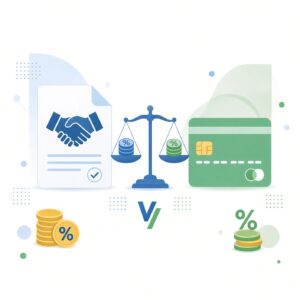
Loan or financing: which one to choose?

image for illustrative purposes only.
Choosing the right way to fund a major life milestone can feel overwhelming. Whether you are looking to purchase your dream home, buy a reliable vehicle, consolidate existing high-interest debt, or inject capital into a growing business, the financial pathway you select matters.
Two of the most common mechanisms for acquiring large sums of money are loans and financing. While people frequently use these terms interchangeably in casual conversation, they represent distinct financial structures with different rules, benefits, and long-term implications.
Making the wrong choice can lead to unnecessarily high interest rates, unfavorable repayment terms, or even the loss of your valuable assets. This definitive guide breaks down the core differences, weighs the pros and cons of each, and gives you a clear blueprint to determine exactly which option aligns with your current financial goals.
Understanding the Core Differences: Personal Loan vs. Asset Financing

To make an informed decision, it is essential to look beneath the surface at how these two capital-delivery systems operate.
What is a Loan?
A loan is a lump sum of cash provided to you upfront by a bank, credit union, or online lender. Once approved, the funds are deposited directly into your bank account. You then have the freedom to spend that money as you see fit, depending on the type of loan you secured. You repay the principal amount, plus interest, over a predetermined schedule of monthly installments.
What is Financing?
Financing is a broader umbrella term, but in consumer and business transactions, it typically refers to an arrangement tied directly to a specific purchase. Instead of receiving cash in your hand, the lender pays the seller directly for the asset you are acquiring. You then pay back the lender over time. The most classic examples of this are auto financing at a car dealership or a residential mortgage for a home.
| Financial Feature | Personal / Unsecured Loans | Targeted Asset Financing |
| Fund Delivery | Direct cash deposit to your account | Paid directly to the merchant/seller |
| Flexibility | Highly flexible; use for multiple purposes | Rigid; tied exclusively to one asset |
| Collateral | Often none required (Unsecured) | The asset itself acts as collateral (Secured) |
| Approval Speed | Can be as fast as 24 to 48 hours | Varies, but often integrated into the purchase process |
How Unsecured Loans Work and When They Make Financial Sense
Unsecured loans are among the most versatile financial instruments available on the market today. Because they do not require you to pledge an asset—like your home or your vehicle—as collateral, the lender takes on a higher level of risk.
The Mechanics of an Unsecured Loan
Lenders mitigate their risk by evaluating your creditworthiness. They look closely at your credit score, your debt-to-income (DTI) ratio, and your verifiable history of steady employment. If you possess an excellent credit profile, you will be rewarded with lower interest rates and higher borrowing limits. If your credit is fair or poor, you may still qualify, but the interest rate will reflect that added risk.
Ideal Scenarios for Choosing a Loan
-
Debt Consolidation: If you are juggling multiple credit cards with high variable interest rates, taking out a single personal loan with a fixed rate allows you to pay off those cards instantly. You are left with one predictable monthly payment, and you frequently save thousands of dollars in aggregate interest.
-
Home Renovations: While home equity options exist, a personal loan allows you to fund a kitchen remodel or a roof repair quickly without putting a lien on your property.
-
Emergency Medical Bills or Unplanned Expenses: When unexpected events occur, the rapid funding speed of an online personal loan can provide immediate relief without disrupting your long-term investments.
The Inner Workings of Financing and Asset-Backed Lending
Financing is inherently transactional and deeply integrated into specific industries. When you walk into an establishment to buy a high-ticket item, financing is often pitched right at the point of sale.
The Role of Collateral in Financing
The defining characteristic of most financing structures is that they are secured. This means the item you are buying serves as a safety net for the lender. If you finance a commercial printing press for your business or a truck for your personal use, and you fail to make your monthly payments, the lender retains the legal right to repossess that asset to recoup their losses.
Because the lender has this tangible security blanket, financing often comes with a few distinct advantages:
-
Lower Interest Rates: Secured financing almost always boasts a lower interest rate compared to an unsecured personal loan.
-
Easier Qualification: If your credit score is less than perfect, you are more likely to get approved for financing because the asset minimizes the lender’s risk.
-
Flexible Terms: Specialized lenders understand the depreciation cycles of specific assets, allowing them to tailor repayment terms that align with the lifespan of the item.
Interest Rates, Fees, and the Total Cost of Borrowing
When evaluating your options, looking solely at the monthly payment is a dangerous trap. You must analyze the total cost of borrowing over the entire lifecycle of the agreement.
Annual Percentage Rate (APR) vs. Interest Rate
The interest rate is simply the percentage cost of borrowing the base principal. The APR, however, is the true metric of comparison. The APR includes the interest rate plus any additional fees mandated by the lender, such as origination fees, administrative charges, or processing costs. Always use the APR to compare a loan against a financing offer.
Fixed vs. Variable Rates
-
Fixed Rates: Your interest rate remains locked for the entire duration of the term. Your monthly payment will never change, offering maximum predictability for your monthly household budget.
-
Variable Rates: The rate is tied to a market index. While it might start lower than a fixed rate, it can fluctuate over time. If market rates climb, your monthly obligation will increase alongside them.
Hidden Fees to Watch Out For
Before signing any contract, read the fine print for these three common cost centers:
-
Origination Fees: A percentage taken off the top of a loan before you receive the funds.
-
Prepayment Penalties: Fees charged by some lenders if you choose to pay off your debt early to save on interest.
-
Late Payment Fees: High penalties that trigger the moment a payment window is missed, which can also negatively impact your credit profile.
Evaluating Your Credit Profile: What Lenders Look For

Your unique financial history dictates the terms you will be offered. Understanding how lenders perceive your profile helps you position yourself for the best possible deal.
The Power of the Credit Score
Your credit score is a numerical representation of your risk as a borrower.
-
Excellent (740 – 850): Access to the lowest historical rates and premium terms.
-
Good (670 – 739): Strong approval odds with highly competitive rates.
-
Fair (580 – 669): Approvals are possible, but interest rates will be higher, and terms may be more restrictive.
-
Poor (300 – 579): Unsecured loans will be difficult to obtain; secured financing or co-signers may be required.
Debt-to-Income (DTI) Ratio
Lenders do not just care about your income; they care about how much of that income is already spoken for. Your DTI ratio is calculated by dividing your total monthly debt payments by your gross monthly income. A DTI ratio below 35% is generally considered excellent, while ratios above 43% may signal to lenders that you are overextended.
Step-by-Step Decision Matrix: Which One Fits Your Need?
If you are still on the fence about whether to pursue a general loan or structured financing, walk through this quick framework to find clarity.
Choose a Personal Loan If:
-
You need absolute flexibility in how the capital is deployed across multiple categories.
-
You do not want to risk losing a specific asset if your financial situation changes unexpectedly.
-
You have an excellent credit score and want to secure an competitive rate without dealing with property appraisals or asset inspections.
-
You want the cash in your hand quickly to negotiate a better deal with cash-in-hand leverage.
Choose Asset Financing If:
-
You are making a singular, massive purchase like real estate, a franchise, or machinery.
-
You want the lowest possible interest rate and are comfortable using the purchase itself as collateral.
-
Your credit history has a few blemishes, and you need the security of an asset to tip the approval odds in your favor.
-
You want to take advantage of specialized manufacturer promotions, such as 0% APR financing periods offered by dealerships.
Long-Term Financial Health: Managing Your Debt Effectively

Whichever path you choose, introducing a new monthly obligation requires careful management to ensure it builds your financial future rather than tearing it down.
Constructing a Repayment Strategy
Before taking on debt, integrate the new payment into your existing budget. Automating your monthly payments through your banking application is an excellent way to ensure you never miss a due date. This consistency protects your credit score and helps you avoid costly late fees.
The Impact of Early Repayments
If your financial situation improves—perhaps through a career advancement, a bonus, or an inheritance—paying down your principal balance early can save you a significant sum in interest. If your agreement does not include a prepayment penalty, contributing even an extra 10% toward your principal each month can shave months or even years off the lifespan of your debt.
Finalizing your decision requires an honest look at your current income stability, your long-term wealth goals, and the exact nature of the purchase. By carefully weighing the structured nature of asset financing against the nimble flexibility of a personal loan, you can step forward with the confidence that your capital is working just as hard as you do.