When a loan can be a good financial decision

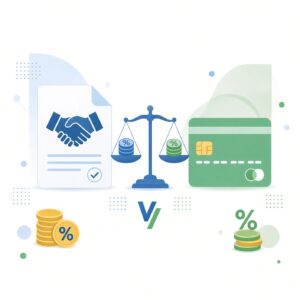
image for illustrative purposes only.
Debt is often discussed with a heavy dose of caution, and for good reason. Mismanaged liabilities can derail your long-term wealth, impact your credit score, and create unnecessary stress. However, viewing all debt through a negative lens overlooks a fundamental principle of sophisticated financial planning: leverage.
When used strategically, an influx of upfront capital can serve as a powerful tool to accelerate your financial goals, minimize existing high-interest burdens, or secure long-term appreciating assets.
Determining whether a personal loan is a sound decision requires shifting the perspective from “borrowing out of necessity” to “borrowing for mathematical and strategic advantage.” If the net financial or structural benefit of taking out a loan outweighs the total cost of borrowing—including interest rates, origination fees, and opportunity costs—the debt transitions from a financial burden to a strategic asset.
High-Interest Debt Consolidation: Reducing Your Effective Annual Percentage Rate

One of the most mathematically sound reasons to secure a personal loan is to consolidate high-interest liabilities, primarily revolving credit card debt.
Credit cards offer unparalleled convenience, but their interest rates can easily climb past 20% to 25% APR. When you carry a balance at these rates, a significant portion of your monthly payment goes toward servicing interest rather than reducing the principal balance. This creates a compounding cycle that can take decades to break.
Example of Debt Consolidation Math:
Current Credit Card Debt: $15,000 at 24% APR
Potential Personal Loan:  $15,000 at 10% APR
Net Interest Savings:    14% APR reduction
By utilizing a fixed-rate personal loan with a lower interest rate to pay off multiple credit card balances, you achieve two distinct advantages:
-
Interest Optimization: You instantly lower your effective APR. If you transfer a $15,000 balance from an average rate of 24% to a structured personal loan at 10%, you save thousands of dollars over the life of the debt. Every dollar saved on interest is a dollar that remains in your net worth.
-
Structural Predictability: Credit cards require variable minimum payments that change based on your balance, which can distort your monthly cash flow planning. A personal loan introduces a fixed repayment timeline (e.g., 36 or 60 months) with an unvarying monthly payment. This predictability allows for precise budgeting and ensures a definitive, guaranteed date on which you will be entirely debt-free.
Credit Score Optimization: Improving Credit Utilization and Payment History
The mechanics of credit scoring models are complex, but understanding how a personal loan interacts with these algorithms can reveal surprising structural benefits for your financial profile.
Your credit score is heavily influenced by two primary factors: your payment history (35%) and your credit utilization ratio (30%).
Credit Utilization = (Total Revolving Balances) / (Total Credit Limits)
Ideally kept below 30%, and optimally below 10%.
When you max out credit cards, your credit utilization ratio spikes, which signals high risk to scoring algorithms and suppresses your credit score.
Shifting Revolving Debt to Installment Debt
When you use a personal loan to clear your credit card balances, you instantly reduce your revolving utilization to near 0%. The loan balance is classified as installment debt rather than revolving debt.
Credit scoring models view installment debt much more favorably because it features a structured, non-revolving payoff framework. Consequently, many individuals observe a noticeable lift in their credit scores shortly after consolidating credit card debt into an installment loan, provided they do not run up new balances on the newly cleared credit cards.
Diversifying Your Credit Mix
Additionally, credit scoring models reward a diverse portfolio of credit types. If your history consists entirely of credit cards, safely introducing a well-managed installment loan improves your “credit mix,” which accounts for 10% of your total score.
Over the long term, making consistent, on-time monthly payments toward that installment loan builds a flawless payment history, further solidifying your creditworthiness for future major transactions, such as securing a prime-rate mortgage.
Financing Essential Home Improvements That Generate Immediate Equity
Real estate is traditionally an appreciating asset, but maintaining or increasing its value requires consistent capital investment. When home repairs or strategic renovations become necessary, funding them out of pocket can dangerously deplete your emergency liquid cash reserves.
Turning to a personal loan to finance these projects can be an excellent financial decision, particularly when the improvements directly enhance the property’s market value or prevent costlier structural damage down the road.
| Project Type | Financial / Structural Benefit |
| Deferred Maintenance (Roofing, HVAC, Foundation) | Prevents catastrophic failure and cascading repair costs; preserves baseline property value. |
| High-ROI Renovations (Kitchen updates, Bathroom modernizations) | Directly boosts appraisal value, increasing home equity. |
| Energy Efficiency Upgrades (Solar arrays, High-efficiency insulation) | Reduces monthly utility expenditures, generating immediate cash flow savings. |
Using an installment loan for home improvements allows you to keep your liquid cash intact for true emergencies, while simultaneously building home equity.
Furthermore, personal loans do not require using your home as collateral, unlike a Home Equity Line of Credit (HELOC) or a second mortgage. This eliminates the risk of foreclosure associated with secured loans, providing an extra layer of structural safety for your primary asset.
Funding Major Life Events Without Depleting Cash Reserves
Life is punctuated by significant milestones that carry substantial price tags. Events like wedding celebrations, cross-country relocations for career advancement, or unexpected medical procedures often require financial liquidity that exceeds regular monthly income.
Faced with these expenses, individuals frequently look to high-interest credit cards or, worse, liquidate long-term investment portfolios. Liquidating equities or retirement accounts can trigger capital gains taxes, penalties, and permanent opportunity costs from missing out on market compounding.
Opting for a personal loan under these circumstances serves as a defensive shield for your investments and liquid safety nets:
-
Preserving the Emergency Fund: A true emergency fund should be reserved for unpredictable disruptions, such as sudden job loss or urgent medical crises. Using it all for a planned event leaves you vulnerable to future financial shocks.
-
Avoiding Capital Disruption: By securing a fixed-rate personal loan to cover a major milestone, you spread the cost smoothly across several years. Your investment portfolios remain untouched, continuing to compound in the market, while your liquid savings stay intact to provide security and peace of mind.
Capitalizing on High-Return Investments and Business Opportunities

True wealth creation often relies on recognizing asymmetric risk-to-reward opportunities and having the capital available to seize them. If a time-sensitive, high-probability investment or business opportunity presents itself, and your capital is locked up in illiquid assets, an unsecured personal loan can bridge the gap.
The Leverage Equation:
Expected Net Return on Opportunity > Total Cost of Loan (Principal + Interest + Fees)
For entrepreneurial ventures, using a personal loan can launch or scale an enterprise before competitors step in. This capital can buy inventory at a steep volume discount, fund an essential marketing campaign that drives immediate revenue, or acquire specialized equipment that lowers operational costs.
The key to this strategy is certainty. If the projected return on investment safely exceeds the total cost of the loan, borrowing capital becomes a rational business decision that accelerates your path to profitability.
Managing Unplanned Emergency Expenses and Mitigating Financial Risk
No matter how meticulously you plan, financial disruptions happen. A sudden medical issue, an urgent vehicle failure required for your daily commute, or critical plumbing issues at home can demand immediate capital.
When your dedicated emergency fund cannot cover the entire cost, a personal loan acts as a vital safety net, protecting you from far more damaging financial alternatives.
       [ Emergency Expense Occurs ]
                    |
      ------------------------------
     |                              |
[ High-Risk Alternative ]   [ Strategic Alternative ]
 - Payday / Title Loans      - Unsecured Personal Loan
 - Sky-High Interest (400%)  - Fixed Interest Rate
 - Debt Trap Cycle           - Structured Payoff Plan
Without access to a structured personal loan, individuals under duress may turn to predatory lending options, such as payday loans or car title loans. These products carry exorbitant interest rates that can exceed 400% APR, trapped within predatory repayment terms designed to trigger a cycle of perpetual debt.
An unsecured personal loan from a reputable institution offers a safe, regulated alternative. It provides the required funds swiftly, features reasonable interest rates, and establishes a clear, predictable path to repayment without hidden risks or volatile penalties.
Vehicle Purchases: Comparing Personal Loans with Dealership Financing
When purchasing a pre-owned vehicle from a private seller or navigating a dealership transaction, consumers often default to the financing options provided on-site. However, dealership financing frequently includes hidden markups, dealer origination fees, or restrictive conditions that favor the lender rather than the borrower.
Securing an independent personal loan before shopping puts you in a much stronger position:
-
Cash Buyer Advantage: With loan proceeds deposited directly into your bank account, you enter negotiations as a cash buyer. This streamlines the purchase process and gives you maximum leverage to negotiate a lower overall vehicle price.
-
Unsecured Asset Flexibility: Traditional auto loans are secured by the vehicle itself, meaning the lender holds the title and can repossess the car if a payment is missed. Furthermore, auto lenders typically require comprehensive auto insurance coverage with low deductibles, which raises your monthly premiums.
-
An unsecured personal loan leaves the vehicle title entirely in your name from day one and removes mandatory lender insurance requirements, allowing you to tailor your coverage and optimize your ongoing monthly costs.
How to Evaluate a Personal Loan Offer Before Signing

Recognizing when a loan makes financial sense is only the first part of the equation; you must also verify that the specific terms of the offer align with your financial goals.
Before signing any loan agreement, evaluate these key metrics to confirm the transaction is structurally sound.
The True Cost: APR vs. Interest Rate
Always look past the advertised base interest rate and focus on the Annual Percentage Rate (APR). The APR represents the true total cost of borrowing on an annual basis, as it includes both the interest rate and any mandatory upfront fees, such as origination fees. Comparing offers based strictly on APR ensures an accurate, apples-to-apples comparison.
Fee Structure and Prepayment Penalties
Review the contract for hidden operational friction. Top-tier lenders do not charge prepayment penalties. A prepayment penalty charges you a fee for paying off your loan ahead of schedule.
Avoiding these penalties is essential: if your cash flow improves or you receive a windfall, you want the freedom to clear the debt early and eliminate future interest charges entirely without penalty.
Monthly Cash Flow Compatibility
A loan can look excellent on paper with a low APR, but if the monthly payment strains your regular cash flow, it introduces structural risk to your finances. Ensure the fixed monthly payment fits comfortably within your existing budget alongside your savings targets and lifestyle needs.
Maintaining a buffer ensures that even during lower-income months, your loan payments remain easy to manage and your financial plan stays firmly on track.