How to Build Your First Diversified Stock Portfolio: A Step-by-Step Guide
The dream of financial freedom often feels like a distant mountain peak—majestic, but seemingly impossible to climb. You hear stories of “overnight millionaires” and “market crashes,” and it is easy to feel that the stock market is just a glorified casino. However, for the disciplined investor, the stock market isn’t a gamble; it’s a garden.
If you want to harvest wealth, you cannot simply throw seeds at the ground and hope for the best. You need a layout, a variety of crops, and a plan for the seasons. In financial terms, this is called a diversified portfolio.
In this guide, we are going to walk through the exact, step-by-step process of building your first stock portfolio from scratch in 2026. Whether you are starting with $100 or $100,000, these principles will ensure you build a foundation that can weather any economic storm.
1. The Pre-Investment Audit: Are You Ready to Enter the Market?
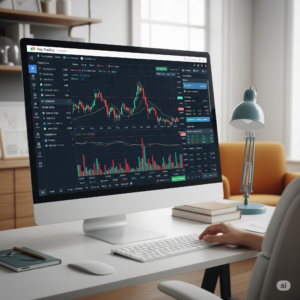
Before you buy your first share of a company, you must ensure your personal “financial house” is in order. Investing is a long-term game; if you are forced to withdraw your money in six months because of an emergency, you aren’t investing—you’re flirting with disaster.
The Emergency Fund Requirement
The stock market is volatile. Prices go up and down daily. To ensure you never have to sell your stocks during a “down” period, you need a cash cushion. Aim for 3 to 6 months of living expenses in a high-yield savings account. This is your “sleep-at-night” fund.
High-Interest Debt Liquidation
If you have credit card debt at a 20% interest rate, and the stock market historically returns around 10% per year, you are mathematically losing money by investing. Clear any high-interest debt first. It is the only “guaranteed” return you will ever get.
2. Defining Your Investment Goals and Risk Tolerance
Not all portfolios are created equal. A 22-year-old starting their first job has very different needs than a 55-year-old looking to retire in a decade.
Understanding Risk Tolerance
Risk tolerance is your ability to watch your portfolio drop by 20% without panicking.
-
Aggressive: You prioritize high growth and have decades before you need the money.
-
Moderate: You want growth but prefer to minimize extreme “swings.”
-
Conservative: You prioritize keeping what you have and generating steady income (dividends).
3. Selecting the Right Brokerage Platform for 2026
In 2026, the barrier to entry is lower than ever. When choosing a broker, look for three main features:
-
Zero Commissions: You should not pay a fee to buy or sell stocks or ETFs.
-
Fractional Shares: This allows you to buy $10 worth of a stock that costs $3,000 per share.
-
User Experience: If the app is too confusing, you won’t use it.
Popular choices in the US and international markets include Fidelity, Charles Schwab, and Robinhood. Ensure your broker is SIPC insured to protect your capital against brokerage failure.
4. The “Core and Satellite” Strategy: The Secret to Diversification

Most beginners make the mistake of buying five random stocks they heard about on social media. This is high-risk and rarely works. Instead, use the Core and Satellite model.
The Core (70-80% of your portfolio)
Your core should be made of “Total Market” or “S&P 500” Index Funds (ETFs). These are baskets that own hundreds of companies at once. By making this the “bulk” of your portfolio, you ensure that you grow alongside the global economy.
The Satellite (20-30% of your portfolio)
This is where you can “pick” individual companies you believe in. Maybe you think a specific AI firm is going to change the world, or you love a certain retail brand. If these individual picks fail, your “Core” keeps you safe.
The formula for your portfolio ($P$) can be expressed as:
Where $E$ represents broad-market ETFs and $S$ represents individual stock picks.
5. Sector Diversification: Don’t Put All Your Chips in Tech
A truly diversified portfolio doesn’t just own different companies; it owns different industries. If you own Apple, Microsoft, and Google, you aren’t diversified—you are just “heavy in tech.” If the tech sector has a bad year, your whole portfolio suffers.
To be safe, you should aim for exposure across the 11 major sectors:
-
Technology (Software, Semiconductors)
-
Healthcare (Pharmaceuticals, Biotech)
-
Financials (Banks, Insurance)
-
Consumer Discretionary (Retail, Luxury)
-
Consumer Staples (Food, Household goods)
-
Energy (Oil, Renewables)
-
Utilities (Electricity, Water)
-
Real Estate (REITs)
-
Industrials (Manufacturing, Aerospace)
-
Materials (Mining, Chemicals)
-
Communication Services (Streaming, Telecom)
6. How to Identify Quality Stocks: The Basics of Analysis
When you move into the “Satellite” part of your portfolio, you need to know what you are buying. You don’t need a PhD in finance, but you should look at three key metrics:
The P/E Ratio (Price-to-Earnings)
The P/E ratio tells you if a stock is “expensive” or “cheap” relative to its profits. It is calculated as:
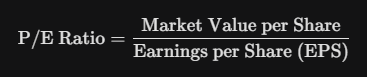
A very high P/E might mean the stock is overvalued, while a low P/E might mean it’s a bargain (or that the company is in trouble).
Dividend Yield
If you want passive income, look for the Dividend Yield. This is the percentage of the stock price the company pays back to you every year. A yield of 2-4% is generally considered healthy and sustainable.
Debt-to-Equity
You want to invest in companies that aren’t drowning in debt. Look for a Debt-to-Equity ratio under 2.0 to ensure the company can survive an economic downturn.
7. The Power of Dollar-Cost Averaging (DCA)
One of the biggest fears for beginners is “buying at the top.” What if you invest $1,000 today and the market crashes tomorrow?
The solution is Dollar-Cost Averaging. Instead of investing a lump sum, you invest a fixed amount (e.g., $200) every month.
-
When prices are high, your $200 buys fewer shares.
-
When prices are low, your $200 buys more shares.
Over time, this lowers your average cost per share and removes the emotional stress of trying to “time” the market perfectly.
8. Geographical Diversification: Looking Beyond the US
While the US stock market has been the leader for decades, a truly “world-class” portfolio looks at international growth. In 2026, emerging markets in Asia and established markets in Europe offer a hedge against a potential US dollar decline.
Consider adding an International ETF (like VXUS or VEA) to your core. This ensures that even if one country’s economy stalls, your wealth continues to build elsewhere.
9. Portfolio Rebalancing: Keeping Your Garden Trimmed

Once you have built your portfolio, you cannot just leave it forever. Over time, some stocks will grow faster than others.
If you started with 50% Stocks and 50% Bonds, and the stocks have a great year, you might end up with 70% Stocks and 30% Bonds. This makes your portfolio riskier than you intended.
Rebalancing is the act of selling a bit of what has grown (selling high) and buying a bit of what has lagged (buying low) to get back to your original plan. Do this once or twice a year.
10. Common Mistakes to Avoid in Your First Year
Building a portfolio is as much about what you don’t do as what you do.
Chasing “Hype”
In 2026, AI and Green Energy are the buzzwords. While these sectors are exciting, don’t put 100% of your money into them. Trends change, but the need for banks, food, and medicine does not.
Emotional Selling
When the market drops 5%, beginners often panic and sell. Remember: you only “lose” money if you sell. If you own high-quality companies and ETFs, the market has historically always recovered and reached new highs.
Over-Diversification
It is possible to own too many stocks. If you own 100 individual stocks, you won’t have time to keep track of them all. Aim for 10-20 individual stocks in your “Satellite” and let your “Core” ETFs handle the rest.
11. The Role of Taxes and Account Types
Where you hold your stocks is just as important as which stocks you buy.
Tax-Advantaged Accounts
In the US, using a Roth IRA or a 401(k) can save you hundreds of thousands of dollars in taxes over your lifetime.
-
Roth IRA: You pay taxes now, but your withdrawals in retirement are 100% tax-free.
-
Standard Brokerage: You pay capital gains tax every time you sell for a profit.
Always try to maximize your tax-advantaged accounts before putting money into a standard taxable account.
Start Small, Think Big
Building your first diversified portfolio is a marathon, not a sprint. You don’t need to be an expert on day one. By following the Core and Satellite model, utilizing Dollar-Cost Averaging, and staying disciplined through market volatility, you are doing more for your future self than 90% of the population.
The year 2026 offers incredible technological tools to make investing easier than it has ever been. Don’t let the fear of “doing it wrong” stop you from doing it at all. Pick a broad index fund, set up an automatic deposit, and watch the power of compounding interest work its magic.
The best time to start was ten years ago. The second best time is right now.