What Happens If You Deposit Money into the Wrong Investment?
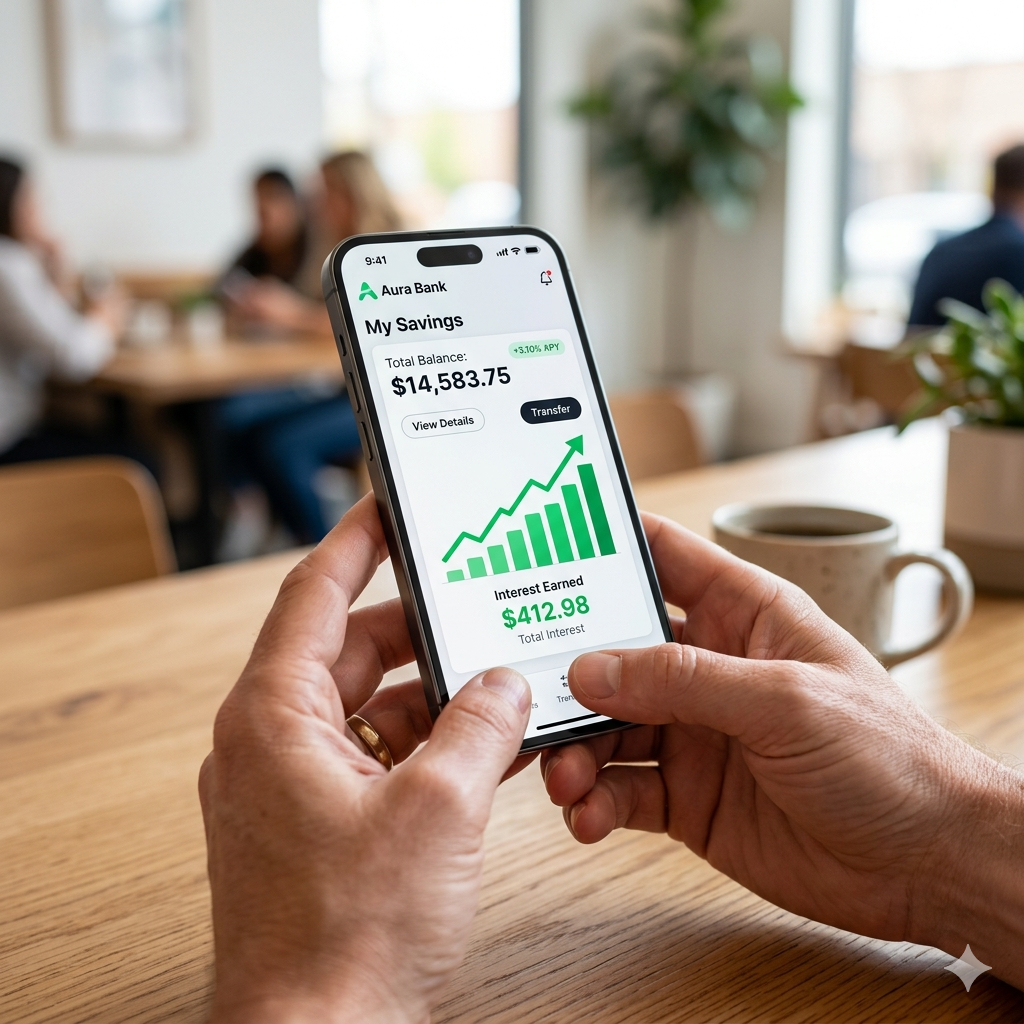
It is the split-second “stomach-drop” moment every investor fears. You’ve spent weeks researching, saving, and finally deciding to put your capital to work. You log into your brokerage app, navigate to the trade screen, and hit “Confirm.” But as the screen refreshes, you realize with horror that you’ve made a mistake.
Maybe you mistyped a ticker symbol. Maybe you deposited $5,000 into a high-risk crypto asset instead of a steady S&P 500 index fund. Or perhaps you accidentally contributed to a retirement account you can’t touch for thirty years when you actually needed that money for a house down payment next month.
In the fast-paced financial landscape of 2026, where “instant” execution is the norm, the margin for error is razor-thin. If you find yourself in this situation, don’t panic. While some mistakes are “final,” many can be mitigated or corrected if you act quickly. This guide explores exactly what happens when you deposit money into the wrong investment and the steps you must take to fix it.
The “Fat Finger” Error: Accidentally Buying the Wrong Ticker Symbol

The most common mistake for beginners is the “ticker mix-up.” In the US markets, thousands of companies have symbols that are nearly identical. For example, an investor looking for Ford Motor Company (F) might accidentally buy Forward Industries (FORD). Or someone looking for Zoom Video (ZM) might accidentally buy the unrelated Zoom Technologies (formerly ZMTP).
Is the Trade Reversible?
Technically, no. Once a trade is executed on a public exchange, it is a binding contract. You cannot “undo” a purchase just because you changed your mind or made a typo. The brokerage has already matched your buy order with a seller’s order.
The Immediate Cost of Correction
To fix a ticker error, you must sell the “wrong” stock and buy the “right” one. This triggers three immediate costs:
-
The Bid-Ask Spread: You typically buy at a slightly higher price and sell at a slightly lower price. This “gap” is a small but immediate loss.
-
Transaction Fees: While many US brokers offer $0 commissions, international or specialized assets may still carry fees.
-
Taxes: If the “wrong” stock goes up in value in the five minutes you own it, you technically owe capital gains tax on that tiny profit.
Wrong Account Type: Putting “Short-Term” Money into a “Long-Term” Account
This is a much more significant mistake than a simple ticker typo. Imagine you have $10,000 saved for a wedding in six months, but you accidentally deposit it into a Traditional IRA or a 401(k).
The Liquidity Trap
In the United States, retirement accounts are “tax-advantaged,” which is the government’s way of saying, “We will give you a tax break, but you have to keep the money here until you’re 59.5 years old.”
If you deposit money into these accounts by mistake, getting it back out isn’t as simple as a bank transfer. You may face:
-
A 10% Early Withdrawal Penalty: The IRS discourages early withdrawals with a flat 10% fine on the amount taken out.
-
Income Tax Hit: For Traditional IRAs, the entire withdrawal is treated as taxable income for the current year.
The “Excess Contribution” Fix
If you caught the mistake immediately and haven’t invested the cash yet, you may be able to file for a “Removal of Excess Contribution.” Most major brokerages have a specific form for this. If processed correctly, the broker can return the funds as if the deposit never happened, avoiding the 10% penalty. However, you must do this before the tax-filing deadline.
Risk Mismatch: Investing in Aggressive Assets by Mistake
Sometimes the “wrong” investment isn’t about a typo or an account type; it’s about Risk Profile. Perhaps you meant to put your savings into a “Target Date Fund” but accidentally clicked on a “3x Leveraged Inverse ETF.”
Understanding Volatility
A 3x leveraged fund is designed to triple the daily moves of an index. If the market drops 3%, your “investment” drops 9% in a single day. If you don’t realize your mistake for a week, you could lose a massive portion of your principal.
The Mathematical Impact of Losses
It is a mathematical reality that losses hurt more than gains help. To see why, look at this formula for the “Return Needed to Break Even”:
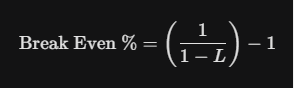
Where L is the percentage of your loss.
-
If you lose 10%, you need an 11.1% gain to get back to zero.
-
If you lose 50%, you need a 100% gain to get back to zero.
If you find your money in a high-risk asset that you didn’t intend to own, the safest move is often to “liquidate at market” immediately, rather than waiting for it to “break even.”
Depositing into the “Wrong” Brokerage or a Phishing Site
In 2026, the rise of “FinTech clones” and sophisticated phishing scams has made it easier to send money to the wrong place entirely.
The Scam Scenario
If you accidentally deposited money into a platform that looked like a legitimate broker but was actually a fraudulent site, time is your only ally.
-
Contact Your Bank Immediately: Initiate a “Recall” or a “Reversal” of the ACH or wire transfer.
-
Freeze Your Credentials: If you gave the site your login info, change your passwords on all financial accounts.
-
Report to Authorities: Contact the SEC (Securities and Exchange Commission) or the IC3 (Internet Crime Complaint Center).
The Legit-but-Wrong Broker
If you simply sent money to a brokerage you used years ago but no longer use, the fix is easier. You simply have to wait for the funds to settle (usually 3–5 business days for ACH) and then initiate an ACATS transfer (Automated Customer Account Transfer Service) to move the assets to your primary broker.
Step-By-Step: What to Do the Moment You Realize the Mistake
If you just hit “Confirm” and realized the error, follow this protocol:
1. Don’t Close the App
Navigate to the “Activity” or “Pending Orders” tab immediately. If the market is closed, or if the order hasn’t “filled” yet, you may be able to Cancel the order before it executes.
2. Contact Customer Support via Phone (Not Email)
In 2026, AI chatbots are everywhere, but for a multi-thousand-dollar mistake, you need a human. Call the brokerage’s “Trade Desk.” They have the authority to halt certain types of transactions or provide specific guidance on reversing “Excess Contributions.”
3. Document the Error
Take screenshots of the trade confirmation and your account balance. If the error was caused by a technical glitch on the broker’s end (e.g., the app froze and doubled your order), they are legally obligated to make you whole. If it was your mistake, documentation helps with tax reporting later.
4. Consult a Tax Professional
Before you “just sell it,” understand the implications. If you are in a high tax bracket and the “wrong” investment made a significant gain, selling it will trigger a tax event. A professional can help you determine if “Tax-Loss Harvesting” later in the year can offset this mistake.
Preventing Future Errors: 2026 Best Practices

The best way to handle the “wrong” investment is to never make it in the first place. Modern tools have made this easier:
-
Use “Paper Trading” First: Most brokers offer a demo account. Spend an hour there to get used to the interface before using real money.
-
Enable “Trade Confirmations”: Never turn off the “Are you sure?” pop-up window. It is your last line of defense.
-
Double-Check Ticker Suffixes: Be aware of suffixes like “.TO” (Toronto) or “.L” (London). Buying the right company on the wrong exchange can lead to high currency conversion fees.
-
Set Up “Two-Step” Transfers: For large amounts, send a “test” deposit of $1 first to ensure the plumbing is working correctly before sending $10,000.
Mistakes Are Part of the Journey
If you’ve deposited money into the wrong investment, you aren’t the first, and you certainly won’t be the last. Even professional hedge fund managers have “fat-fingered” trades that cost millions.
The stock market is a game of discipline and math. While a $100 error in your 20s is a cheap lesson, a $10,000 error in your 50s is a major setback. Treat every click on your brokerage app with the same seriousness you would treat signing a legal contract—because that is exactly what it is.
Take a deep breath, assess the damage, and follow the regulatory paths to correction. Your portfolio will recover.